What Are EVA Foam Dog Balls? And Why Do They Matter?
Dogs need to play, that's no secret. Sure, you can take them on walks or runs, hit the trails, and get them moving, but play time is essential for any dog. You have plenty of toys on the market like tug toys, stuffed animals, and more, but one of the most popular toys for dogs are balls, and there are a lot of them out there. Most dog balls look similar at a glance—but the material they’re made from changes everything about how your dog interacts with them. Cheaper materials require constant replacement.
EVA foam is one of those materials that doesn’t get much attention, but quietly solves a lot of common problems with traditional dog balls.
Before getting into why it matters, it helps to understand what it actually is. Our team at Bolder K9 is going to break it down.
What Is EVA Foam?
EVA (ethylene-vinyl acetate) is a closed-cell foam used in products that need to balance cushioning, durability, and resilience—like running shoes and protective gear.
In dog toys, that combination creates something different from standard rubber or plastic balls:
- It has slight give under pressure, instead of being rigid
- It’s lightweight without feeling hollow
- It doesn’t absorb water
- It holds its shape even with repeated use
In simple terms, it behaves less like a hard object—and more like a controlled, durable cushion. That difference shows up immediately in how dogs bite, carry, and engage with the ball.
Why That Difference Matters
Most dog balls force a tradeoff:
- Hard materials = durable, but tough on teeth
- Soft materials = safer, but short-lived
EVA foam sits in between. It reduces that tradeoff, which leads to better play—not just longer-lasting toys. To make that more concrete, let's break down the key ways it changes performance.

5 Reasons EVA Foam Dog Balls Perform Better
1. Safer on Teeth Without Feeling Fragile
EVA compresses slightly when your dog bites down, which reduces impact stress compared to dense rubber balls.
That matters over time—especially for dogs that bite hard or catch at speed.
2. Lightweight for Better Throws and Easier Catches
Because the ball is lighter, you can throw farther with less effort.
For your dog, that means cleaner catches and less jarring impact—especially during high-speed fetch.
3. Water-Friendly by Design
EVA’s closed-cell structure means it won’t absorb water.
No waterlogging, no slime buildup, no change in weight mid-play. It performs the same whether you’re at the park, near water, or it's raining out, and it is easy to clean.
4. Consistent in Different Conditions
Some materials get stiff in the cold or overly soft in heat. No matter what environment you are in, EVA stays relatively stable, which means more predictable play year-round.
5. More Versatile Than a Standard Ball
The versatility factor is where EVA stands apart from other standard dog balls. It works well as a standalone fetch ball—but it also performs exceptionally well as part of a handled tug system.
That versatility changes how you can use it.

Two Ways to Use EVA Foam Balls
1. As a Standalone Fetch Ball
For dogs that love to chase, this is the simplest and most natural use.
Best for:
- Fetch sessions in open spaces
- Water retrieves
- Dogs that like to carry and self-engage
The lightweight feel and slight compression make it easier for dogs to catch and hold, which keeps the play loop smooth.
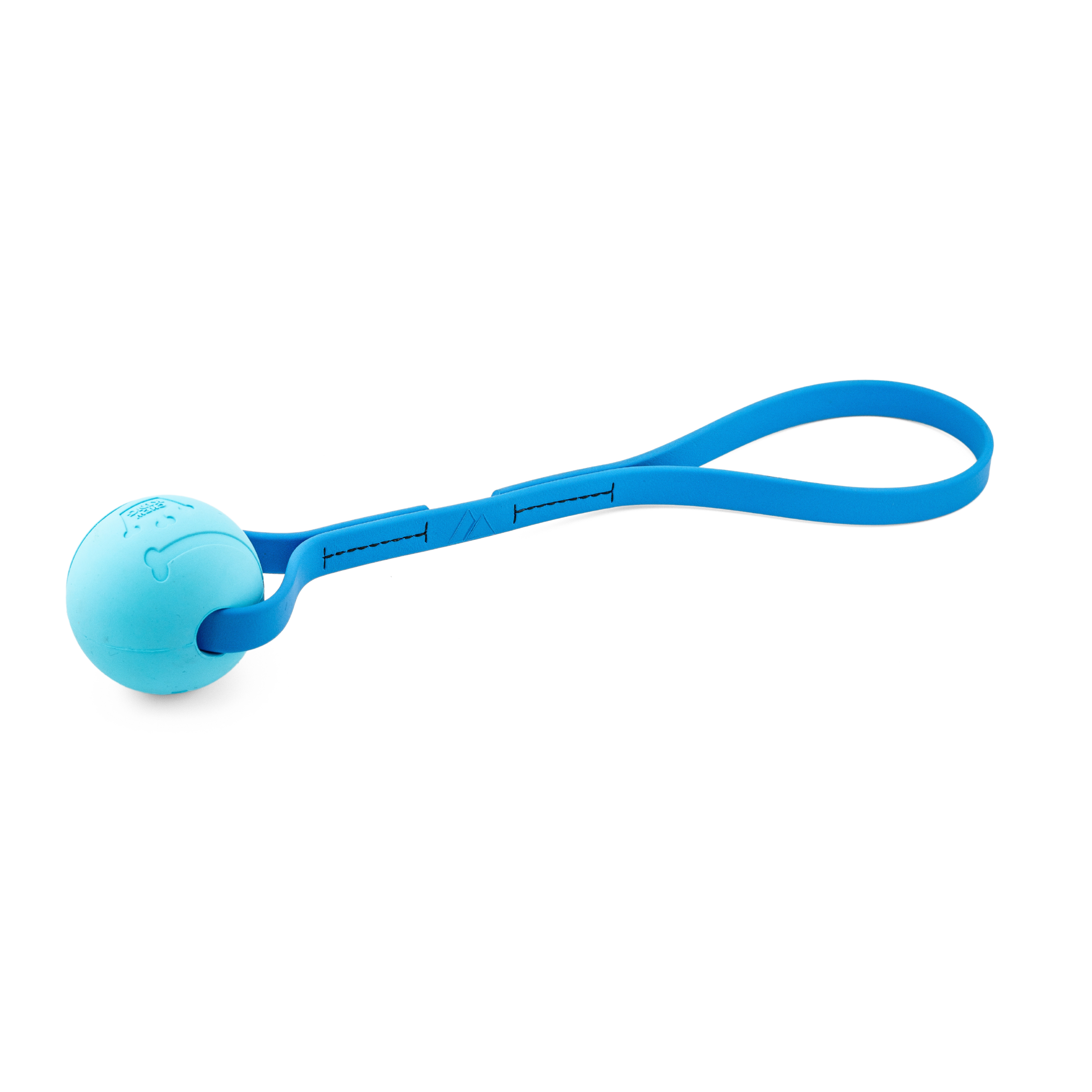
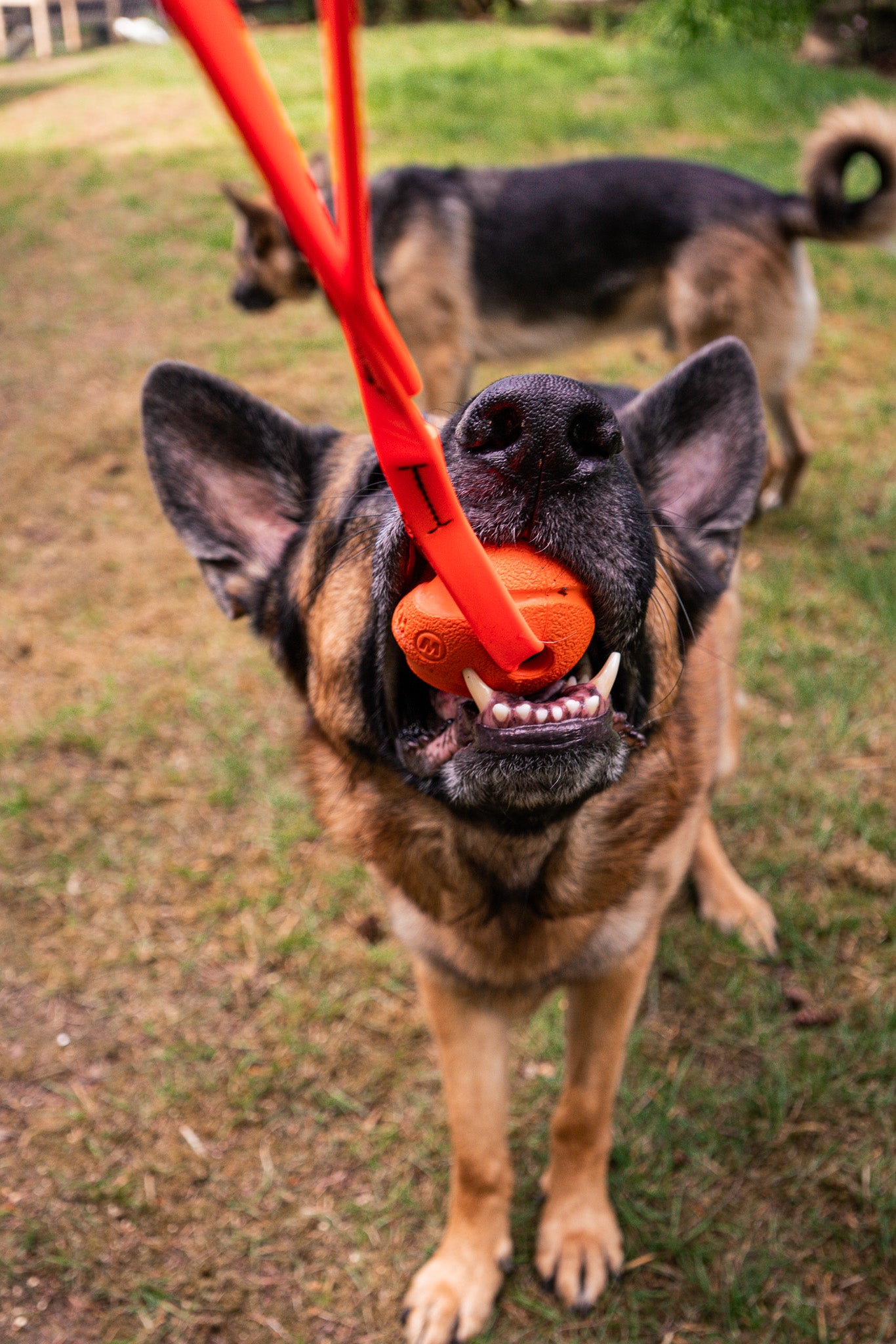
2. As a Tug Toy with a Biothane Handle
Adding a handle—especially a Biothane handle—turns the ball into something more structured.
Instead of just throwing and retrieving, you now have a tool for interactive play and training.
Why this setup works:
- The EVA ball gives your dog a comfortable, grippable target
- The Biothane handle gives you control without absorbing water, dirt, or odor
Biothane is a durable material, easy to clean, and holds up under tension—making it ideal for repeated tug sessions.
More importantly, this setup creates clearer play dynamics:
- The dog engages with the ball
- You control the interaction through the handle
That separation leads to cleaner engagement, better focus, and more intentional play.
Best tugs that feature the EVA foam dog ball:

Which One Should You Choose?
The type of toy you choose truly depends on how your dog prefers to play.
- For high-energy fetch → go with the standalone ball
- For interaction and training → choose the handled version
- For most dogs → both serve different roles
Fetch burns energy.
Tug builds engagement.
Final Thought: Material Shapes Behavior
It’s easy to think of a dog ball as a simple object that you can just buy for cheap—but the material affects:
- How your dog bites
- How they carry and release
- How safe it is over time
- How long it actually lasts
EVA foam isn’t flashy, but it changes those fundamentals in a meaningful way. And when you pair it with a thoughtful design—like a Biothane-handled tug—it becomes more than a toy. It becomes a more reliable way to play.
Be sure to check out Bolder K9 on Instagram!