Why Long Lines Are Used in BAT 2.0 for Reactive Dogs
You may have researched Behavior Adjustment Training, or BAT, for a reactive dog. You likely noticed the importance of using a BAT long line.
There's often a lot more leash. That's intentional.
Behavior Adjustment Training was developed by dog trainer Grisha Stewart for dogs experiencing issues including fear, frustration, and aggression. BAT uses a long line to help balance two things that can seem contradictory: freedom and safety.
The dog gets room to move, sniff, investigate, change direction, and make choices. The handler still maintains a physical connection and can intervene when necessary. But putting your reactive dog on a 15-foot leash doesn't mean you're suddenly doing BAT.
The long line supports the training. It isn't the training.
Our team at Bolder K9 is going to break it down.
What Is BAT 2.0?
BAT stands for Behavior Adjustment Training, a system developed by Grisha Stewart.
BAT does not use the leash to continually control movement. It creates managed situations where dogs make safe choices.
Stewart now teaches BAT 3.0, but she states that the BAT 2.0 book and BAT 2.0 leash-skills materials remain valid.
We won't teach BAT in a Bolder K9 post. See Grisha Stewart's official BAT resources or work with a qualified professional.
What we can dig into is the equipment side—particularly why long lines are so useful for this type of work.
Why Does BAT Use a Long Line?
Think about how much your position affects your dog when you're using a standard six-foot leash.
Your dog moves left and reaches the end.
They slow down while you continue forward and the leash tightens.
They try to move farther away from something, but there isn't enough leash.
None of that means a six-foot leash is bad. In busy environments, keeping a dog close may be exactly what safety requires.
But BAT training is generally set up differently.
The goal is to create space for meaningful movement. The dog must remain connected to the handler.
A longer leash can give the dog room to:
- Move away
- Move laterally
- Change direction
- Sniff and explore
- Pause
- Adjust distance
- Gather information without remaining directly beside the handler
That additional movement is one of the big reasons long lines fit this type of training so well.
Our guide to dog long lines covers length and materials. It is great for recall training or decompression walks.
The Long Line Is a Safety Connection, Not a Steering Wheel
This might be the most important concept in the entire article.
When people first start handling long lines, it's tempting to use all that extra leash to steer the dog.
Dog goes left?
Dog slows down?
Pull forward.
Dog notices something?
Reel them back.
At that point, you've essentially created a 15-foot steering wheel.
That's not the goal of BAT leash handling.
Stewart's materials emphasize looseness in the line. Handlers must manage length and stop the dog when necessary.
Learn to feed line out, shorten it, and relax it. Stop movement without directing every single step.
Good long-line handling can look simple.
It takes practice.

How Long Should a BAT Long Line Be?
BAT 2.0 materials have commonly used long lines around the 12-to-15-foot range when teaching leash skills.
That doesn't make 15 feet a universal rule.
The appropriate length depends on the dog, handler, environment, and training setup.
More leash isn't automatically better.
A 30-foot line provides more movement, but it also creates more line to manage. There are more opportunities for tangles, loops around legs, and a dog building speed before reaching the end.
Start with a manageable length in a low-distraction environment. Do not immediately grab the longest line available.
Practice first.
In fact, Stewart's BAT materials include practicing leash-handling skills before attempting an actual BAT setup.
We like that advice.
Learn to manage 15 feet of line first. Do not do this while your reactive dog notices another dog.
What Makes a Good BAT long line?
There isn't a magical "reactive dog leash."
The leash doesn't change the behavior. It gives you a tool for managing the training environment.
For BAT-style handling, we'd consider a few practical characteristics.
Enough Length for Meaningful Movement
You need enough usable line for the dog to move without immediately reaching the end.
At the same time, you need to be able to confidently manage that amount of leash.
Comfortable Handling
You'll be shortening and lengthening the line throughout the session.
Avoid materials that are awkward or bulky. Choose what works for you, not just what another trainer prefers.
Appropriate Hardware
Look beyond the leash material.
Check the clip, attachment points, stitching or fasteners, and whatever collar or harness the leash is attached to.
Inspect equipment regularly for damage or wear.
Easy Cleaning
Long lines spend a lot of time on the ground. Mud, wet grass, snow, dirt, and puddles are normal.
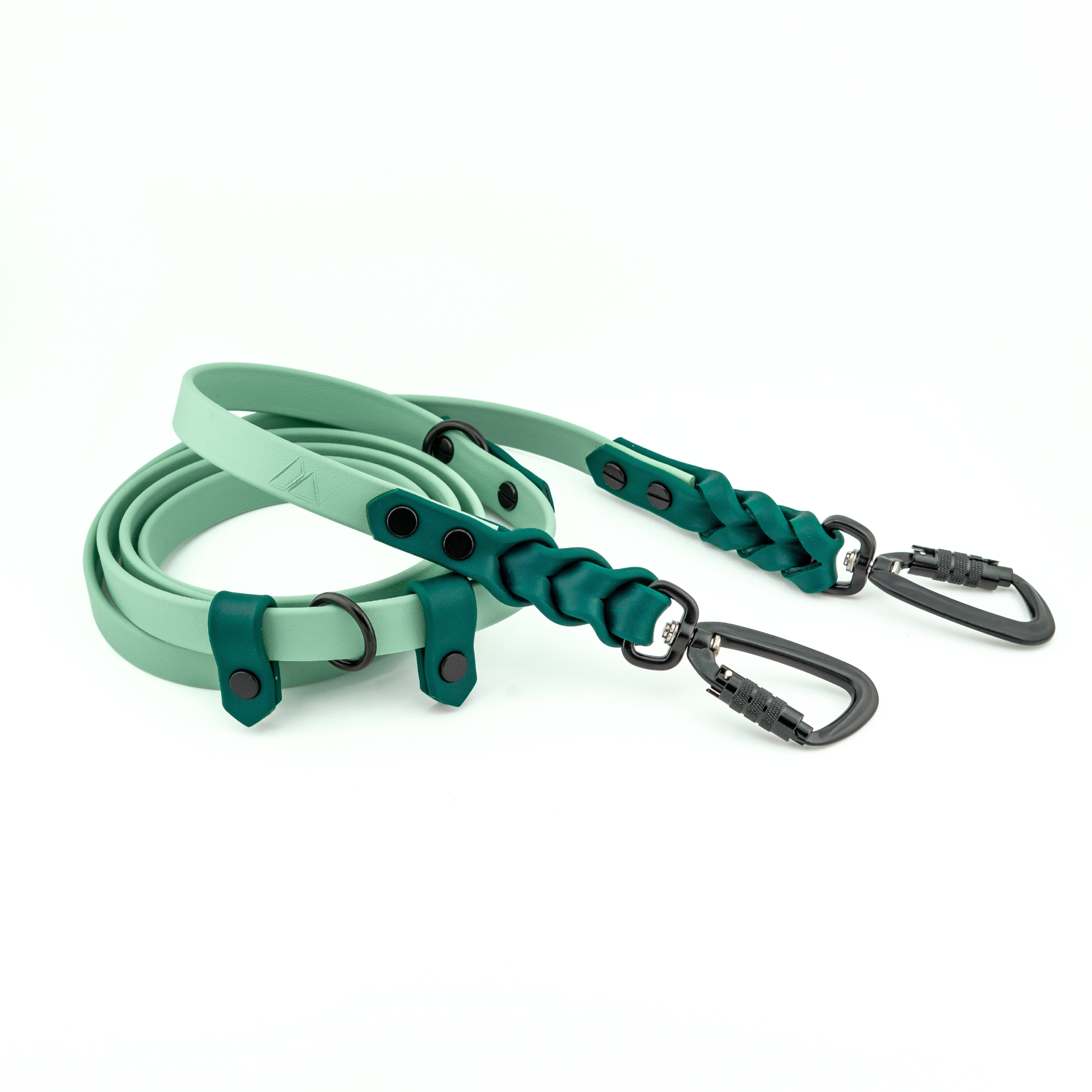
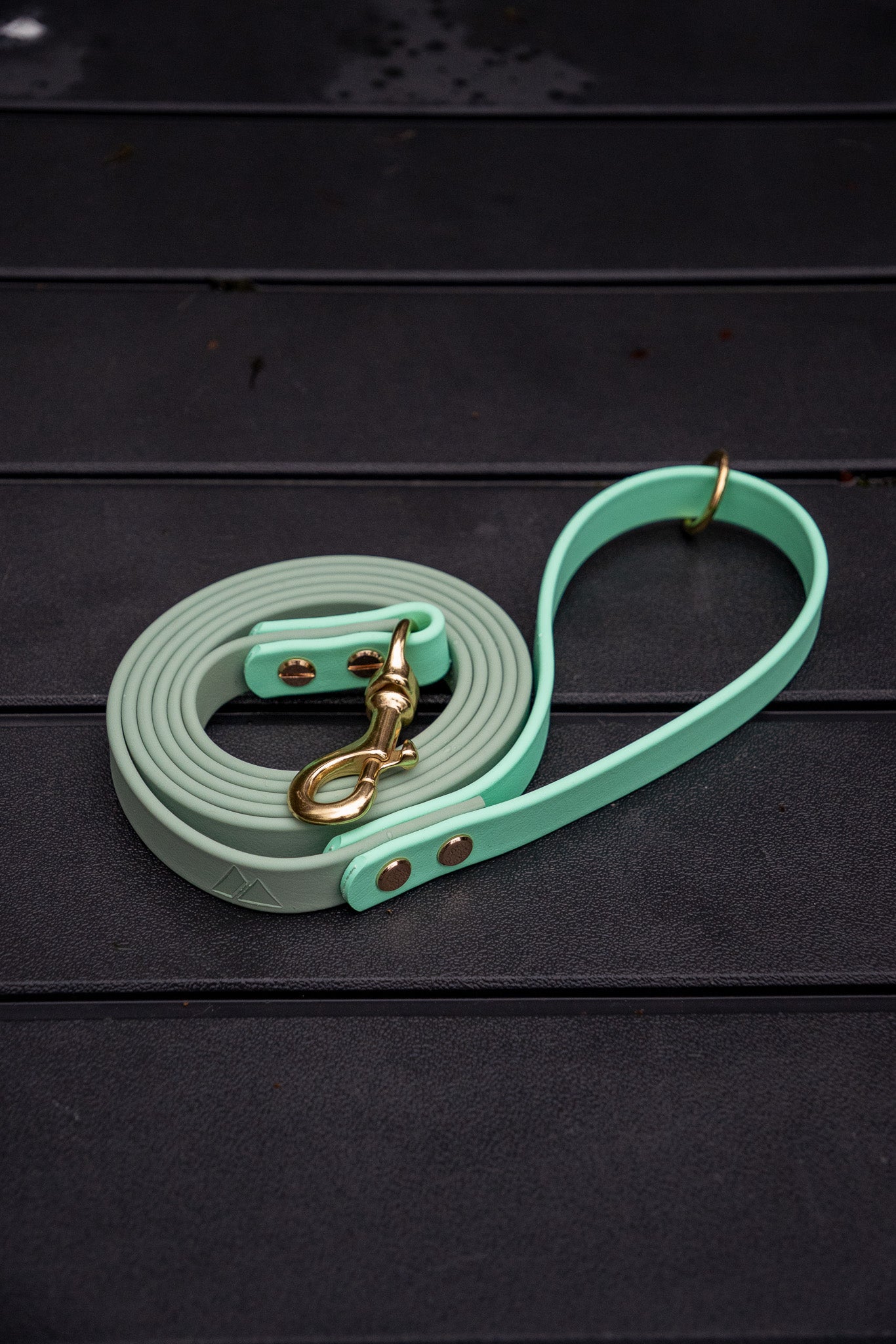
That's one reason we like BioThane® for outdoor long-line work. It's waterproof and doesn't absorb water the way many traditional fabric webbings can, making cleanup straightforward after training.
The Element BioThane® Long Line is a simple fixed-line option for handlers who want waterproof material without a retracting mechanism.
It doesn't "fix" reactivity.
It simply gives the handler a practical physical connection while leaving room for the actual training to happen.
Why We Wouldn't Use a Retractable Leash for BAT
A retractable leash might give your dog 15 feet of distance.
But mechanically, it isn't the same as a 15-foot fixed long line.
BAT leash skills involve intentional management. Feed it out, gather it, and maintain slack to brake when necessary.
A retractable leash uses an internal mechanism. It generally maintains some tension as the dog moves outward.
That's a different handling system.
For BAT-style work, we'd choose a fixed long line.
Long-Line Safety Matters
Long lines give dogs more freedom, but they also create their own risks.
The big one is momentum.
Don't give a reactive dog 20 feet of runway and then let the leash stop them.
A dog accelerating through the available line can create significant force when they abruptly reach the end.
Good handling means recognizing what's developing before that happens.
Avoid wrapping a long line around your hand or fingers. Track loops and slack. Shorten and lengthen the line smoothly.
And don't assume more leash is appropriate everywhere.
A wide-open training field is very different from a crowded sidewalk.
Extra length around traffic, cyclists, unfamiliar dogs, children, or tight spaces can create problems rather than solve them.
Our broader reactive-dog gear guide discusses choosing leash setups based on the environment rather than assuming one configuration works everywhere.

Five Common Long-Line Mistakes
1. Constantly keeping the line tight.
The extra length doesn't accomplish much if the dog is still moving against continuous leash pressure.
2. Wrapping the leash around your hand.
If the dog suddenly accelerates, loops around your fingers, wrist, or hand can tighten quickly.
3. Letting the dog hit the end at full speed.
Long lines provide movement, not a runway. Pay attention to acceleration and manage the available line before the dog reaches the end.
4. Using too much leash for the environment.
Fifteen feet might be useful in an open field and completely inappropriate on a busy sidewalk.
5. Focusing so much on the leash that you stop watching your dog. Handling should become smooth. Then you can watch the dog's body language instead of your hands.
Does a Long Line Help With Dog Reactivity?
A long line can support a properly designed training or management plan by providing additional space and movement options.
It does not fix reactivity. Neither does a harness, collar, tug toy, or any other piece of equipment.
The leash is only one part of a larger system. It involves environment, distance, observation, and movement.
Some dogs show significant fear or aggression. In these cases, working with a qualified professional is extremely valuable.
BAT Isn't About Getting as Close as Possible
There's one more misconception worth clearing up.
Success isn't necessarily:
"My dog got closer to the trigger."
Sometimes the useful choice is moving away.
BAT isn't simply walking a dog toward something until they stop reacting.
The dog's comfort matters. The setup needs enough space for the handler to respond to stress signs.
That's another reason the long line makes sense, it creates room for movement without immediately removing the safety connection.
The Bottom Line
The long line plays a specific role in BAT: it helps create freedom without completely giving up physical management.
Your dog gets room to move, investigate, sniff, change direction, and make choices.
You remain connected and capable of intervening when necessary.
But the length of the leash isn't what makes BAT work.
Handling matters.
Distance matters.
Environment matters.
Reading your dog matters.
And knowing when to stop or leave matters.
Learn BAT from Grisha Stewart's official resources. You can also use a qualified professional familiar with the system.
Then practice your long-line skills somewhere boring.
No triggers. No big training objective.
Just you, your dog, some open space, and enough time to learn how the line actually moves through your hands.
Because when the difficult situation happens, handling the leash should be the easy part.
Frequently Asked Questions
What does BAT mean in dog training?
BAT stands for Behavior Adjustment Training. It was developed by dog trainer Grisha Stewart and is used particularly with dogs experiencing fear, frustration, aggression, and reactivity.
Why does BAT use a long line?
A long line gives freedom while maintaining safety. Dogs can change direction or sniff without staying beside the handler.
How long should a BAT long line be?
BAT 2.0 materials have commonly used approximately 12-to-15-foot long lines for leash-skills work. The appropriate length depends on the individual dog, handler, environment, and training setup.
Can I use a retractable leash for BAT?
A fixed long line matches BAT techniques. It allows manual management of slack instead of relying on a mechanism.
Can a long line fix a reactive dog?
No. A long line is equipment that can support training and management. It does not change reactive behavior by itself.
Should I practice long-line handling before working around triggers?
Yes. Practice in a low-distraction environment. This makes handling smoother before attempting more challenging training situations.
Is BAT 2.0 still relevant?
Stewart now teaches BAT 3.0. However, the BAT 2.0 book and leash-skills materials remain accurate. Use her current resources to understand the system's development.
Be sure to check out Bolder K9 on Instagram.