How to Teach Your Dog to Walk on a Hands-Free Leash
Hands-free leash training shouldn't be complex. It does not require teaching an entirely new style of walking.
In fact, the easiest transition happens when your dog already understands the basics of loose-leash walking.
Teach your dog to move with you first.
Practice turns, pivots, stops, and changes of direction. Reward your dog for staying connected to you. If they forge ahead and pull, change direction instead of getting into a pulling contest.
Once those skills start making sense, you can move the leash from your hand to your body.
That's really the foundation of the process:
Teach the walking skills first. Then change where the leash connects to you.
Start With Loose-Leash Walking
Before worrying about hands-free walking, grab a standard leash and start somewhere easy.
You don't need a perfect heel.
Your dog doesn't need their shoulder glued to your leg. They don't need to stare at you.
Dogs should understand that staying connected and keeping leash slack allows the walk to continue.
Start in a quiet environment with minimal distractions.
That could be your driveway, yard, a quiet section of sidewalk, or another familiar area.
Then start moving.
When your dog moves with you and the leash remains loose, mark and reward it.
Use a verbal marker like "yes" or a clicker. Use any consistent marker your dog understands.
You're showing the dog:
That's the movement I want.
Practice Pivots and Direction Changes
One of the simplest exercises for loose-leash walking is changing direction.
Let's say your dog starts moving ahead of you.
Instead of continuing forward until they're pulling you down the sidewalk, pivot and head the other way.
As your dog turns and catches up with you, mark that decision and reward them.
Then keep walking.
You can practice:
- Left turns
- Right turns
- 180-degree pivots
- Stops
- Changes in walking speed
- Random direction changes
This isn't about trying to trick your dog.
You're teaching them that your movement matters.
Dogs won't pay attention if they learn you always follow wherever they pull.
If your movement becomes relevant—and staying connected to you gets rewarded—you start building a very different walking pattern.
What If Your Dog Pulls Ahead?
Don't turn it into a tug-of-war.
If your dog pulls forward, you have several options. These depend on your style and the situation.
For a very basic approach, simply stop or change direction.
When the dog comes back with you and the leash becomes loose again:
Mark. Reward. Continue.
Then repeat.
And repeat again.
Loose-leash walking takes practice, especially when the environment becomes more exciting.
A dog may walk well at home. They may not do so at a busy park.
Build difficulty gradually.
For foundational work, our leash-handling tips for dog owners are a good place to start.

When Should You Switch to a Hands-Free Leash?
You don't need perfect loose-leash walking before trying hands-free.
But we'd want to see some basic understanding first.
Ideally, your dog is beginning to:
- Follow when you change direction
- Respond to familiar markers and rewards
- Walk with slack in the leash for at least short periods
- Come with you during pivots
- Recover when they move too far ahead
- Pay some attention to your movement
If your dog lunges or pulls hard, focus on the foundation first. Avoid attaching them to your body.
A hands-free leash can make walking more convenient.
It doesn't teach a dog not to pull.
Step 1: Use Your Hands-Free Leash Like a Regular Leash
This is where a convertible leash can be especially useful.
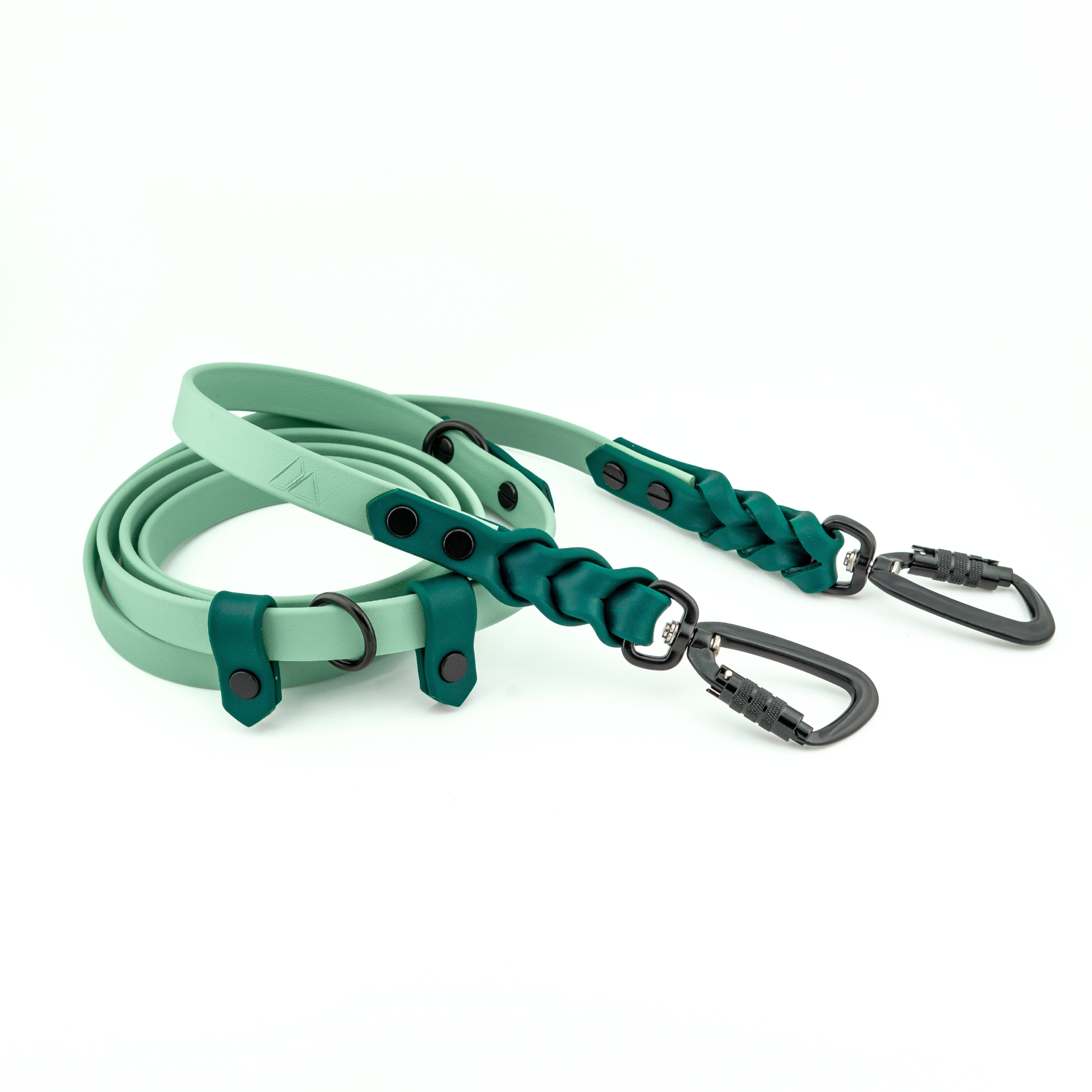
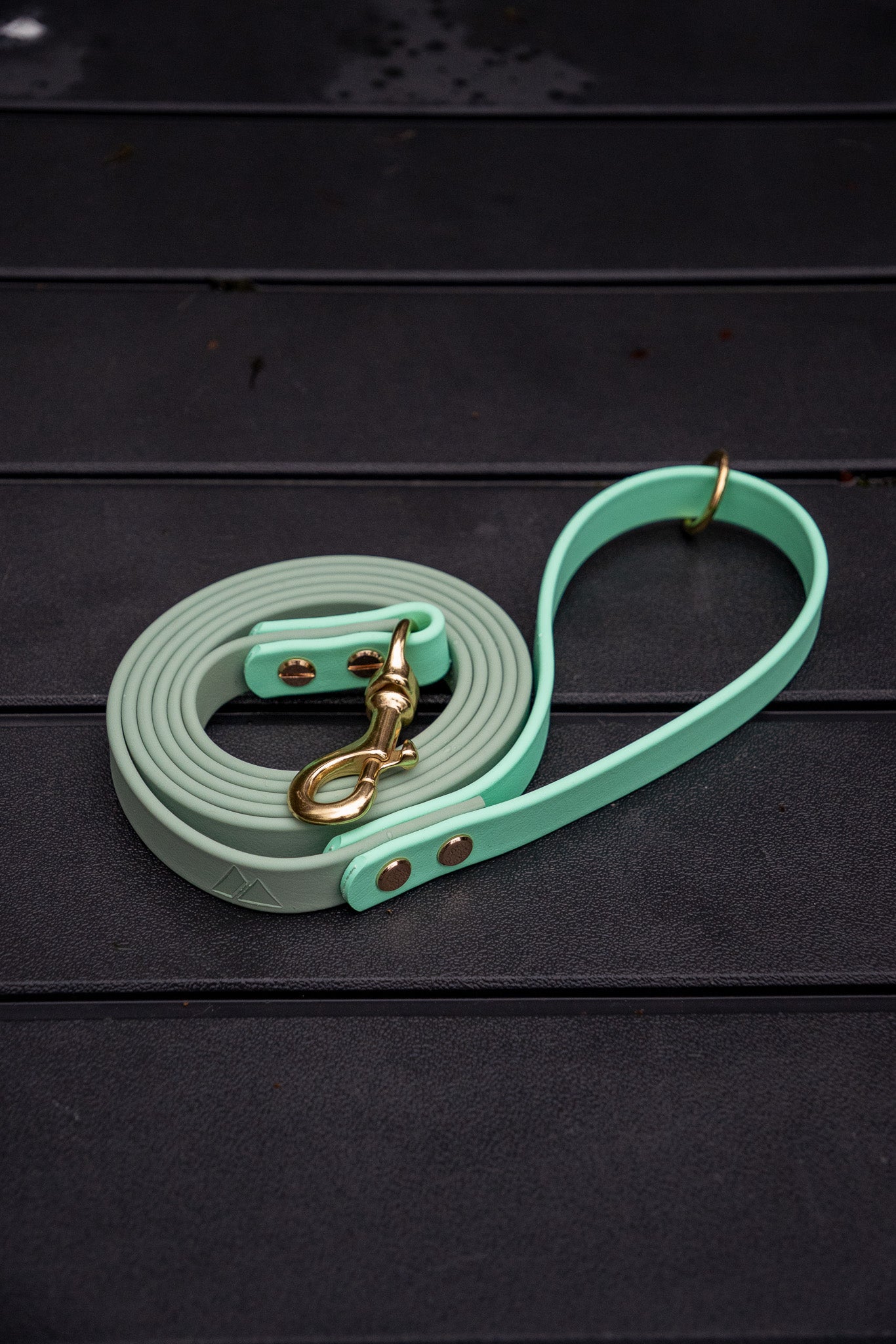
The Voyager Hands-Free BioThane® Leash can be configured for hands-free use or converted back into a traditional handheld leash.
For someone making this transition, that simplicity is useful.
Start by using it like the leash your dog already understands.
Hold the standard handle.
Walk.
Pivot.
Reward.
Change direction.
Practice stops.
Nothing is different yet.
You're introducing the equipment without changing the lesson.
Don't change the leash and the lesson at the same time.
Step 2: Put the Leash On—But Keep Using Your Hand
Next, configure the leash around your waist or crossbody.
But don't immediately throw both hands in your pockets and head out for a three-mile walk.
Keep a hand on the leash.
Practice the same loose-leash skills you've already been working on.
Turn.
Pivot.
Stop.
Reward the dog when they come with you.
The leash is now connected to your body, but you're still actively handling it.
Once comfortable, release your hand for short periods. Ensure the leash is loose and the environment is appropriate.
A few seconds is fine.
Then a little longer.
The transition doesn't need to be dramatic.
Step 3: Practice Hands-Free Somewhere Boring
Your dog's first fully hands-free walk probably shouldn't happen at a farmers market.
Or on a packed trail.
Or next to six dogs losing their minds behind a fence.
Go somewhere easy.
Practice the exact same skills.
Walk forward.
Turn left.
Turn right.
Pivot 180 degrees.
Stop.
Start again.
Reward your dog for moving with you.
If they forge ahead, change direction just like you did with the handheld leash.
The training hasn't changed.
Only the attachment point has.
Hands-Free Doesn't Mean Hands-Off
This is one of the biggest misconceptions about hands-free leashes.
You are allowed to touch the leash.
In fact, you should.
Grab the leash at intersections or crowds. Manage it directly during unexpected situations.
Hands-free means your hands can be free when the situation allows it.
It doesn't mean you're prohibited from handling your leash.
That's also why we like transitioning with a leash that can function both ways. You don't have to decide that you're either a "hands-free person" or a "standard leash person."
Real walks change.
Your handling can change with them.
Our complete guide to hands-free dog leashes goes deeper into different configurations, activities, and situations where hands-free walking makes sense.

What Length Hands-Free Leash Should You Choose?
This gets a little more interesting with a hands-free leash.
A 6.5-foot hands-free leash isn't necessarily giving your dog 6.5 feet of working distance when you're wearing it.
Part of that total length is being used to go around your waist, shoulder, or torso.
Body size, clothing, and leash adjustment all affect the amount of leash between you and your dog.
That's why Voyager lengths are measured approximately end-to-end.
Current length options include:
5 Feet
The shortest option.
This can make sense when you prefer less working length and want your dog relatively close.
Remember, though, that part of those five feet will be used around your body when worn hands-free.
For some handlers, that may feel fairly short.
6.5 Feet — Our Most Popular Length
For many people learning hands-free walking, 6.5 feet is a very approachable starting point.
It provides additional total length compared with a traditional short leash while remaining relatively easy to manage.
It's also our most popular Voyager length.
If you're primarily thinking about neighborhood walks, everyday training, and general hands-free use, this is where we'd start looking.
8 Feet — Our Second Most Popular Length
Want a little more room?
The 8-foot Voyager is very popular. It gives you more leash after accounting for the waist section.
This is useful for handlers who prefer more space for casual walking and sniffing.
10 Feet
At 10 feet, you're moving into noticeably more available line.
This provides more room between you and the dog. It also means more leash to manage.
12 Feet
The 12-foot option gives you even more flexibility for open environments and handlers who intentionally want additional working distance.
For someone just learning hands-free walking, though, we wouldn't automatically assume more length is better.
15 Feet
Fifteen feet provides substantial total length.
This may suit some preferences. It is not the best start for a beginner wanting a neighborhood leash.
More leash means more freedom.
It also means more leash to manage.
So Which Length Should a Beginner Choose?
For many everyday users, we'd look first at 6.5 feet or 8 feet.
That's not because those lengths are universally correct.
They're simply useful middle-ground options.
Choose based on:
- Your height and body size
- Crossbody vs. waist wear
- Your dog's size
- How close you prefer your dog to walk
- Your normal walking environment
- How much usable leash you want after configuring it around your body
A five-foot leash on one person can feel very different from the same leash on another.
Fit the leash to the dog-handler team, not just the dog.
Your Body Mechanics Change Too
There's another difference when you go hands-free:
Pulling force reaches your body differently.
With a handheld leash, your arm and shoulder absorb much of the movement.
With a waist or crossbody configuration, force can transfer more directly through your body.
Keep a stable stance and pay attention to your surroundings.
More importantly, don't let your dog build speed and slam into the end of the leash.
Do not use a waist leash if a powerful dog lunges and compromises your balance.
Work on the underlying leash skills first, and consider professional training help when appropriate.
Don't Expect a Formal Heel
Hands-free walking doesn't mean your dog needs to march beside your knee.
For many everyday walks, there's nothing wrong with allowing your dog to sniff and explore within reasonable boundaries.
You decide what those boundaries are.
Maybe your rule is simply:
Don't pull me.
Your dog can walk slightly ahead.
They can sniff.
They can switch sides when it's safe.
They can enjoy being a dog.
Shorten the leash for road crossings or other dogs. Then, you can manage them more directly.
Loose-leash walking and formal heelwork are different skills.
Don't make your everyday walk unnecessarily complicated.
A Simple Hands-Free Leash Training Progression
If we had to reduce the entire process to five steps, it would look like this:
1. Teach basic loose-leash walking on a standard leash.
Reward connection, practice turns, and change direction when your dog forges ahead.
2. Introduce the convertible leash in standard-handle mode.
Keep the training familiar.
3. Configure the leash hands-free but continue holding it.
Let both you and your dog adjust to the new attachment point.
4. Release your hand for short periods in an easy environment.
Continue marking and rewarding the same walking behavior.
5. Gradually increase distractions and duration.
Don't jump from the driveway to the busiest trail in town.
That's it.
You don't need a completely different training system because the leash moved from your hand to your torso.
Frequently Asked Questions
Should my dog know loose-leash walking before using a hands-free leash?
Dogs should have basic loose-leash skills before going hands-free. This makes the transition much easier.
Can a hands-free leash teach my dog not to pull?
No. A hands-free leash changes how the leash attaches to the handler. It doesn't teach loose-leash walking by itself. Training and reinforcement still matter.
What should I do if my dog pulls while I'm hands-free?
For a basic positive approach, stop or change direction rather than continuing to follow the pull. When your dog reconnects and the leash becomes loose, mark and reward that behavior before continuing.
What length hands-free leash is best?
It depends on your body, dog, wearing configuration, and preferred working distance. For the Voyager, 6.5 feet is the most popular length and 8 feet is the second most popular. Both can provide an approachable middle ground for everyday hands-free walking.
Can I still hold a hands-free leash?
Hands-free doesn't mean hands-off. Be prepared to grab and manage your leash around traffic or crowds.
Should I wear a hands-free leash around my waist or crossbody?
Either can work. Comfort, body size, leash length, environment, and personal preference all matter. Try the configuration in a quiet environment before deciding which feels most natural.
Is a hands-free leash good for a dog that pulls hard?
Attaching a hard-pulling or lunging dog directly to your body doesn't eliminate the pulling and may affect your balance. Build foundational leash skills first. Dogs with significant pulling or lunging issues may benefit from individualized help from a qualified trainer.
The Bottom Line
Teaching your dog to walk on a hands-free leash doesn't need to be complicated.
Start with the foundation.
Teach your dog that moving with you, responding to direction changes, and maintaining a loose leash pays off.
Practice pivots.
Reward connection.
Change direction when your dog forges ahead.
Then make the transition gradually.
Use a standard handle first. Configure the leash hands-free while still holding it. Practice somewhere easy. Then begin releasing your hand as both of you become comfortable.
That's one reason we like the Voyager for someone making the transition.
It is adjustable and can function as a handheld leash. It also transitions into a hands-free setup.
Don't change the leash and the lesson at the same time.
Teach the walking first.
Then let hands-free become what it's supposed to be:
A simpler way to enjoy the walk.