Are They Actually Better Than BioThane®?
Rope dog leashes are popular for hiking and camping. Many owners compare rope leashes vs BioThane. Their rugged, colorful designs look like equipment built for adventure. But are rope dog leashes actually better than BioThane®?
Not necessarily. Both materials have advantages, but they perform differently when exposed to water, mud, repeated handling, and everyday wear.
Traditional climbing-rope dog leashes are often made from braided synthetic fibers, while BioThane® leashes use coated webbing. These differences affect everything from cleaning and moisture retention to grip, flexibility, and maintenance.
At Bolder K9, we specialize in customizable BioThane® dog gear. Choosing the right leash means understanding the materials. Do not assume one is superior by looks.
Let's compare rope and BioThane® leashes. We will examine their strengths and limitations. We'll determine which material fits different dogs and lifestyles.
1. What Is a Climbing Rope Dog Leash?
A climbing-rope leash uses synthetic rope. This is often inspired by or made from climbing equipment materials.
Many feature a kernmantle construction, which consists of two primary components:
- Core (kern): The internal fibers that provide much of the rope's tensile strength.
- Sheath (mantle): The woven outer layer that protects the core from abrasion and handling wear.
Nylon and polyester are common materials in climbing-style rope products.
Some dog leashes use genuine climbing rope, while others use climbing-inspired cordage with different specifications. A leash's appearance alone doesn't establish whether it uses certified climbing rope or what its finished strength rating might be.
Why are climbing rope leashes popular?
Their popularity comes from several practical and aesthetic characteristics.
First, climbing-style rope has a recognizable outdoor look. Woven patterns and bright colors appeal to hikers. These gear options look great for adventure.
Second, many rope constructions are flexible and comfortable to coil or carry.
Third, the rounded profile provides a different gripping experience from flat webbing.
However, it's important to distinguish climbing-rope dog leashes from rope slip leads.
A climbing-rope leash typically connects to a separate collar or harness using a clip. A rope slip lead combines the leash and neck loop into one piece.
They serve different purposes and shouldn't be treated as interchangeable equipment.
2. What Is a BioThane® Dog Leash?
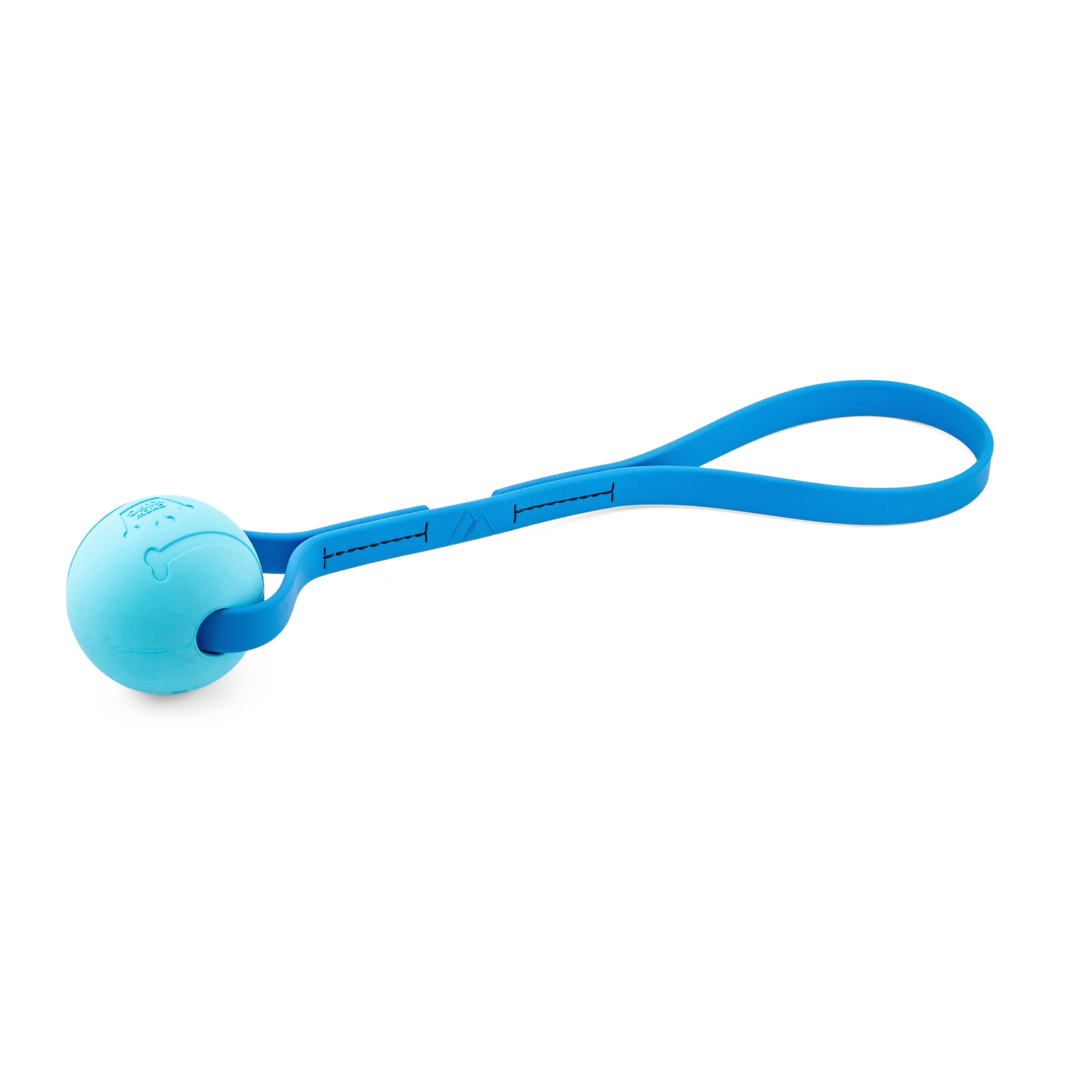
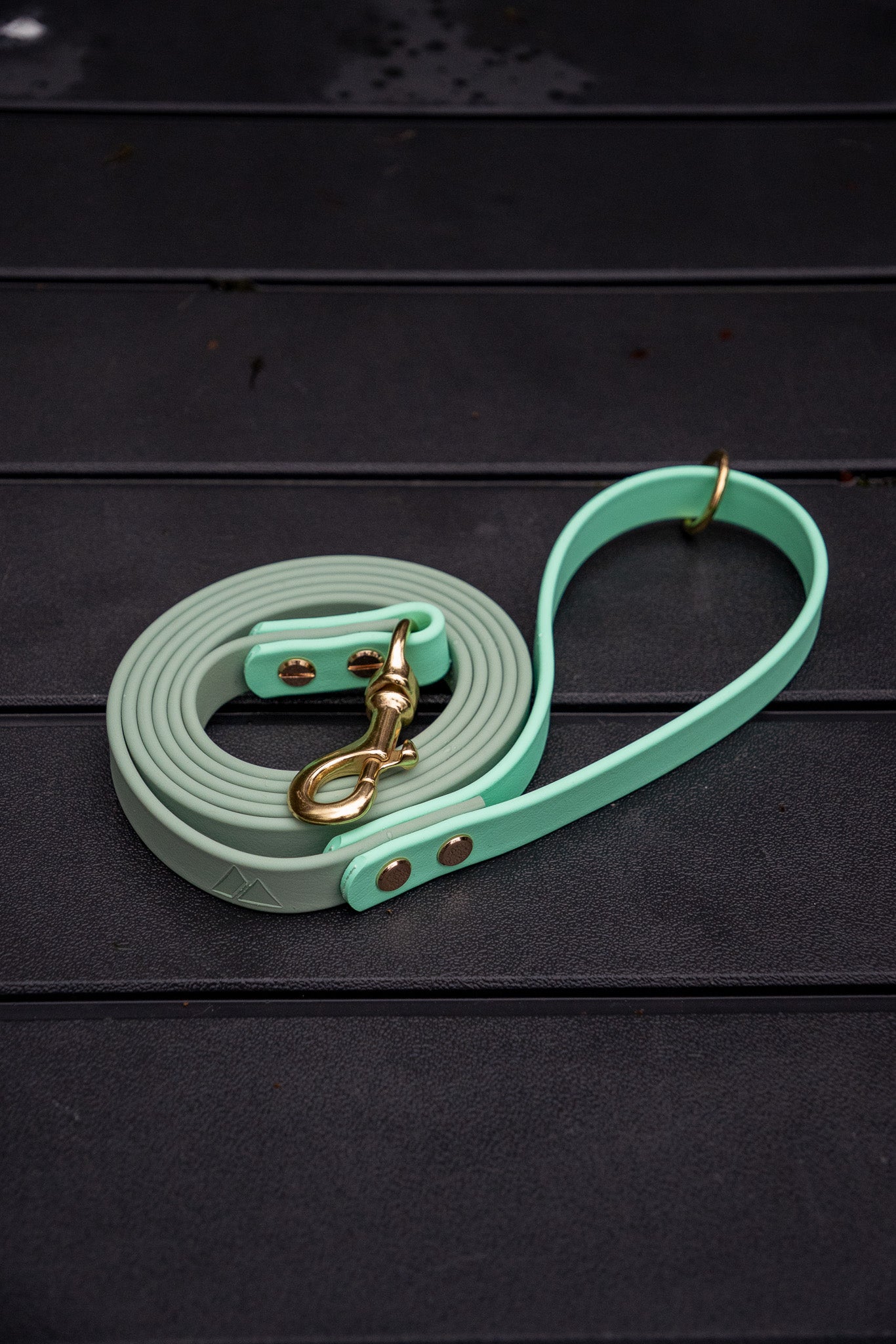
BioThane® is a branded coated-webbing material widely used in dog leashes, collars, and other outdoor equipment.
Unlike traditional climbing rope, which relies on exposed woven fibers, BioThane® has a protective polymer-coated surface over its internal webbing.
This construction gives BioThane® several practical characteristics:
- A smooth surface that is generally easy to wipe clean.
- Resistance to absorbing water through the coated surface.
- A consistent appearance after exposure to everyday dirt and mud.
- A flexible feel that doesn't require leather-style conditioning.
- A wide range of available colors and configurations.
BioThane® comes in different widths, thicknesses, and product styles, so not every BioThane® leash feels or performs identically.
At Bolder K9, our large-dog leash designs use 3/4-inch Super Heavy BioThane®, while other designs use different BioThane® formats.
This material is great for versatile owners. It transitions easily between walks, wet trails, and everyday training.
That doesn't make BioThane® indestructible. Hardware, connection points, and the webbing itself can still become damaged through misuse or wear.

3. Rope vs. BioThane®: Which Is More Durable?
Durability is often the first question people ask when comparing leash materials.
Climbing rope has a reputation for strength because properly manufactured climbing equipment is engineered for demanding applications.
But a climbing-rope dog leash isn't automatically stronger than a BioThane® leash.
The finished product's performance depends on several factors:
- The specific rope or webbing construction.
- Material dimensions and condition.
- The strength and suitability of the leash clip.
- How the handle and hardware connections are assembled.
- Exposure to abrasion, damage, and repeated use.
A leash made with strong rope can still have a weak connection point. The same is true of a BioThane® leash with unsuitable hardware.
Abrasion resistance
Rope and BioThane® respond differently to abrasive contact.
The woven outer sheath may develop fuzzing or fraying. This happens when dragged across rough surfaces.
BioThane® has a coated surface instead of a woven sheath. This makes surface damage easier to spot.
However, BioThane® can also be cut, scraped, or worn through. Its coating shouldn't be treated as protection against every form of abrasion.
Verdict: Neither material wins automatically on durability. Compare the exact construction and inspect the finished leash regularly.
4. Which Leash Handles Water and Mud Better?
This is one of the clearest practical differences between the two materials.
Climbing rope and moisture
Traditional nylon climbing rope can absorb water. This happens when protective treatments wear or the rope saturates.
A wet rope leash may feel heavier, hold dirt within its woven structure, and require more time to dry.
Polyester rope and specially treated cordage may behave differently, so these characteristics aren't universal to every rope leash.
For occasional outdoor use, that may not be a major inconvenience.
Does your dog run through wet grass or mud? Cleaning and drying may become part of your routine.
BioThane® and moisture
BioThane® has a coated surface that is generally easy to rinse or wipe down after exposure to water and mud.
Dirt is less likely to become embedded in exposed woven fibers because the surface is coated.
For many dog owners, that means less time cleaning gear after an outdoor adventure.
Metal clips and connection points still require attention, especially after exposure to saltwater, grit, or moisture.
Verdict: BioThane® has a practical advantage for frequent wet and muddy use, particularly when quick cleaning is a priority.
5. Which Material Is More Comfortable to Hold?
Comfort is more subjective than durability or cleaning.
How rope leashes feel
Climbing-style rope leashes have a rounded profile.
Some handlers appreciate the way that shape sits in their hand, especially when loosely holding or coiling the leash.
Depending on the rope diameter and weave, the surface may feel soft, firm, textured, or relatively smooth.
However, a rounded rope can concentrate pressure against a smaller area of the hand when pulled tightly.
How BioThane® feels
Traditional BioThane® webbing has a flat profile.
This provides a broad contact surface across the palm. Comfort depends on width, thickness, and how it is held.
Some people prefer the smooth feel of coated webbing, while others prefer the texture of woven rope.
Neither material should be wrapped tightly around fingers, hands, or wrists, particularly when handling a strong dog.
Verdict: Grip preference is personal. The best choice depends on the individual leash and how you handle it.
6. Rope vs. BioThane® for Large Dogs
Large dogs introduce an important consideration: the complete leash setup must be appropriate for the individual dog and intended activity.
It can be tempting to assume that a thick climbing-rope leash is inherently more suitable for a powerful breed.
But thickness and appearance don't tell the whole story.
A thick rope leash may have substantial cordage while still using a lightweight clip. A wide BioThane® leash may have heavy-duty hardware but unsuitable or damaged connections.
When choosing a leash for a large dog, evaluate the complete assembly rather than one component.
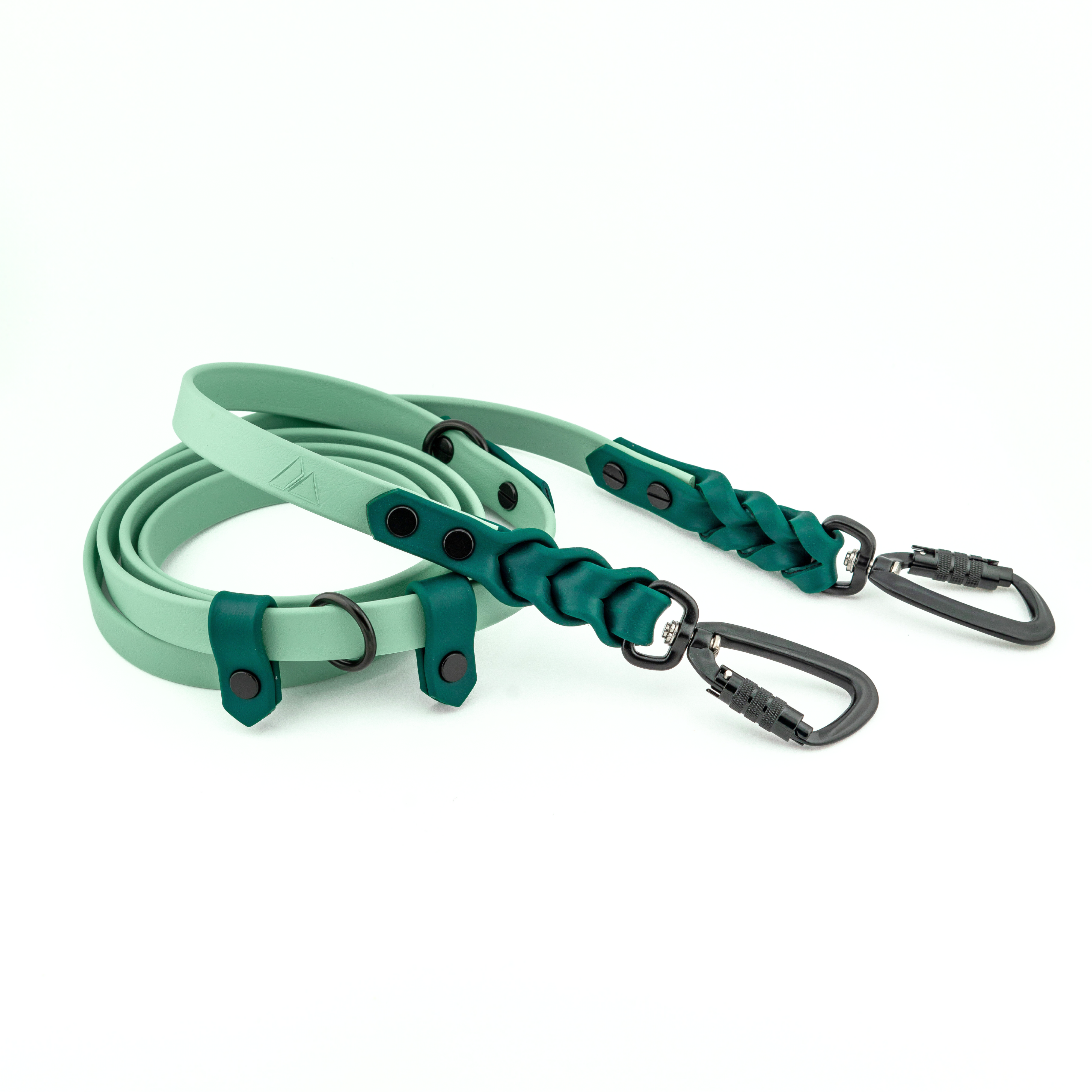
At Bolder K9, our featured large-dog leashes use 3/4-inch Super Heavy BioThane® and offer different hardware options.
These include bolt snaps, frog clips, and auto-locking carabiners, depending on the product configuration.
Choose a setup that matches your dog's behavior and environment. Do not simply pick the thickest leash.
For details on length and hardware, see our Best Dog Leashes for Large Dogs buyer's guide.
7. Which Leash Is Better for Hiking?
Hiking is one of the main reasons people consider climbing-rope leashes.
Their outdoor aesthetic, flexible construction, and variety of colors make them appealing for trail use.
But appearance doesn't necessarily predict how convenient a leash will be during an actual hike.
When climbing rope makes sense
A climbing-rope leash may be a good fit when you:
- Prefer a rounded, textured grip.
- Enjoy the flexibility of woven rope.
- Primarily hike in relatively dry conditions.
- Don't mind additional cleaning or drying when necessary.
When BioThane® makes sense
A BioThane® leash may be more practical when you:
- Frequently hike in wet or muddy conditions.
- Want a leash that can be wiped clean quickly.
- Prefer flat webbing over rounded rope.
- Want customizable lengths and hardware options.
For longer hikes, leash configuration matters too.
Convertible hands-free leashes can be convenient. However, they aren't always safest for dogs that pull or lunge.
The terrain, the dog's behavior, and the handler's ability to maintain balance all matter.
Verdict: For wet, muddy hiking, BioThane® is often the more convenient material. For dry conditions and handlers who prefer a rounded grip, climbing rope remains a reasonable option.
8. Which Material Is Easier to Clean?
This is an area where BioThane® offers a meaningful everyday advantage. Cleaning a rope leash involves rinsing the woven material. Then, allow sufficient time for it to dry.
The exact method depends on the rope manufacturer's care instructions and the leash's hardware.
BioThane® generally requires less involved surface cleaning.
After a muddy walk, you can usually rinse or wipe away dirt and allow the leash and hardware to dry.
This difference becomes especially noticeable for dogs that use the same leash several times a day.

9. Are Rope Leashes Cheaper Than BioThane®?
Pricing varies significantly across both categories.
Basic rope leashes may be inexpensive. Premium climbing-rope designs with specialty hardware can cost considerably more.
BioThane® leashes also range in price depending on material type, width, hardware, construction, and customization.
Instead of comparing price alone, consider what you're receiving.
Compare material quality, hardware, and connection methods. Also check lengths, maintenance, and if it is made to order.
The lowest purchase price isn't always the best long-term value, but a higher price doesn't automatically guarantee superior performance.
10. Is BioThane® Better Than Rope for Dog Training?
Both materials can work for training when the leash is appropriately selected and handled.
A standard leash is commonly used for loose-leash walking, engagement exercises, and everyday obedience work.
Long lines are useful for certain distance-training exercises, including recall practice in suitable environments.
For training around dirt, wet grass, and mud, BioThane®'s easy-clean surface can be particularly convenient.
Traditional rope may appeal to handlers who prefer a rounded grip or a particular degree of flexibility.
Neither material teaches the dog what to do.
Successful training depends on appropriate technique, timing, reinforcement, and environmental management.
The leash should support those efforts rather than becoming the focus of the training session.
11. Rope vs. BioThane®: Quick Comparison
| Feature | Climbing-rope leash | BioThane® leash |
| Construction | Typically braided synthetic rope | Coated webbing |
| Grip | Rounded, often textured | Flat and generally smooth |
| Water exposure | Depends on fiber and treatment; some absorb water | Coated surface resists water absorption |
| Mud cleanup | Dirt can collect in woven fibers | Usually easy to wipe or rinse |
| Abrasion | Sheath can fuzz or fray | Coating can scratch, cut, or wear |
| Flexibility | Varies by rope diameter and construction | Varies by webbing thickness and style |
| Maintenance | May require more thorough washing and drying | Generally simpler surface cleaning |
| Appearance | Traditional climbing-inspired style | Clean, streamlined appearance |
| Best fit | Handlers who prefer rope's feel and look | Handlers prioritizing easy maintenance and customization |
Frequently Asked Questions
Are climbing-rope dog leashes stronger than BioThane®?
Not necessarily. Strength depends on the specific material, construction, hardware, connections, and condition. A climbing-rope appearance doesn't establish the strength of a finished dog leash.
Are climbing-rope leashes waterproof?
Not all are. Some materials resist moisture better. Traditional woven rope can absorb water and require drying.
Does BioThane® fray like rope?
BioThane® has a coated surface, so it doesn't develop exposed-sheath fuzzing in the same way as traditional woven rope. However, cuts, damaged edges, and coating wear can still compromise the material.
Is BioThane® slippery when wet?
Grip depends on the particular BioThane® finish, the handler's hands, and environmental conditions. Don't assume any leash material maintains the same grip under every wet or muddy condition.
Are rope leashes good for dogs that pull?
A rope leash can be suitable for some dogs, but material alone doesn't address pulling. Hardware, leash fit, handling technique, and training are more important than whether the leash is rope or coated webbing.
Do climbing-rope dog leashes stretch?
Some nylon rope constructions have more elongation than others. However, climbing-rope stretch characteristics shouldn't be assumed to apply to every climbing-style dog leash. Check the actual cordage and finished product specifications.
Is BioThane® worth the extra money?
It can be, particularly if you value easy cleaning, wet-weather convenience, and customization. Whether it's worth the price depends on the specific product and how often you'll benefit from those features.
Final Verdict: Are Rope Dog Leashes Actually Better Than BioThane®?
Climbing-rope dog leashes aren't inherently better than BioThane® leashes.
They offer a distinctive rounded grip, flexible construction, and an outdoor-inspired appearance that many dog owners appreciate.
BioThane® offers a different set of advantages, particularly when it comes to moisture exposure, easy cleaning, and everyday maintenance.
Some prefer dry sidewalks and the feel of climbing rope. For them, a rope leash is excellent.
Do you deal with rain, mud, and hiking trails? BioThane® is often the more practical option.
At Bolder K9, we build customizable BioThane® leashes. We value gear that is practical and adaptable.
Switching from climbing rope? Explore our BioThane® Dog Leash Collection to compare designs and hardware.
Ultimately, the best leash isn't determined by whether it's made from rope or BioThane®. It's the one with the right construction, fit, and handling characteristics for you and your dog.
Be sure to check out Bolder K9 on Instagram!