A long line gives you one of the most useful things you can have when teaching recall: distance without giving up control of the environment.
Your dog gets room to move, sniff, explore, and make choices farther away from you, while you maintain a physical connection if the recall isn't ready for off-leash freedom.
But the goal isn't to say “come” and use 30 feet of leash to reel your dog back.
When teaching recall, the long line should primarily give you a way to manage the environment while your dog learns that hearing the recall cue, turning away from what they're doing, and returning to you is worth it.
Start where success is easy. Reward the return. Gradually increase distance and distractions. If the behavior starts falling apart, reduce the difficulty instead of repeating the cue louder.
Here's how to do it.
What Does a Good Recall Actually Look Like?
Recall is more than a dog eventually wandering back in your direction.
A useful recall has several pieces:
- Your dog hears the cue.
- Your dog disengages from what they're doing.
- Your dog turns toward you.
- Your dog returns all the way to you.
- Your dog finishes close enough for you to regain physical control if needed.
That last step matters.
A dog that runs toward you, grabs a treat from an outstretched hand, and immediately takes off again may understand part of the exercise, but that's not always enough for a practical real-world recall.
For most pet dogs, the finish doesn't need to be complicated. Returning close enough for you to calmly take the collar, harness, or line can be perfectly functional.
The important part is defining what “come” means from beginning to end.
Why Use a Long Line for Recall Training?
Recall is usually easy when there's nothing better to do.
Inside your house, your dog may only be a few feet away. Distractions are limited. You may already have their attention.
Outside is different.
Now you're competing with:
- Wildlife
- Other dogs
- People
- Movement
- New smells
- Water
- Trails
- Food on the ground
- Interesting patches of grass
- The freedom to explore
A long line bridges the gap between a short everyday leash and complete off-leash freedom.
It lets you practice recall at meaningful distances without betting your dog's safety on a behavior that isn't finished yet.
That's an important mindset shift:
Recall training shouldn't constantly test whether your dog will come back. Training should create situations where you can successfully teach them to come back.
Teach the Behavior Before Adding Distance
Don't make the middle of a 30-foot field the first place your dog learns what “come” means.
Start somewhere easier.
That might be:
- Inside your home
- In your yard
- In a fenced area
- In a quiet training space
- Outdoors with very few distractions
At first, you don't need much distance.
Move away from your dog and encourage them to follow. When they commit to moving toward you, reward them when they reach you.
Your reward could be:
- Food
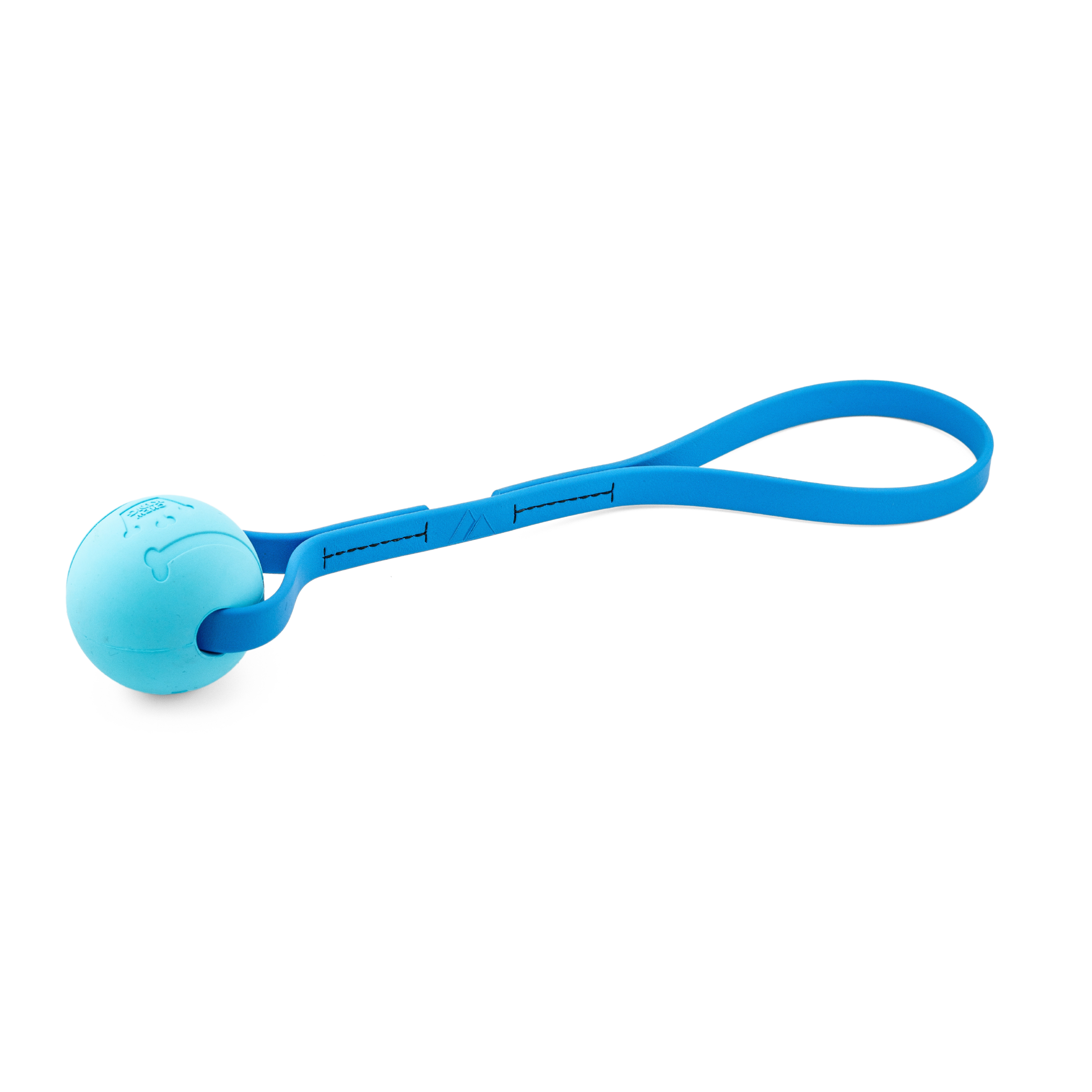
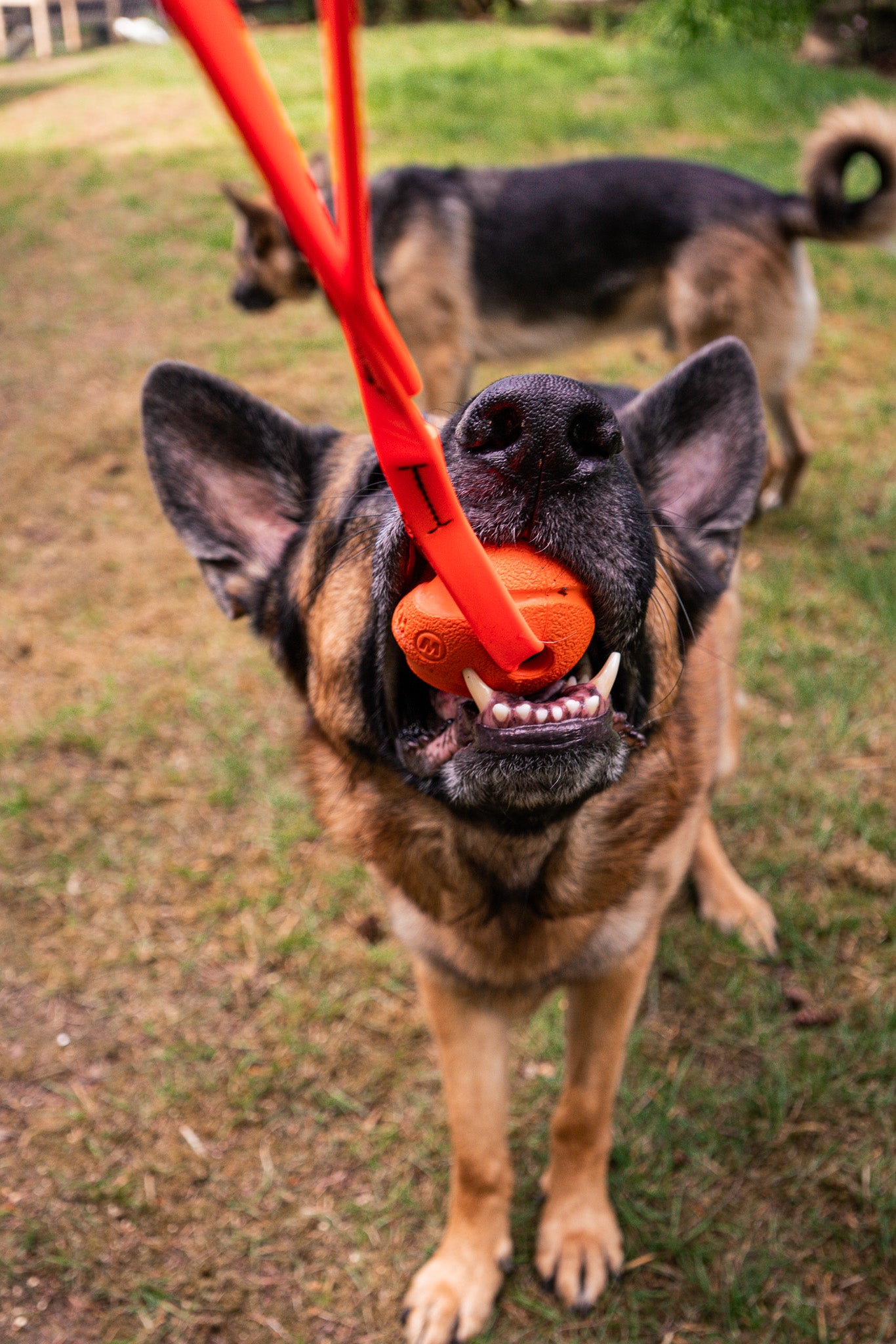
- Tug
- A favorite toy
- A ball
- Praise and interaction
- Access to something the dog wants
Food is convenient because it's fast and easy to repeat. For dogs that strongly value toys, a short game of tug or another form of play can be an extremely powerful reward.
The important question isn't what you think should motivate your dog.
It's what your dog actually values.
Build Value for Returning to You
A strong recall isn't only about teaching the meaning of a word.
You also want your dog to develop a history of good things happening when they return.
That doesn't mean every recall needs a huge reward forever. But while you're building the behavior, there's little reason to be stingy.
Your dog is often giving something up when you call them.
Maybe it's a smell.
Maybe it's another dog.
Maybe it's the direction a squirrel disappeared.
Maybe it's simply the freedom to explore.
The more difficult the choice, the more you should think about the value of what you're offering in return.
A piece of regular kibble may be exciting in your kitchen and completely irrelevant in a field full of interesting smells.
Reward value should match the difficulty of the exercise.
Put the Recall Cue on a Behavior Your Dog Understands
One common mistake is introducing the word too early.
The handler says:
“Come.”
Nothing happens.
“Come!”
Still nothing.
“Come! Come! COME!”
Now the dog has practiced hearing the cue several times without responding.
Early in training, it's often cleaner to create the movement first.
Encourage the dog toward you. As the dog starts to understand the pattern, introduce your recall cue when you're reasonably confident the dog is going to perform the behavior.
Over time, the sequence becomes:
Recall cue → turn toward handler → return → finish → reward.
Once that pattern is clear in an easy environment, you're ready to start using the long line to increase difficulty.
How to Use a Long Line for Recall Training: Step by Step
Step 1: Choose the Right Training Environment
Start somewhere boring.
That may sound strange, but boring is useful when you're teaching a new behavior.
A field with squirrels, loose dogs, kids playing soccer, and a pond full of ducks may be a great place to test an established recall.
It's a terrible place to introduce one.
Look for an open area with enough room to work without the line constantly catching around:
- Trees
- Posts
- Picnic tables
- Brush
- People
- Other dogs
Also check the rules where you're training. Some public spaces regulate leash length even when the dog remains physically attached.
Step 2: Don't Use the Entire Line Yet
A 30-foot long line doesn't mean your dog needs to start 30 feet away.
Begin closer.
Five or ten feet may be plenty.
Let your dog move around and explore. When they're in a situation where you have good reason to believe they can respond, give the recall cue once.
Then help make the correct choice easy.
Move backward.
Create movement.
Use your body language.
Encourage the dog toward you without repeating the cue over and over.
When the dog reaches you, reward.

Step 3: Reward the Entire Return
Don't rush to deliver the reward while your dog is still several feet away.
Teach the dog to come all the way in.
You may choose to briefly take the collar or harness before delivering the reward. That can make being physically secured a normal part of the recall rather than something the dog learns to avoid.
A practical sequence might look like:
Cue → dog returns → handler takes collar → reward → release.
Keep it smooth and positive.
You're not trying to trap the dog.
You're teaching that coming close and allowing the handler to regain control is part of the behavior.
Step 4: Let the Long Line Be Backup
Whenever possible, the line should remain loose while your dog performs the recall.
You want the dog responding to your cue—not waiting until they feel leash pressure before turning around.
If your dog ignores the cue, don't immediately turn the exercise into a tug-of-war.
Use the line to keep control of the situation while you evaluate what went wrong.
Ask yourself:
Was the distraction too difficult?
Was the dog too far away?
Was the dog already deeply engaged with something?
Was the reward valuable enough?
Have we actually trained this level yet?
Then reset and make the next repetition easier.
The long line gives you the ability to make mistakes without giving your dog unrestricted freedom to leave.
That's one of its biggest advantages.
Step 5: Increase Distance Gradually
Once the recall is consistent at short distances, start adding space.
For example:
5 feet → 10 feet → 15 feet → 20 feet.
Those aren't mandatory milestones. The point is simply to progress gradually.
Don't assume that because you bought a 30-foot line, you need to get to 30 feet in one session.
Watch the dog's behavior.
If the response remains fast and confident, keep progressing.
If the recall suddenly gets slow, inconsistent, or nonexistent, you've probably increased difficulty too quickly.
Move closer and rebuild.
Step 6: Add Distractions Separately
Distance isn't the only thing that makes recall difficult.
Distractions matter just as much—often more.
A dog may easily recall from 30 feet in an empty field but struggle to recall from eight feet away from another dog.
That's normal.
When you increase one form of difficulty, consider reducing another.
For example:
Low distraction + greater distance
can become:
Higher distraction + shorter distance.
Once the dog understands the exercise around the new distraction, build distance again.
This is much more productive than continually placing your dog in situations where the recall is unlikely to succeed.
Calling Away vs. Calling Off a Distraction
There's another useful distinction when you start adding distractions.
Calling away means your dog notices something interesting but hasn't fully engaged with it.
Calling off means your dog is already actively engaged with that thing.
Those can be very different levels of difficulty.
Imagine your dog sees a ball sitting 20 feet away.
That's one exercise.
Now imagine your dog is already chasing or playing with the ball and you call them away from it.
That's a much harder exercise.
The same principle applies to smells, wildlife, food, other dogs, and environmental distractions.
Don't start with the hardest version.
Teach your dog to successfully turn away from manageable distractions first. Then gradually work toward recalling from stronger engagement.
Use the Environment as a Reward
Food and toys aren't your only options.
Sometimes what your dog wants most is to go back to exploring.
Use that.
Your dog is sniffing.
You call.
The dog returns.
Reward.
Then release them:
“Go sniff.”
Now the dog gets access to the environment again.
This can be extremely useful because recall stops predicting that freedom is about to end.
Think of the sequence as:
Come → reward → release → return to exploring.
You're teaching your dog that responding to you doesn't necessarily mean losing whatever they were enjoying.
Don't Make Recall Mean “The Fun Is Over”
Imagine this from your dog's perspective.
Every time you hear “come”:
You return.
The leash gets shortened.
You get put in the car.
You leave the park.
Eventually, that cue becomes a pretty reliable predictor that something enjoyable is about to end.
That's not the association we want.
Practice recalls throughout walks and training sessions where nothing ends.
Call your dog.
Reward.
Release them.
Continue walking.
Call again later.
Reward.
Go explore.
You can still use recall when it's time to leave. Just don't make that the only time your dog hears it.
What Length Long Line Is Best for Recall Training?
For many dogs and handlers, 15–30 feet is a useful range for recall work.
| Long Line Length | Best For | Main Consideration |
| 10–15 feet | Beginners, early recall work, smaller areas | Easier to manage but provides less distance |
| 20 feet | General recall training | Good balance between distance and handling |
| 30 feet | Building greater distance in open areas | Requires better line management |
| 40+ feet | Specialized distance work | Considerably more line and potential speed to manage |
Longer isn't automatically better.
A longer line gives your dog more freedom, but it also gives you more material to manage.
More importantly, a dog can potentially build considerably more speed across 30 or 40 feet than across 10 feet.
If you're new to long-line handling, start shorter.
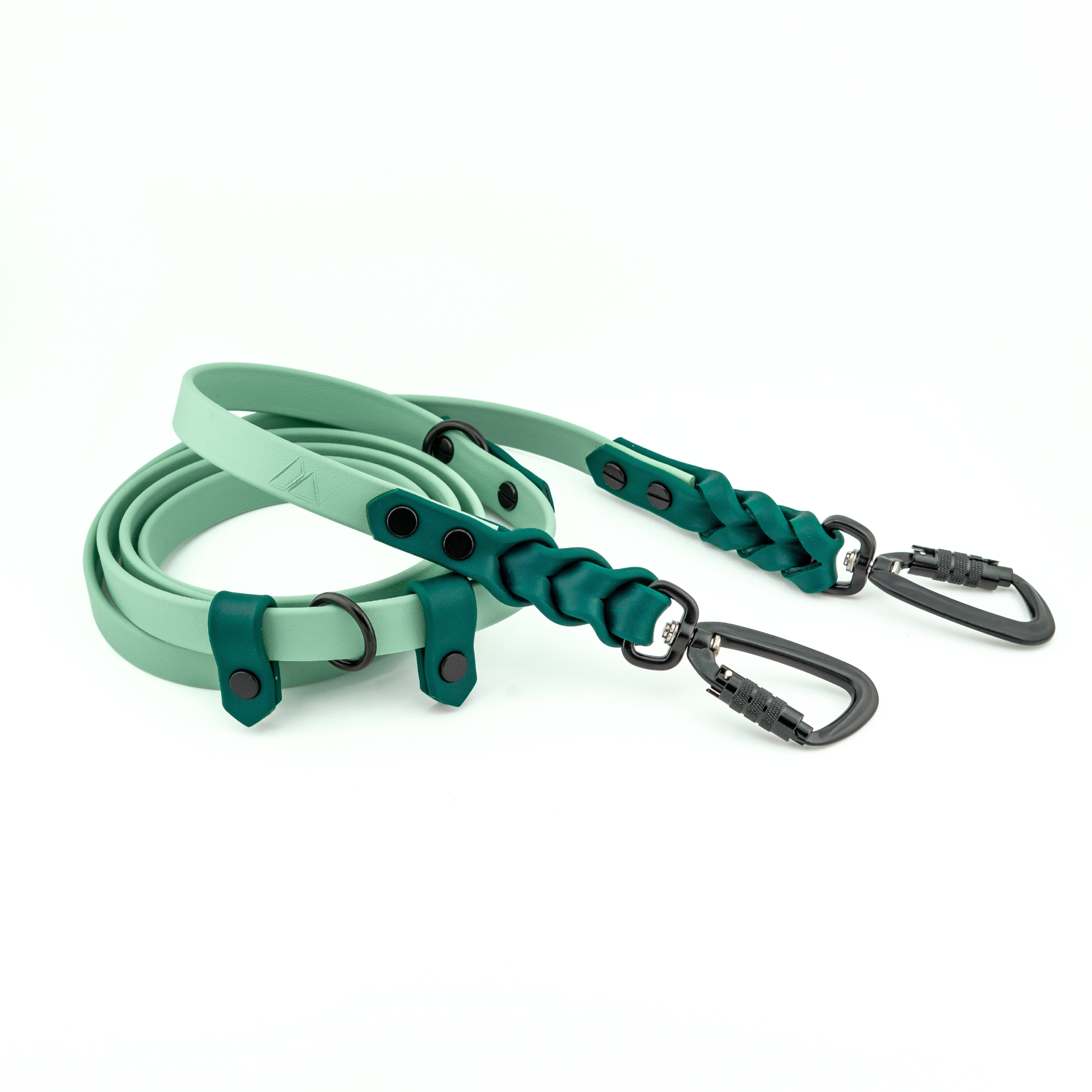
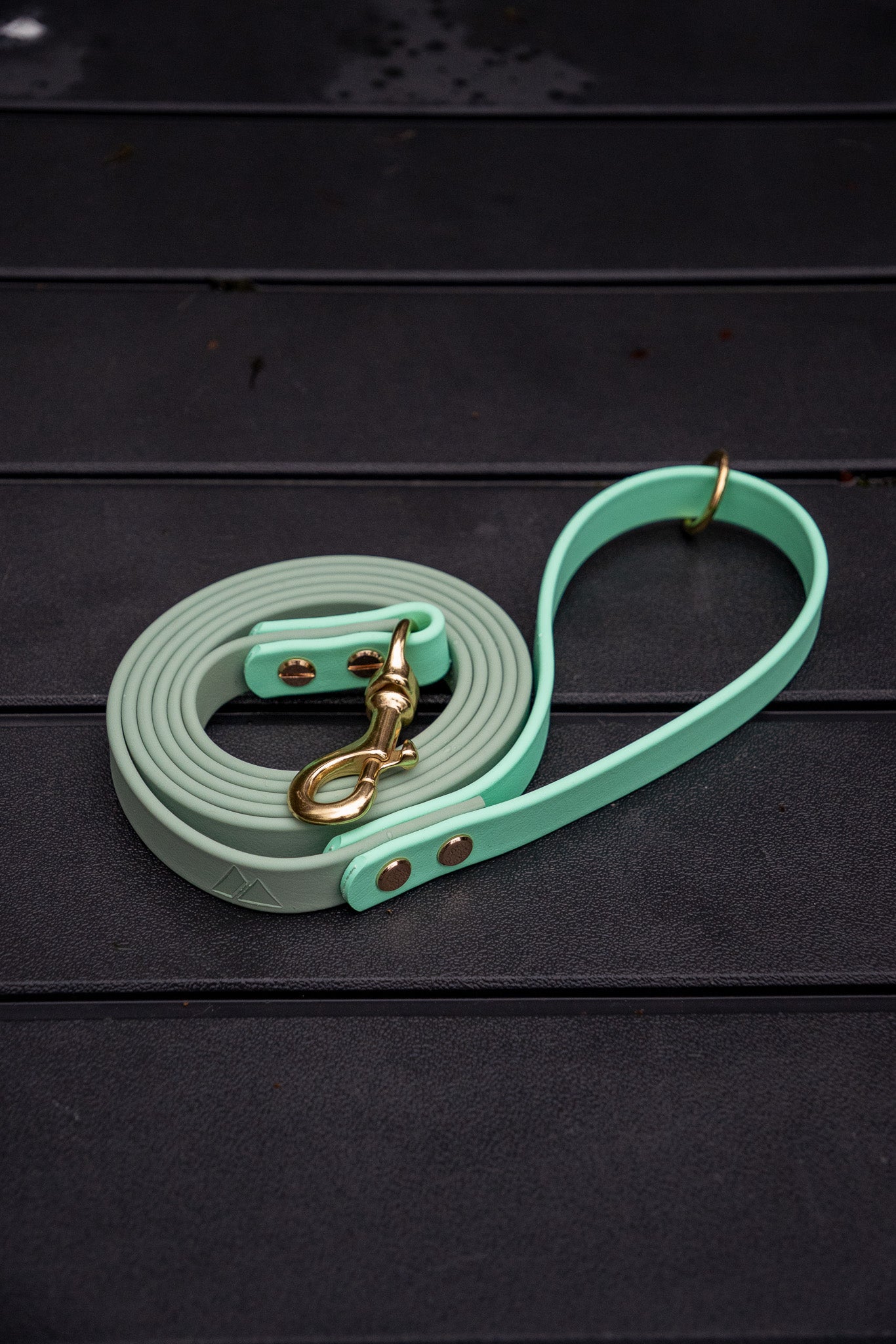
Bolder K9's BioThane® Long Lines give dogs working distance without using an absorbent fabric line that becomes increasingly unpleasant after dragging through wet grass, mud, or snow.
How to Handle a Long Line Safely
Long-line handling is a skill of its own.
Don't wrap the line around your hand, fingers, wrist, or body.
Instead, manage excess line in loose sections that you can feed out or take in as your dog moves.
Stay aware of where the line is.
Avoid letting it wrap around:
- Your legs
- Your dog's legs
- Another person
- Another dog
- Trees
- Posts
- Brush
Also avoid allowing a dog to repeatedly accelerate to full speed and slam into the end of the line.
The long line should give you training distance—not function as an emergency braking system.
Our Dog Long Line Guide goes deeper into choosing lengths, applications, materials, and handling considerations.

Should You Attach a Long Line to a Collar or Harness?
For recall exercises where a dog may move quickly or unexpectedly reach the end of the line, many handlers choose a well-fitted harness so unexpected force isn't concentrated at the dog's neck.
The appropriate setup depends on the individual dog, equipment, environment, and exercise.
Regardless of the attachment point, your training should be designed to avoid repeatedly letting the dog build speed and hit the end of the line.
If that's happening often, change the setup.
Reduce distance.
Improve line management.
Choose an easier environment.
The goal is to teach recall—not repeatedly stop the dog at the end of the equipment.
What If Your Dog Doesn't Come?
First, don't immediately assume your dog is being stubborn.
Look at the situation.
There are several possible reasons:
The dog doesn't fully understand the cue.
Go back to an easier environment and strengthen the basic behavior.
The distraction is too difficult.
Create more distance from it.
You're working too far away.
Shorten the working distance.
Your reward isn't competitive enough.
Use something the dog values more.
The dog is too engaged with the environment.
Work on calling away from easier distractions before expecting the dog to disengage from intense ones.
You've progressed too quickly.
Go back a step.
Training isn't always a straight line.
Making an exercise easier isn't failure. It's how you get cleaner repetitions.
Don't Repeat the Cue Over and Over
If you want “come” to mean something specific, avoid turning it into background noise.
Ideally:
Say the cue once.
If the dog responds, complete the repetition and reward.
If the dog doesn't respond, use your long line to maintain control and adjust the training setup.
Repeating the cue louder doesn't necessarily make the dog understand it better.
Often, it simply tells you the exercise was harder than the dog's current training could support.
Testing vs. Training
This is one of the most useful distinctions you can make with recall.
Testing sounds like:
“There's a deer over there. Let's see if he'll come back.”
Training sounds like:
“My dog can recall consistently around mild distractions, so I'm going to set up a slightly harder repetition while I still have control of the situation.”
Testing asks whether the behavior survives a challenge.
Training systematically prepares the behavior for that challenge.
You eventually need to find out what your recall can handle—but don't make every session an experiment at the edge of failure.
Build the behavior first.
How Do You Know When to Make Recall Harder?
Don't progress because you've completed a certain number of training sessions.
Progress because the behavior tells you it's ready.
Look for:
- Quick orientation after the cue
- Confident movement toward you
- Consistency at the current distance
- Ability to disengage from manageable distractions
- Willingness to come all the way in
- Comfort with being briefly secured
- Enthusiasm about returning
When those pieces look strong, change one variable.
Increase distance.
Or add a distraction.
Or change environments.
Then evaluate again.
If performance drops dramatically, you've learned something useful.
The new version was too difficult.
Common Long-Line Recall Mistakes
Reeling the Dog In
If every recall ends with the handler pulling the dog back, you're not getting much information about the dog's response to the recall cue.
Use the long line to manage the environment while you teach the dog to return.
Going Too Far Too Fast
Thirty feet isn't better than ten feet if your dog can't perform the behavior at 30.
Earn distance gradually.
Repeating the Recall Cue
Avoid giving your dog repeated opportunities to hear the cue without responding.
Using the Same Reward Everywhere
The environment changes.
Reward value may need to change with it.
Only Calling When Freedom Ends
Practice plenty of recalls where your dog gets released back to whatever they were enjoying.
Using Too Much Line
Good handling of 15 feet is better than poor handling of 30.
Starting Around Major Distractions
Build the skill before asking the dog to perform around its strongest competing interests.
Confusing Management With Training
The long line prevents your dog from leaving.
That alone doesn't teach recall.
The teaching comes from building a clear behavior, reinforcing successful returns, and gradually increasing difficulty.
When Can You Stop Using the Long Line?
There isn't a magic number of successful recalls that makes a dog ready for off-leash freedom.
You're looking for a strong history of success across:
- Different distances
- Different environments
- Different distraction levels
- Different times of day
- Different types of competing interests
Even then, recall ability is only one part of deciding whether a dog should be off leash.
You also need to consider:
- Local leash laws
- Roads
- Wildlife
- Other dogs
- Other people
- Terrain
- Visibility
- The individual dog's tendencies
- Whether off-leash dogs are actually permitted
A good recall doesn't make every environment an appropriate place to remove the leash.
And there's nothing wrong with continuing to use a long line.
For many dogs, a long line provides an excellent middle ground: considerably more freedom to explore while maintaining a physical connection to the handler.
Long-Line Recall Training FAQ
What length long line should I use for recall training?
For many dogs and handlers, 15–30 feet works well. Beginners may find a 10–15-foot line easier to manage before progressing to longer distances.
Should I pull my dog toward me with the long line?
When you're teaching the recall behavior, the goal is for your dog to respond to the recall cue rather than depend on being pulled back. Use the line primarily to manage the environment while you adjust the exercise to a level your dog can successfully perform.
What should I reward my dog with for coming?
Use something your dog genuinely values. Food, tug, toys, play, praise, and access back to the environment can all work. The harder the recall, the more important reward value becomes.
Should I reward my dog every time they come?
During the teaching phase, frequent reinforcement helps build a strong history around returning to you. As the behavior becomes established, how and when you reinforce can evolve, but there's little benefit in rushing to make a new recall less rewarding.
How many times should I say “come”?
Aim to give your trained recall cue once. If your dog consistently doesn't respond, reduce the difficulty rather than practicing repeated ignored cues.
Can I use tug for recall training?
Yes. For a dog that strongly values tug, a short game can be an excellent recall reward. The important part is using a reward that is genuinely valuable to the individual dog.
Should I let my dog drag the long line?
A dog can drag a long line in certain controlled training situations, but doing so creates snagging and entanglement risks. Consider the terrain, dog, line length, and exercise carefully, and supervise the dog.
Can I practice recall around other dogs?
Eventually, yes, if that's relevant to your goals. But don't start there if other dogs are a major distraction. Build the recall around easier distractions first, then progressively work at safe distances where your dog can still perform successfully.
Does using a long line guarantee a reliable recall?
No. A long line is a training and management tool. Recall becomes stronger through clear teaching, reinforcement, gradual increases in difficulty, practice in different environments, and continued maintenance.
The Bottom Line
The biggest advantage of a long line isn't that it gives you a way to physically bring your dog back.
It's that it gives you enough freedom to teach a realistic recall without gambling on an unfinished behavior.
Start close.
Teach the behavior clearly.
Make returning to you worthwhile.
Give the cue once.
Reward the complete return.
Sometimes release your dog right back to exploring.
Then gradually increase distance, distractions, and environmental difficulty.
If the recall starts falling apart, don't just get louder or add more distance. Look at what changed and make the exercise easier enough for your dog to understand it again.
That's the difference between constantly testing a recall and actually building one.
The long line provides the safety net. The training builds the behavior.