If you’ve been shopping for a dog leash, collar, long line, or training gear, you’ve probably come across BioThane®. It has become especially popular with dog trainers, working-dog handlers, hikers, and owners who are tired of dealing with wet, muddy, smelly gear.
But what actually is BioThane—and is it really better than nylon, leather, or rope?
BioThane® is a brand of coated webbing made with a polyester webbing core and a protective TPU or PVC coating. For dog gear, that combination creates a waterproof, easy-to-clean material that works particularly well for leashes, collars, long lines, and other equipment exposed to dirt, water, and frequent use.
That doesn't automatically make BioThane the best material for every dog, handler, or situation. The material is only one part of a well-built piece of gear. Width, hardware, construction, fit, and intended use matter too.
Here's what you should know before deciding whether BioThane belongs in your dog's gear setup.
What Is BioThane®?
BioThane® isn't a generic name for waterproof dog-leash material. It is a registered brand of coated webbing manufactured by BioThane Coated Webbing Corp.
At its core is woven polyester webbing. That webbing is coated with a protective polymer such as TPU or PVC, depending on the specific BioThane product.
Think of the webbing as the structure of the material and the coating as its protective outer surface.
That construction gives genuine BioThane several qualities that make it particularly useful for dog gear:
- It does not absorb water like woven fabric.
- Mud and dirt are generally easy to rinse away.
- It doesn't hold odor the way absorbent materials can.
- It is available in different widths, thicknesses, textures, and colors.
- It stays relatively easy to maintain despite regular outdoor use.
- It can provide the structure needed for durable dog equipment when paired with appropriate hardware and construction.
One important distinction: not every piece of colorful coated webbing sold as "waterproof dog gear" is genuine BioThane®.
BioThane is the brand name of the material—not the generic category.
Why Is BioThane So Popular for Dog Gear?
The simple answer is that dogs are hard on equipment.
Leashes get dragged through wet grass. Long lines end up in mud. Collars go swimming. Training gear gets dropped on the ground. Adventure gear gets covered in sand, snow, dirt, slobber, and whatever else your dog finds interesting.
Materials that absorb moisture can become heavier when wet, take longer to dry, collect grime within their fibers, and eventually develop odor.
BioThane largely removes that part of the equation.
If a BioThane leash gets muddy, you usually don't need to put it through the washing machine or wait hours for it to dry. Rinse the strap, use mild soap when necessary, wipe it down, and pay attention to drying the hardware.
That sounds like a minor convenience until you're using the same equipment every day.
For active dogs and handlers, low maintenance becomes a meaningful feature.

BioThane filled that gap. Eventually, dog trainers discovered it was perfect for training leads and tracking lines.
From there, hunters, search-and-rescue teams, service dog handlers, sport dog competitors, and eventually everyday pet owners began adopting it.
Today, BioThane is widely considered one of the premium materials for high-performance dog gear.
BioThane vs Nylon vs Leather vs Rope
There isn't one universally "best" leash material. The better question is which material fits the way you actually use your dog's gear.
| Material | Water Exposure | Cleaning | Maintenance | Hand Feel | Best Fit |
| BioThane® | Does not absorb water | Usually easy to rinse or wipe clean | Low | Smooth; texture varies by product | Wet weather, training, hiking, daily use |
| Nylon | Can absorb moisture | May require washing | Low | Lightweight; woven texture | Budget-friendly everyday gear |
| Leather | Requires more care around repeated moisture | More involved | Higher | Softens and develops character with use | Handlers who prefer traditional leather feel |
| Rope | Depends on rope construction | Can hold dirt within fibers | Varies | Flexible and easy to gather | Slip leads and handlers who prefer rope feel |
Is BioThane better than nylon?
BioThane is often the more practical choice when water, mud, odor, and easy cleaning are priorities.
Nylon still has advantages. It is widely available, generally inexpensive, and can be very lightweight. For an owner whose dog mostly takes dry neighborhood walks, a basic nylon leash may do everything they need.
The difference becomes more noticeable when gear is constantly getting wet or dirty.
For a deeper comparison, our BioThane® vs. nylon guide breaks down where the two materials differ in real-world use.
Is BioThane better than leather?
That depends heavily on what you value.
A quality leather leash has a hand feel and appearance that BioThane isn't trying to duplicate perfectly. Properly maintained leather can also last a very long time.
The tradeoff is maintenance.
If you're regularly hiking in rain, walking through mud, training in wet grass, or taking a dog swimming, BioThane is considerably simpler to live with because the strap itself doesn't need leather conditioning or extended drying.
What about rope?
Rope remains useful for certain leash designs, particularly slip leads. It's flexible, easy to gather, and many handlers like the way it feels.
But woven rope can collect dirt and moisture in ways coated webbing doesn't.
The right choice isn't about declaring one material universally superior. It's about matching the material to the job.
Is BioThane Actually Waterproof?
Yes. Genuine BioThane® coated webbing is waterproof.
That means the webbing material itself does not soak up water the way nylon, cotton, or other absorbent woven materials can.
But there's an important distinction when we're talking about complete dog gear:
A waterproof strap does not make every component of a leash or collar maintenance-free.
Your leash may also contain:
- Snaps
- Rings
- Buckles
- Rivets
- Screws
- Stitching
- Other connection points
Those components can still collect sand, grit, salt, moisture, and debris.
This matters especially after saltwater, muddy hikes, repeated swimming, or winter walks on treated roads.
Rinse the complete piece of gear when necessary and dry the hardware instead of assuming "waterproof" means you can throw a wet leash into the back of the car indefinitely.
Is BioThane Strong?
BioThane can be an excellent material for strong dog gear, but the word BioThane alone doesn't tell you how strong a finished leash or collar is.
This is one of the most important things we want dog owners to understand.
A leash is a system.
Its real-world performance depends on:
- The specific BioThane webbing
- Webbing width and thickness
- The snap or connector
- Rings and other hardware
- How connection points are constructed
- Stitching or fasteners
- Wear and damage
- How the equipment is being used
You can start with excellent webbing and still build mediocre equipment around it.
That's why we recommend looking beyond material claims when comparing dog gear.
Ask what kind of hardware you're getting. Look at connection points. Choose an appropriate width for your dog and use case. Inspect equipment periodically instead of assuming that any leash is permanent simply because it was built from a durable material.
Durable does not mean indestructible.
And BioThane is not chew-proof. A determined dog can damage or chew through coated webbing, just as dogs can damage many other leash and collar materials.
What Is BioThane Best Used For?
BioThane really earns its keep in situations where gear gets used hard or gets dirty frequently.
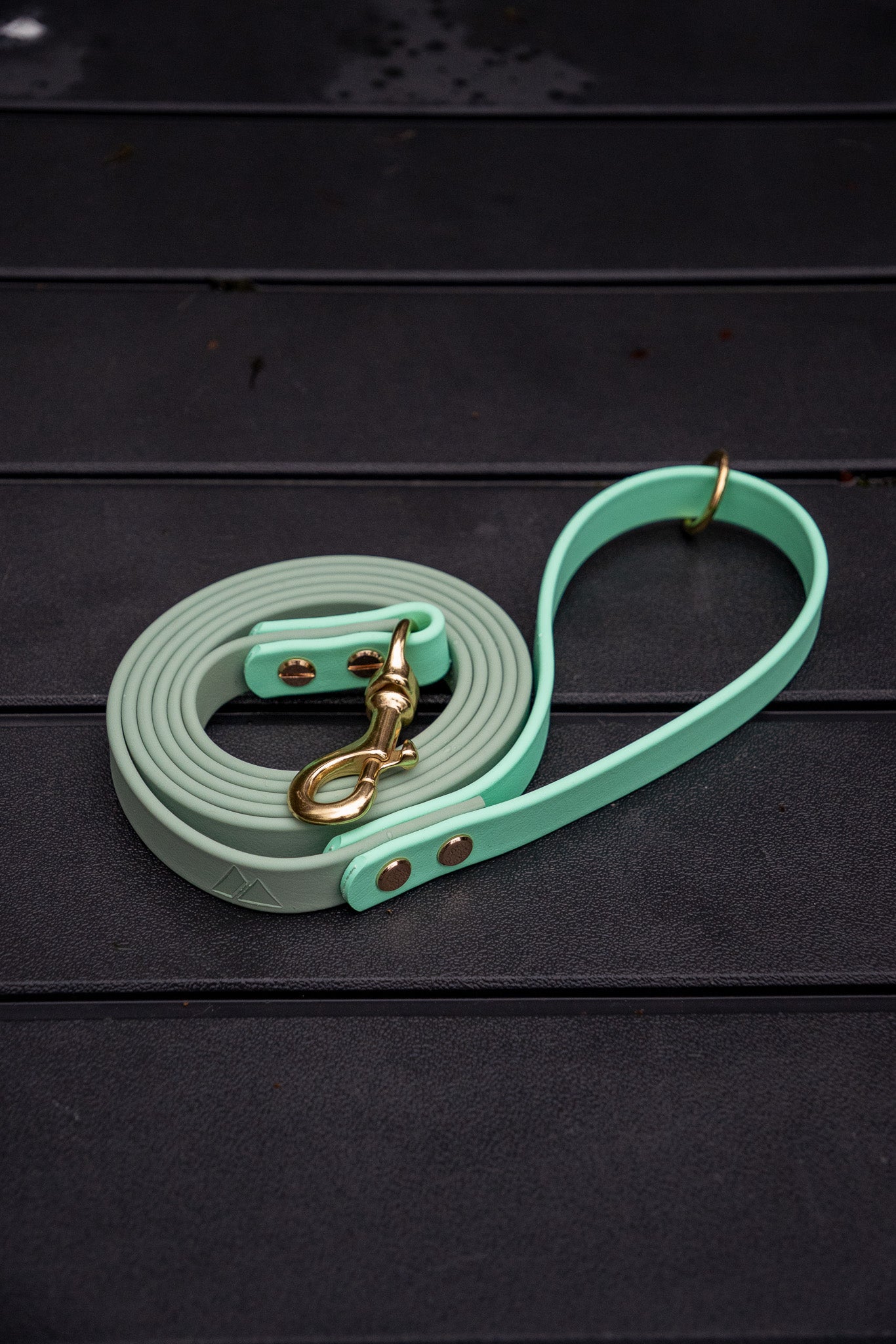
Everyday Dog Leashes
For everyday walking, BioThane offers a simple advantage: it's easy to maintain.
Rainy walk? Wipe it down.
Mud? Rinse it.
Dog steps on the leash with dirty paws? Usually not a big project.
For someone buying their first piece of BioThane gear, a standard leash is often the easiest place to start.
Long Lines
This is one of our favorite applications for coated webbing.
A long line is practically designed to get dirty. It may move across wet grass, dirt, sand, snow, and muddy ground during recall work, decompression walks, tracking, or other distance exercises.
An absorbent 20- or 30-foot line can become unpleasant to handle once it gets saturated.
BioThane avoids much of that problem because the strap doesn't soak up the water.
The tradeoff is that longer isn't automatically better. Longer lines mean more material to manage, and the correct length depends on the exercise, environment, dog, and handler experience.
Dog Collars
BioThane also makes sense for dogs whose collars regularly get wet or dirty.
That can include dogs that:
- Swim frequently
- Hike
- Train outdoors
- Live in rainy climates
- Spend time around mud or snow
- Simply have a talent for getting filthy
The wipe-clean surface makes routine collar maintenance straightforward.
Fit still matters more than material. A waterproof collar that doesn't fit correctly isn't the right collar.
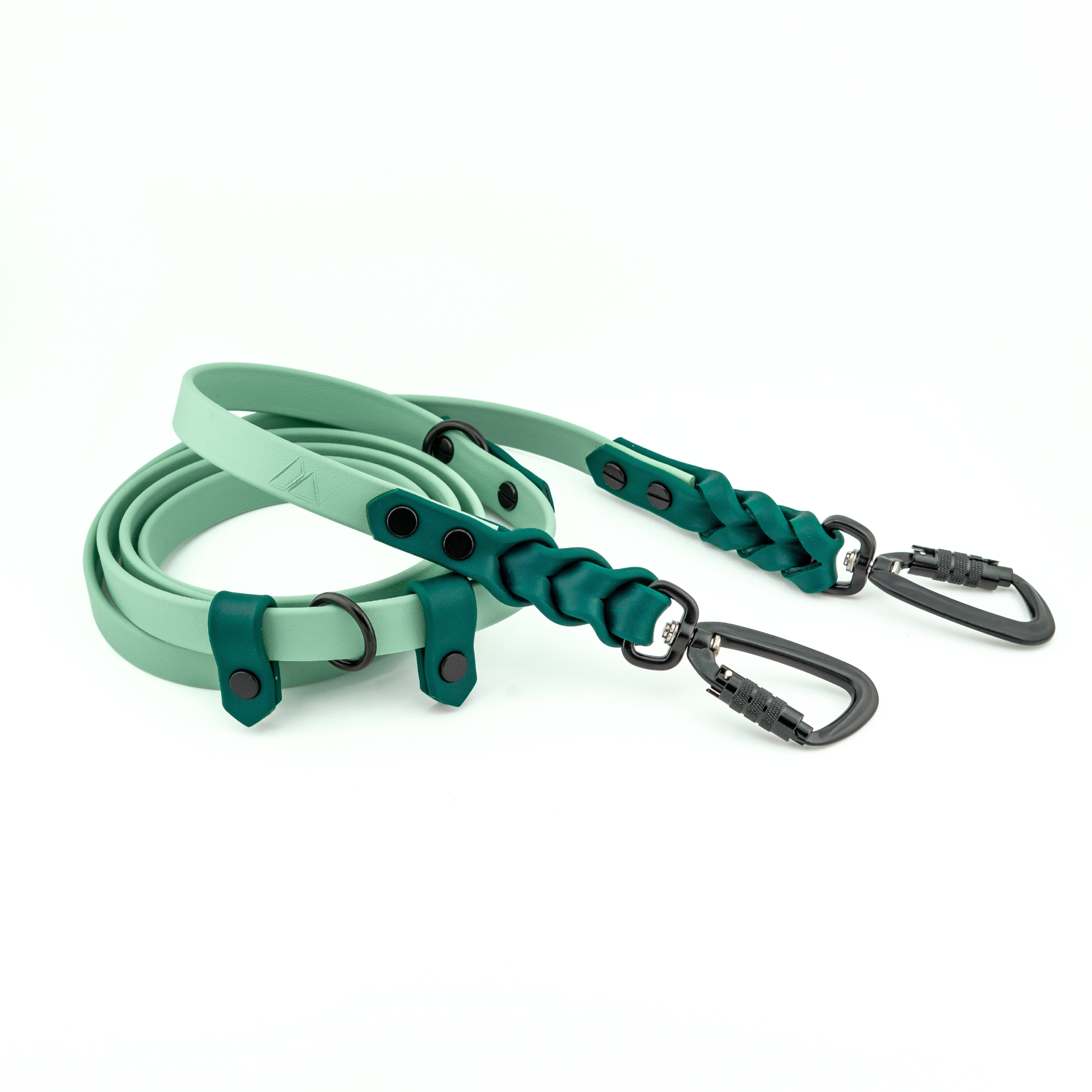
Hands-Free Leashes
BioThane works well in adjustable and convertible leash designs because it can handle outdoor exposure without absorbing moisture.
For hiking, walking, and other activities where hands-free handling makes sense, it can be a useful combination.
Hands-free isn't automatically appropriate for every dog, though. Dogs that pull hard, lunge, or create sudden force may be better handled with a standard handheld leash that gives the handler more direct control.
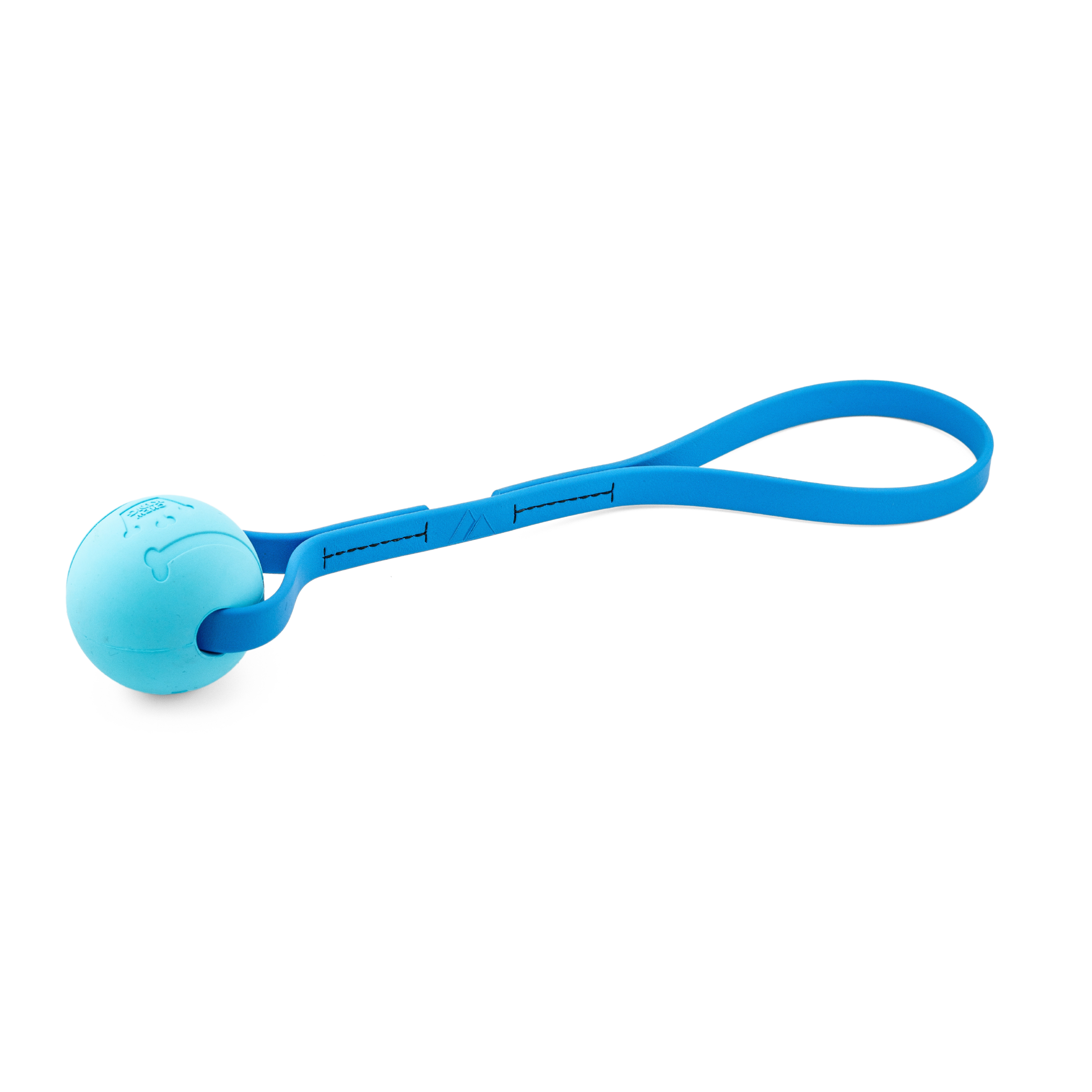
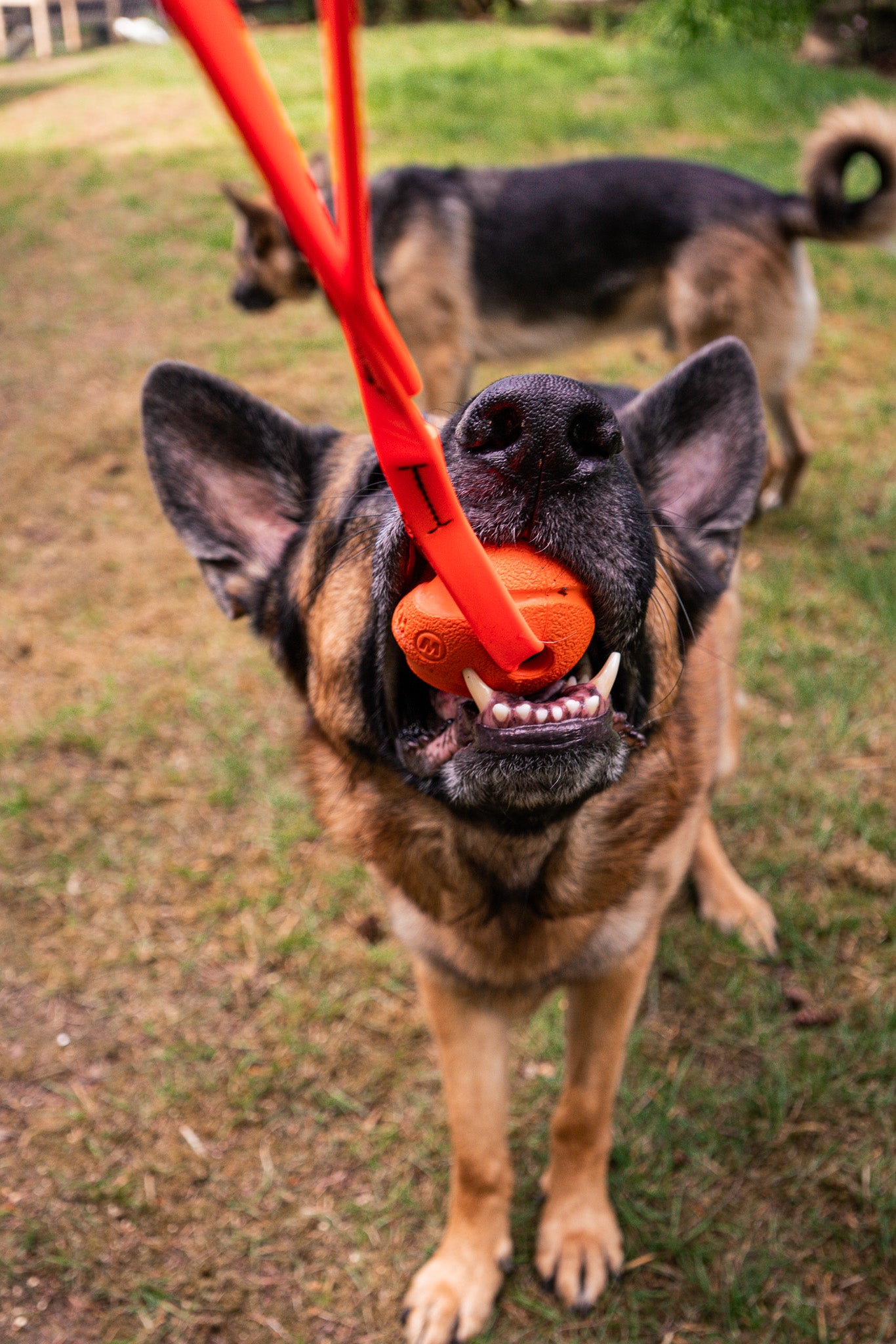
Tug and Reward Toys
BioThane is also useful for handles on interactive training and reward toys because handlers can easily wipe them clean after outdoor sessions.
But there's an important distinction:
A training tug is not a chew toy.
BioThane's durability doesn't make a tug appropriate for unsupervised chewing. Training toys should be used interactively and inspected for damage.
Smooth BioThane vs Textured BioThane
Not all BioThane feels the same in your hand.
Smooth BioThane is what many people picture first: a relatively smooth, leather-like coated strap that moves easily through the hand and cleans up quickly.
Textured options such as Pebble Grip BioThane® add surface texture for handlers who prefer more traction.
Neither is automatically better.
A smooth leash may be preferable when you want the material to feed easily through your hands. A textured surface may feel more secure when your hands are wet, you're wearing gloves, or you simply prefer additional grip.
This is one of those details that becomes much more important once you've actually used a leash for hours rather than judging it from a product photo.
Does BioThane Get Slippery When Wet?
Smooth BioThane can feel slicker to some handlers when wet, particularly compared with a highly textured leash material.
That doesn't make it unsuitable for wet conditions—it means grip preference matters.
If wet-weather handling is a major concern, consider the surface texture as well as the material itself.
A leash's diameter or width, texture, flexibility, and how it sits in your hand can all change the handling experience.
This is also why we don't think "BioThane" alone is enough information to choose a leash.
How Do You Clean BioThane Dog Gear?
Routine cleaning is simple:
- Rinse off dirt and debris. Warm water is usually enough for light mud.
- Use mild soap when necessary. Avoid aggressive cleaners unless the manufacturer specifically recommends them.
- Rinse away residue.
- Wipe down the BioThane.
- Dry the hardware thoroughly.
- Inspect the complete piece of gear before using it again.
Pay extra attention after exposure to saltwater, sand, road salt, or fine grit because debris can work its way into moving hardware.
You should also inspect connection points, stitching, fasteners, clips, buckles, and the webbing itself for unusual wear.
Easy maintenance doesn't mean no maintenance.

What Should You Look for When Buying BioThane Dog Gear?
This is where we'd encourage you to look beyond color.
1. Genuine material
If genuine BioThane® matters to you, verify that the manufacturer actually uses it.
"Waterproof coated webbing" and "BioThane®" are not automatically interchangeable terms.
2. Appropriate width
More isn't always better.
A very wide leash can add unnecessary bulk and heavier hardware for a small dog. An extremely narrow setup may not provide the hand feel or construction you want for a large, powerful dog.
Choose width based on the dog, equipment design, activity, and your handling preference.
3. Hardware
The strap isn't the only part connecting you to your dog.
Look at the snap, rings, buckles, and other components just as carefully as the BioThane itself.
4. Construction
Pay attention to how the hardware connects to the webbing.
The material can be excellent while the finished product is poorly constructed.
5. Intended use
A six-foot walking leash, 30-foot long line, hands-free leash, traffic lead, and slip lead solve very different problems.
Start with what you're trying to do and choose the equipment from there.
Is BioThane Worth the Extra Cost?
For many dog owners, yes—but not simply because BioThane is a premium material.
It tends to make the most sense when you regularly benefit from its specific advantages.
BioThane may be worth it if:
- Your dog's gear gets wet frequently.
- You live somewhere rainy or snowy.
- Your dog swims.
- You hike or camp together.
- You train outdoors.
- You're tired of fabric gear holding odor.
- You use long lines that frequently touch the ground.
- You want equipment that's quick to clean.
You may not need it if:
- Your dog only takes short, dry neighborhood walks.
- Budget matters more than weather resistance.
- You strongly prefer the feel and aging characteristics of leather.
- You prefer very lightweight woven gear.
- Your current equipment already does its job well.
Buying better gear shouldn't mean buying equipment you don't need.
The right gear is the gear that fits the dog, handler, environment, and job.
Common BioThane Mistakes
Assuming every coated leash is genuine BioThane®
BioThane® is a brand. Generic coated webbing may look similar but isn't automatically the same product.
Choosing entirely by color
We love color options too, but width, length, hardware, construction, and intended use should come first.
Assuming waterproof means maintenance-free
The strap may be waterproof. Your hardware still deserves attention.
Assuming durable means chew-proof
It doesn't.
Don't leave a dog unattended with a leash, collar, or training tug simply because it's made from BioThane.
Buying the heaviest setup possible
Bigger hardware and wider webbing aren't inherently better. Equipment should be appropriately matched to the dog and task.
Ignoring wear because the strap still looks good
Inspect the whole piece of equipment, particularly moving hardware and connection points.
BioThane® FAQ
What is BioThane made from?
BioThane® is coated webbing. It uses a polyester webbing core with a polymer coating such as TPU or PVC, depending on the specific BioThane product.
Is BioThane actually waterproof?
Yes. Genuine BioThane coated webbing does not absorb water like woven nylon or cotton. Hardware on finished dog gear still needs routine cleaning, drying, and inspection.
Does BioThane hold odor?
BioThane generally resists odor buildup better than absorbent woven materials because moisture and grime do not readily soak into the coated strap. Dirty gear should still be cleaned.
Can a dog chew through BioThane?
Yes. BioThane is durable, not chew-proof. Dogs should not be allowed to chew on leashes or collars, and training tugs should not be treated as unsupervised chew toys.
Is BioThane better than nylon?
BioThane is usually more practical for wet, muddy, or high-use environments because it doesn't absorb water and is easy to clean. Nylon may be lighter and less expensive, so the better material depends on your priorities.
Is BioThane better than leather?
For frequent water exposure and low-maintenance ownership, BioThane has clear advantages. Leather remains an excellent material for people who prefer its traditional feel and are willing to maintain it properly.
Is BioThane good for large or strong dogs?
It can be, but material alone doesn't determine whether a piece of equipment is appropriate for a strong dog. Webbing width, hardware, construction, leash style, condition, and intended use all matter.
How long does BioThane dog gear last?
There isn't one useful lifespan for every BioThane product. Wear depends on frequency of use, environment, construction, hardware, abrasion, chewing, storage, and maintenance. Inspect gear regularly and replace it when structural damage or concerning wear appears.
The Bottom Line
BioThane® became popular in dog gear for a pretty practical reason: it solves problems dog owners actually have.
It doesn't soak up rain during a wet walk. Mud doesn't become embedded in woven fibers. Long lines can be rinsed after dragging through a field. Collars don't need the maintenance routine associated with leather.
But BioThane isn't magic.
A good leash or collar is more than its webbing. Hardware, construction, dimensions, fit, maintenance, and choosing the correct design for the job matter just as much.
That's ultimately how we think dog gear should be evaluated.
Don't choose a leash because one material is trendy. Choose it because the complete piece of equipment fits your dog, your handling style, and what you actually do together.
Once you understand that distinction, BioThane becomes much easier to evaluate—and for dogs and handlers who spend a lot of time in rain, mud, water, training fields, and the outdoors, it's difficult to ignore.