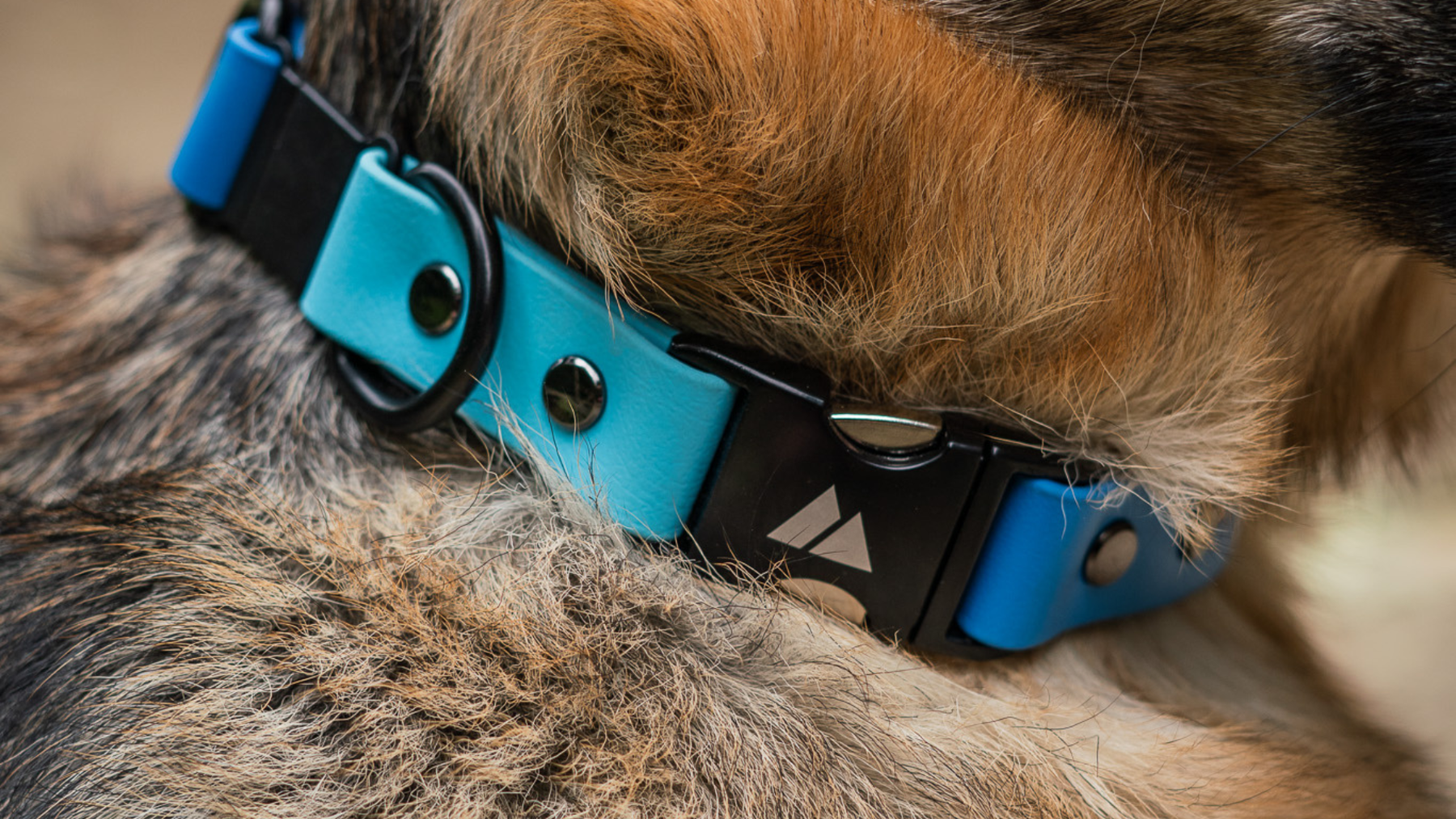
Don't Let Your Dog Collar Deteriorate
Most dog owners don’t think about replacing a dog collar until something goes wrong, such as the buckle sticking, the stitching wearing out, or worse—the collar fails when it matters and your dog slips out on a walk, run, or a hike on the trails.
Unlike dog beds or toys, collars don’t typically come with an obvious expiration date. But they are safety equipment, and over time, every collar reaches a point where it’s no longer reliable.
So how often should you actually replace your dog’s collar?
The honest answer: it depends on how it’s used, where it’s used, and what it’s made of. Our team at Bolder K9 is going to walk you through what to look for, what wear actually matters, and when replacing a collar is the safer choice.

Why Dog Collars Wear Out Faster Than People Expect
No matter how good you are at leash handling, dog collars are exposed to stress almost constantly:
- Pulling and tension during walks
- Friction from movement
- Moisture from rain, snow, and humidity
- Dirt, grit, and environmental residue
- Daily on/off cycles
Even if a collar looks fine, internal wear often shows up long before visible damage. Stitching weakens. Hardware fatigues. Materials lose structure.
That’s why time alone isn’t the best measure of when to replace a collar.
There’s No Universal Timeline—But There Are Clear Signs
While there is no universal timeline for when your dog collar will start to deteriorate, there are some signs to look out for. Instead of asking “How old is this collar?”, the better question is:
“Is this collar still doing its job safely?”
Here’s how to tell.
Signs It’s Time to Replace a Dog Collar
1. Worn or Fraying Stitching
Stitching is often the first true failure point.
Look for:
- Loose threads
- Thinning stitches
- Uneven or pulled seams
If stitching starts to go, strength drops quickly—even if the rest of the collar looks intact.
2. Hardware That No Longer Moves Smoothly
Buckles and D-rings should move freely and consistently.
Replace the collar if you notice:
- Sticking or grinding
- Visible corrosion or pitting
- Bent or misshapen metal
- Plastic that looks brittle or cracked
Hardware failure is rarely gradual—it tends to happen suddenly.

3. Loss of Structure or Shape
A collar that has stretched, softened, or collapsed under tension won’t behave the same way it did when new.
Watch for:
- Collars that twist or roll easily
- Webbing that feels limp or overly soft
- Difficulty keeping the collar positioned correctly on the neck
Loss of structure can lead directly to slipping or reduced control.
4. Fit That’s Changed Over Time
Dogs change—sometimes gradually, sometimes quickly.
A collar may need replacement if:
- Weight changes affect fit
- Fur growth alters how it sits
- The collar no longer stays positioned where it should
A collar that once fit perfectly can become unreliable without obvious damage.
How Environment Affects Collar Lifespan
People don't usually take the environment into consideration when it comes to how fast your dog collar wears down, but where your dog lives and walks matters just as much as how often.
Collars wear out faster in:
- Constant rain or high humidity
- Urban environments with pavement and road grit
- Coastal areas with salt exposure
- Multi-walk, daily use routines
A collar used daily in a wet city may need replacement far sooner than one used occasionally in dry conditions.

How Long Does a Quality Dog Collar Usually Last?
While there’s no exact number, here are general expectations when the collar is well-made and properly used:
- Light, occasional use: 12–24 months
- Daily walks, moderate conditions: 9–18 months
- Daily use in wet or abrasive environments: 6–12 months
These aren’t rules—they’re reference points. Some collars last longer, some shorter. The key is inspection, not the calendar.
Why Waiting Too Long Can Be Risky
Many collar failures don’t happen during calm moments.
They happen:
- When a dog startles
- During a sudden lunge
- At the end of a leash under load
- In high-distraction environments
Replacing a collar before it fails isn’t wasteful—it’s preventative.
How to Extend the Life of a Dog Collar
You can’t make a collar last forever, but you can help it last as long as it safely can.
- Let collars dry fully between uses
- Rinse off grit, salt, or mud when needed
- Avoid storing wet collars in closed spaces
- Inspect stitching and hardware regularly
- Choose a collar that is made from durable material such as BioThane
- Stay away from less durable materials like nylon
Small habits can add months of reliable use.
Final Thoughts
Dog collars don’t usually fail without warning—but the warnings are easy to miss if you’re only looking at appearance.
A collar should be replaced when:
- Stitching weakens
- Hardware degrades
- Structure is lost
- Fit is no longer secure
Treating a collar like safety equipment—not an accessory—leads to better decisions, fewer surprises, and more confident walks.
When in doubt, replacing a worn collar early is almost always the safer choice.
Be sure to check out Bolder K9 on Instagram!