Strong does not mean “maximum hardware”
An adult Lab may weigh roughly 55–80 pounds, but hardware should still match the dog, the activity and the handler. More bulk is not automatically safer or easier to use.
Labrador Retriever gear guide
Practical gear for strong, social, water-loving retrievers—from daily walks and puppy training to fetch, swimming and muddy adventures.

The short answer
The best gear for most Labrador Retrievers is a properly fitted adjustable collar, a washable standard leash with comfortable hand control, and a supervised retrieve or tug toy chosen for the dog’s size and play style. Labs are athletic, powerful retrievers that commonly enjoy water, mud, carrying and active play. Their gear should be easy to clean, simple to handle and appropriate for the individual dog—not merely oversized because the dog is a Labrador.
A 1-inch adjustable BioThane® collar gives most adult Labs a practical balance of fit, visibility and easy care.
A 6- to 8-foot standard leash is the most versatile starting point for neighborhood walks and training.
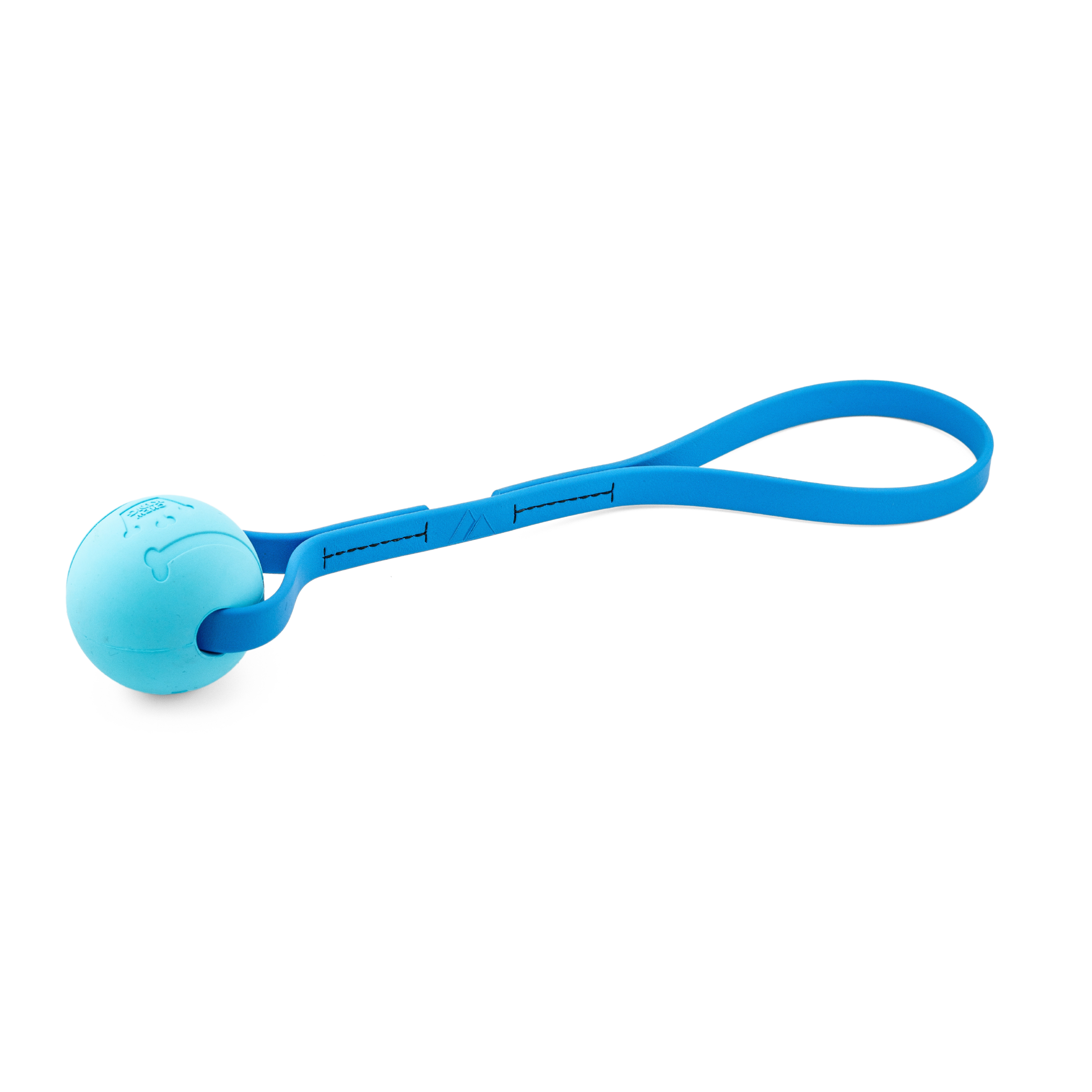
A correctly sized ball tug, floating bumper or fabric tug turns a Lab’s interest in carrying and retrieving into structured interaction.
Choose for the dog in front of you
Labradors were developed as capable retrieving dogs. The breed is generally athletic, energetic and strongly built, with a weather-resistant coat suited to work around water. Those traits make cleanability, grip, fit and purposeful play especially useful considerations—but breed alone does not decide the right equipment.
An adult Lab may weigh roughly 55–80 pounds, but hardware should still match the dog, the activity and the handler. More bulk is not automatically safer or easier to use.
Wet nylon can hold water, grime and odor. Genuine BioThane® coated webbing is non-porous and easy to wipe clean, which makes it a practical option for swimming, rain and muddy trails.
Interactive tugs and retrieve toys are designed for supervised training and play. They should be put away afterward and replaced if damaged; no training toy should be marketed as chew-proof.
A leash, collar or toy can support communication and reinforcement, but equipment does not teach loose-leash walking, recall, steadiness or a clean toy release by itself.
Our practical shortlist
These are use-case recommendations, not one-size-fits-all rules. Measure your dog, consider the activity and choose the lightest setup that still gives you appropriate handling and reliability.
01 / Collars
For most adult Labs, start with a one-inch collar. Wider collars can suit individual preferences, but width alone does not determine strength or comfort.
Best everyday starting point
A clean, classic adjustable collar for identification and everyday use. The simple profile keeps the setup practical without adding unnecessary bulk.
Best for: most adult Labs, everyday wear and easy cleaning.
View the Voyager Collar →Best quick-release option
A purpose-built BioThane® collar for handlers who prefer the convenience of a quick-release buckle and a more substantial modern profile.
Best for: fast removal, daily adventures and handlers who prefer buckle convenience.
View the Atlas Collar →Best limited-slip option
A limited-slip design that can provide a more secure fit for dogs whose head and neck proportions allow them to back out of a standard flat collar.
Best for: dogs with a demonstrated collar-slipping concern and handlers who understand proper martingale fit.
View the Adjustable Martingale →Fit note: You should be able to check the collar’s fit consistently without allowing enough room for the dog to pull its head through. A martingale should be adjusted so it tightens without choking and should not be left on unattended.
02 / Leashes
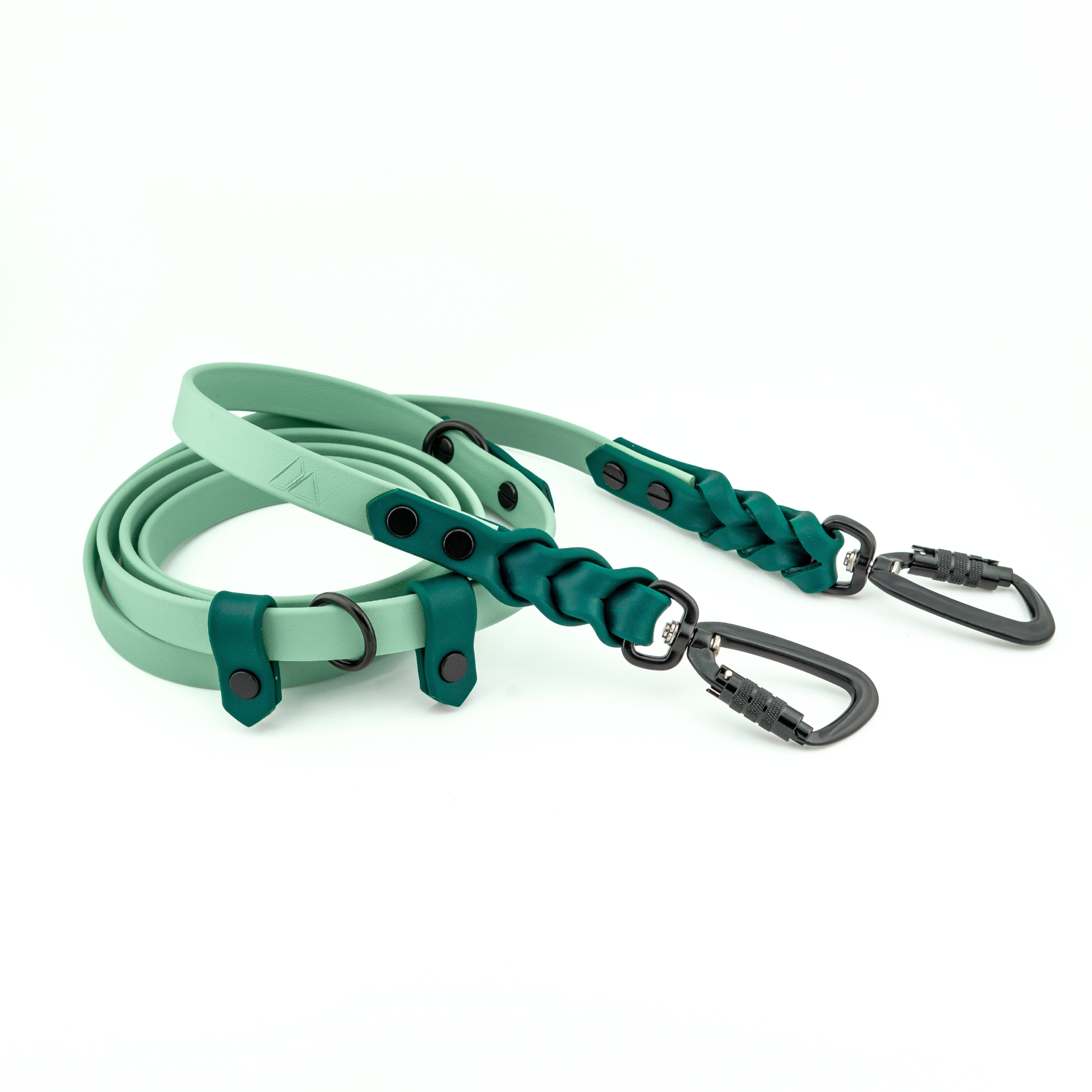
A standard leash remains the best all-around recommendation for most Labs. Hands-free use should come after reliable leash skills and only when the dog cannot overpower the handler.
Best overall
Our best-selling standard leash combines a straightforward walking setup with a distinct two-color design and multiple customization choices.
Best for: everyday walking, training and owners who want a versatile standard lead.
View the Atlas Leash →Best wet-weather grip
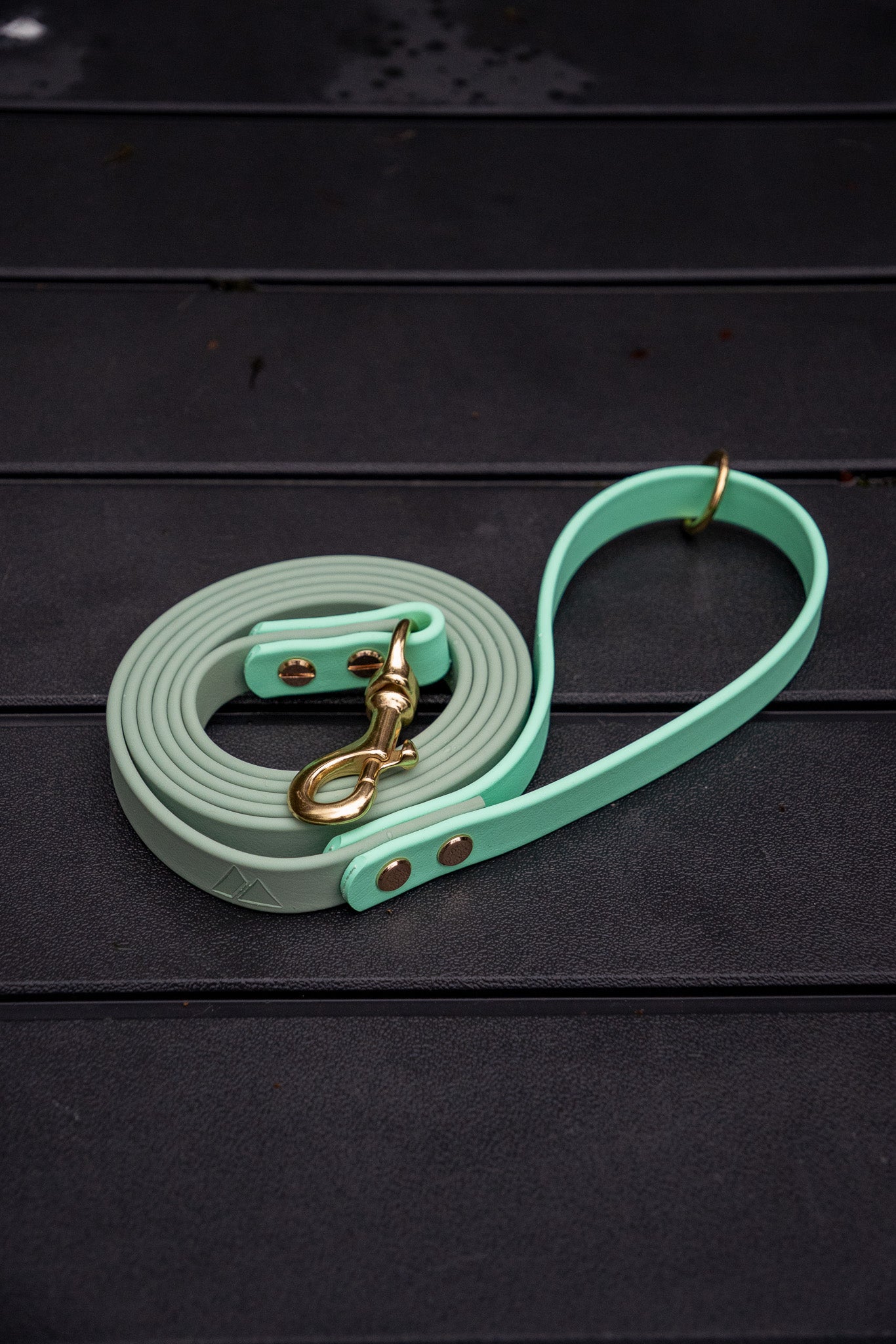
An embossed surface adds texture for handlers who want more tactile grip in rain, mud or active training environments.
Best for: wet climates, slippery conditions and handlers who prefer a textured feel.
View the Pebble Grip Leash →Best heavy-duty build
A sewn construction and practical design for owners who prioritize a substantial, work-ready standard leash over decorative details.
Best for: powerful adult dogs, frequent use and handlers who prefer sewn construction.
View the Professional Sewn Leash →Length note: Six to eight feet works well for many daily walks. Choose a longer leash or long line for recall and distance work in appropriate open spaces—never use extra length as a substitute for handling skills.
03 / Toys
Choose the toy by the game you want to play. A floating bumper supports water retrieves; a ball tug creates a clear interactive reward; a fabric tug offers a larger bite surface.
Best all-around reward toy
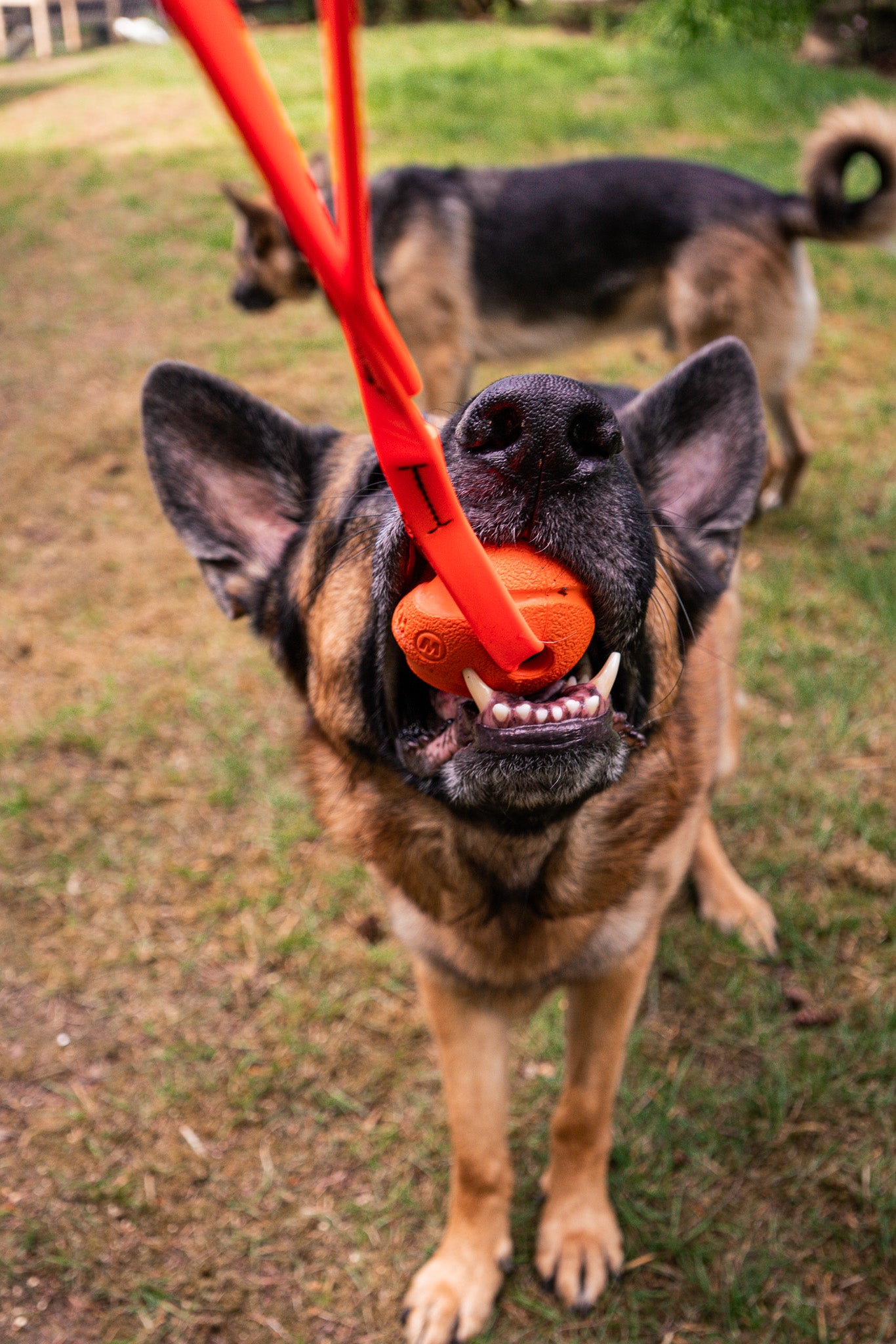
A streamlined ball-and-handle design that is easy to present, carry and use as an interactive reward during everyday training.
Best for: fetch, tug, engagement and dogs motivated by a ball.
View the Element Ball Tug →Best for water retrieves
A buoyant bumper with a BioThane® handle for visible, structured retrieves around water and other outdoor environments.
Best for: swimming, dock days and Labs that prefer a bumper-style retrieve toy.
View the Splash Bumper →Best larger bite surface
A structured fabric tug for interactive games with dogs that prefer biting a soft, wider target instead of a ball.
Best for: controlled tug sessions, reward play and dogs learning to target the body of the tug.
View the French Linen Tug →Safety note: Bolder K9 tugs and bumpers are interactive training toys, not chew toys. Supervise every session, teach a release cue, keep hands on the handles and store the toy when the game ends.

Mud, water, repeat
Genuine BioThane® is a strong practical choice for Labrador collars and leashes because its coated surface does not absorb water and is easy to clean. That matters for a breed commonly involved in swimming, retrieving, hiking and messy outdoor play.
Build the setup by activity
| Use case | Collar | Leash | Toy | What matters most |
|---|---|---|---|---|
| Everyday walks | 1-inch adjustable collar | 6–8 ft standard leash | Element Ball Tug | Comfortable handling and a simple reward |
| Rain and mud | BioThane® adjustable collar | Pebble Grip leash | Easy-clean ball tug | Grip, non-absorbent materials and easy cleanup |
| Swimming | Remove when safe and appropriate, or use corrosion-conscious hardware | Use only when needed and managed to prevent entanglement | Splash Floating Bumper | Visibility, buoyancy and water safety |
| Training class | Properly fitted collar selected for the exercise | 6 ft standard leash | Ball or fabric tug | Clear mechanics and a toy the dog values |
| Recall practice | Secure, properly fitted collar or harness | Long line | High-value retrieve or tug reward | Safe space, line handling and reinforcement |
Growing dogs need a different plan
A Labrador puppy needs lightweight, adjustable gear that fits now—not oversized adult equipment intended for later. Puppies grow quickly, so check collar fit often and expect to replace or resize equipment as the neck, chest and handling needs change.

Before you order
Use a soft measuring tape and the product-specific directions. Do not choose collar size from weight or breed alone.
Sizing guide →Daily walking, recall practice, swimming and interactive tug all create different equipment needs.
Leash finder →Decide whether the toy is for retrieving, tugging or training rewards, then select the size and construction accordingly.
Tug finder →Common questions
Direct answers to the questions owners commonly ask before choosing a Lab’s collar, leash or training toy.
For most adult Labrador Retrievers, a properly fitted 1-inch adjustable collar is a practical everyday choice. Select the buckle, hardware and width for the individual dog and activity, then measure the neck rather than ordering by breed or weight alone.
Labrador collar size varies by age, sex, build and individual neck shape, so there is no reliable breed-only size. Measure where the collar will sit and follow the product-specific sizing directions; recheck growing puppies frequently.
A 1-inch collar is a balanced everyday choice for many adult Labs. A 1.5-inch collar creates a wider profile, but it is not automatically more comfortable or necessary; choose based on the dog's build, coat, use and handler preference.
A properly fitted martingale can help with dogs that can back out of a standard collar, but it is not necessary for every Labrador. It should tighten only to the intended limit, should not choke the dog and should not be left on unattended.
A 6- to 8-foot standard leash is the most versatile length range for many everyday Lab walks. Shorter options provide closer positioning, while long lines are better reserved for recall and distance work in suitable open spaces.
A hands-free leash can work for a Labrador with reliable loose-leash skills when the handler can safely manage the dog. It is not recommended when the dog can overpower the handler, lunges forcefully or is still learning not to pull.
Genuine BioThane® is a practical leash material for swimming and wet weather because it does not absorb water and is easy to wipe clean. Choose corrosion-conscious hardware, rinse after saltwater exposure and dry the hardware fully.
Any line or collar around water can create snag and entanglement risks. Use only the equipment needed for the environment, maintain direct supervision, keep lines managed and consider a properly fitted canine life jacket; not every dog is automatically a safe swimmer.
Many Labs enjoy retrieve toys, floating bumpers, ball tugs and fabric tugs. The best choice depends on whether the game is retrieving, interactive tug or training reinforcement and whether the size and construction suit the individual dog's mouth and play style.
Tug toys can be used safely as supervised interactive training toys. Keep the game controlled, encourage the dog to bite the intended surface, teach a release cue, stop if the toy is damaged and store it when the session ends.
No. Bolder K9 tug toys are built for supervised interaction, not independent chewing, and no training toy should be considered indestructible. Allowing a dog to chew the handle, ball or tug body can cause damage and may create an ingestion risk.
Choose a lightweight adjustable collar, a manageable standard leash and an appropriately sized supervised toy. Buy for the puppy's current measurements, build handling skills gradually and check the fit every week during rapid growth.
No leash stops pulling by itself. A well-made leash gives the handler a reliable connection, while loose-leash walking comes from training, reinforcement, management and consistent handling mechanics.
Wipe or rinse the coated webbing with mild soap and water, rinse away residue and dry the hardware. Inspect the complete item after muddy, sandy or saltwater use and follow the care guidance for the selected hardware.
Inspect gear before each use and examine it more closely after hard play, swimming, dragging or contact with rough surfaces. Replace equipment that has damaged webbing, compromised stitching, distorted hardware, sharp edges or other changes that affect safe use.
Made for real use
Choose the right fit, keep the handling simple and use play with purpose. Bolder K9 gear is handmade for active dogs and the people who train, walk and adventure with them.