Trail-ready dog gear
Hiking Dog Gear Built for Mud, Miles, and Real Trail Use
The best hiking dog gear keeps your dog secure, comfortable, and easy to manage on the trail. This guide explains how to choose waterproof leashes, collars, hands-free systems, and long lines for hiking with your dog.

What Gear Does a Dog Need for Hiking?
The best hiking dog gear keeps your dog secure, comfortable, visible, and easy to manage on changing terrain. For most trail days, that means a durable leash, a properly fitted collar or harness, a hands-free option when control matters, and easy-to-clean materials that can handle mud, rain, dirt, and water.
Best Hiking Dog Gear Setup
A simple hiking setup should include a secure collar, a standard leash or hands-free leash, and a backup safety connector for extra control. For open areas where legal and appropriate, a long line can give your dog more freedom without losing connection.
- Hands-free leash: best for long walks, uneven terrain, and keeping your hands available.
- Standard leash: best for crowded trails, trailheads, and passing other hikers.
- Long line: best for recall practice, open spaces, and structured freedom.
- Waterproof collar: best for wet, muddy, or high-use hiking conditions.
Why BioThane Works Well for Hiking
BioThane is a strong coated webbing that is waterproof, wipeable, odor-resistant, and easier to clean than nylon after muddy trail use. For hiking dog gear, it is a practical choice because it does not absorb water the same way fabric materials do.
- Wipes clean after dirt, mud, and rain
- Does not hold odor like many fabric leashes
- Smooth feel without soggy webbing
- Built for repeated outdoor use
How to Choose Hiking Dog Gear
Choose control first
Pick a leash setup based on where you hike. Busy trails need closer control. Open areas may allow more length.
Fit the dog, not the trend
Your dog’s size, strength, behavior, and training level matter more than any one “best” product.
Use trail-proof materials
Choose gear that handles water, dirt, sand, mud, and repeated use without becoming heavy or hard to clean.
Hiking Leash Comparison
| Gear Type | Best For | Trail Notes |
|---|---|---|
| Hands-Free Leash | Long hikes, uneven terrain, active handlers | Keeps your hands available while maintaining connection. |
| Standard Leash | Trailheads, crowded paths, passing dogs | Simple, reliable, and easy to shorten when needed. |
| Long Line | Recall work, open fields, structured freedom | Use only where space, visibility, and local rules allow. |
| Waterproof Collar | Mud, rain, water crossings, daily hiking | Easy to clean and less likely to hold odor. |
Recommended Hiking Dog Gear

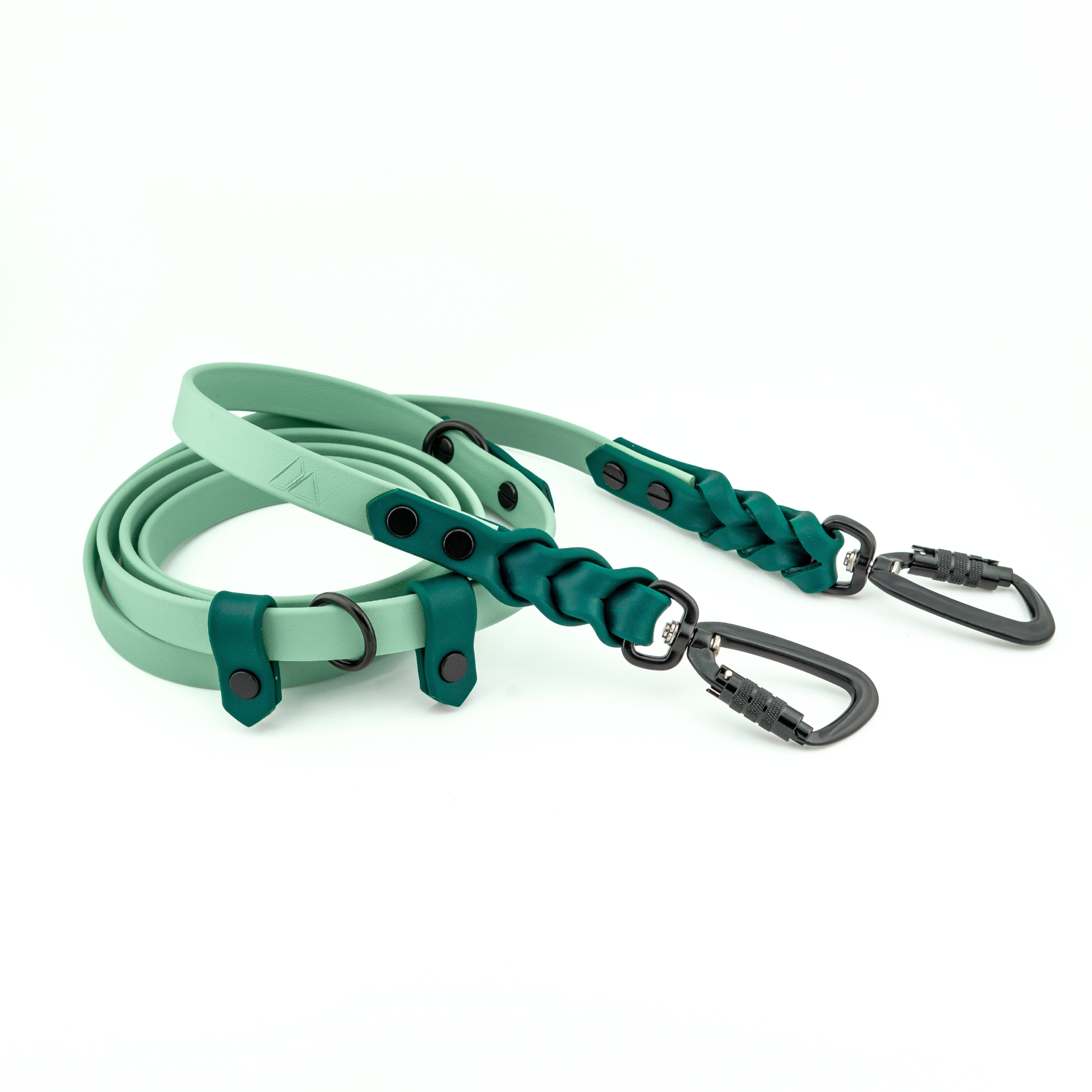
Hands-Free BioThane Leash
Best for long hikes, uneven terrain, and handlers who want both hands available while staying connected to their dog.
Shop hands-free leashes
Waterproof BioThane Collar
Best for muddy, rainy, and high-use trail conditions where easy cleaning and odor resistance matter.
Shop collars
BioThane Long Line
Best for recall practice, open spaces, and giving your dog structured freedom where local trail rules allow.
Shop long linesQuick Recap
- Choose hiking dog gear based on control, terrain, weather, and your dog’s training level.
- Hands-free leashes are useful for long hikes because they keep your hands available.
- BioThane is a strong choice for hiking because it is waterproof, wipeable, and odor-resistant.
- Long lines are best for open areas and recall practice, not crowded trails.
- Proper fit matters: gear should be secure without restricting natural movement.
Purchase Checklist
1. Pick your leash style
Choose hands-free for longer hikes, standard for close control, or a long line for open-space training.
2. Confirm fit and size
Measure your dog carefully and choose gear that stays secure without rubbing, slipping, or restricting movement.
3. Choose trail-ready materials
Prioritize waterproof, easy-clean materials if your dog hikes through mud, water, brush, or sand.
Common Questions About Hiking Dog Gear
What gear does my dog need for hiking?
Your dog needs secure, comfortable, trail-ready gear for hiking. The essentials are a properly fitted collar or harness, a durable leash, identification, water, waste bags, and weather-appropriate accessories.
For Bolder K9 customers, a BioThane leash, waterproof collar, and hands-free leash system are the most useful starting points for regular trail use.
What is the best leash for hiking with a dog?
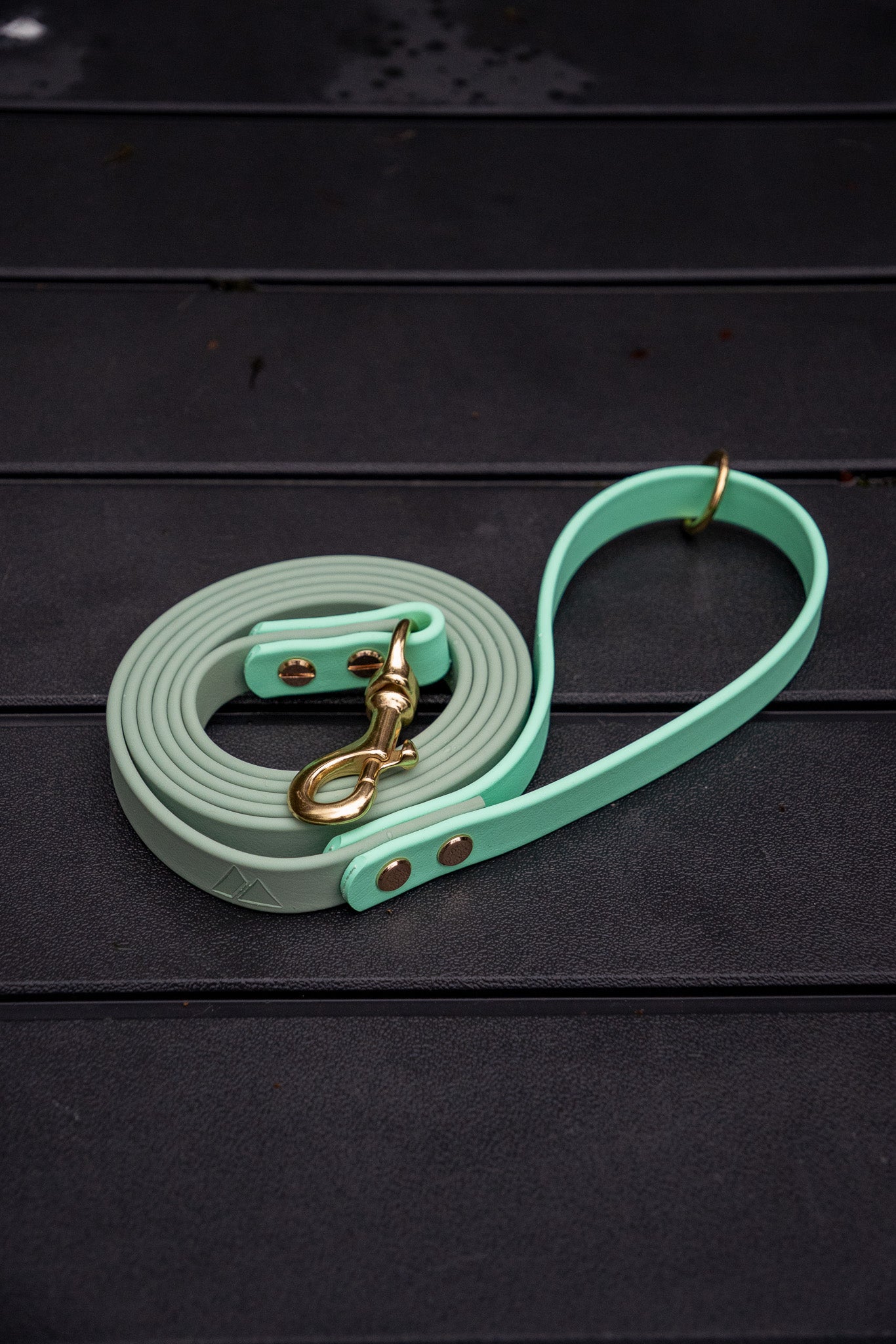
The best leash for hiking with a dog is strong, easy to hold, weather-resistant, and matched to the trail. A waterproof BioThane leash is a practical choice because it can handle mud, rain, and dirt without becoming soggy.
Choose a standard leash for busy trails and a hands-free leash for longer hikes where you want both hands available.
Are hands-free dog leashes good for hiking?
Yes, hands-free dog leashes are good for hiking when your dog has reliable leash manners and you still maintain control. They keep your hands available for balance, trekking poles, water, or managing gear.
For strong dogs or reactive dogs, choose a hands-free leash with durable hardware and enough adjustability to keep the dog close when needed.
Is BioThane good for hiking dog gear?
Yes, BioThane is excellent for hiking dog gear because it is waterproof, wipeable, odor-resistant, and strong for repeated outdoor use. It is especially useful in wet climates, muddy trails, and water crossings.
Unlike many fabric leashes, BioThane does not absorb water the same way, which makes cleanup faster after hikes.
Is BioThane better than nylon for hiking?
BioThane is often better than nylon for hiking if you want waterproof, easy-clean gear. Nylon can absorb water, hold odor, and become harder to clean after mud or trail use.
Nylon can still work, but BioThane is usually more practical for dogs that hike in rain, dirt, sand, or wet brush.
How long should a dog leash be for hiking?
A hiking dog leash is usually best between 6 and 8 feet for most trails. This gives your dog enough room to move naturally while still allowing close control around people, dogs, wildlife, and narrow paths.
Longer leashes and long lines can be useful in open areas, but they are not ideal for crowded or technical trails.
Should I use a long line for hiking?
You should use a long line for hiking only when the trail has enough space, visibility, and rules that allow it. Long lines are best for recall training, open fields, quiet trail areas, and structured freedom.
Do not use a long line on crowded trails, narrow paths, or areas with heavy wildlife activity where excess leash length can create safety issues.
What is the difference between a hiking leash and a regular leash?
A hiking leash is designed for outdoor durability, control, and changing terrain. It should handle dirt, water, tension, and repeated use better than a basic everyday leash.
Regular leashes can work for short walks, but hiking leashes often benefit from waterproof materials, stronger hardware, adjustable length, or hands-free options.
Can my dog hike on a collar instead of a harness?
Yes, many dogs can hike on a collar if they walk well on leash and the collar is properly fitted. A collar should sit securely without slipping over the head or restricting breathing.
Dogs that pull heavily, have neck sensitivity, or need more body control may do better with a harness. Match the gear to the dog, trail, and training level.
What size collar does my dog need for hiking?
Your dog’s hiking collar should fit snugly enough that it cannot slip off, but comfortably enough to allow normal movement and breathing. Measure the center of the neck and follow the product sizing instructions.
A good general check is that you should be able to fit two fingers under the collar without it being loose enough to slide over the dog’s head.
What is the safest leash setup for hiking with a large dog?
The safest leash setup for hiking with a large dog is one that gives you secure control without relying on weak clips or slippery materials. A strong BioThane leash with quality hardware is a practical choice for large dogs.
For strong dogs, consider a hands-free leash with a traffic handle or a standard leash that can be shortened quickly when passing people or dogs.
Can I use a retractable leash for hiking?
A retractable leash is usually not the best choice for hiking because it gives less immediate control and can create safety issues on narrow trails, around wildlife, or near other dogs. A fixed-length leash is more predictable.
For more freedom, a long line is usually a better training tool than a retractable leash because it gives structured length without the same handle and tension risks.
How do I clean BioThane hiking gear?
Clean BioThane hiking gear by wiping it with a damp cloth or rinsing it with water after muddy or dusty trail use. For heavier grime, use mild soap and water, then dry the hardware before storing.
This easy-clean routine is one of the biggest reasons BioThane works well for hiking dog leashes and collars.
What dog gear is best for muddy hikes?
The best dog gear for muddy hikes is waterproof, wipeable, and resistant to odor. BioThane leashes and collars are well suited for mud because they can be rinsed or wiped clean after the hike.
Avoid gear that stays wet for a long time or traps dirt in woven fibers if your dog hikes in mud often.
Should my dog wear ID while hiking?
Yes, your dog should always wear identification while hiking. Even well-trained dogs can become separated because of wildlife, trail confusion, sudden noise, or equipment failure.
Use a secure collar with current ID tags, and consider a microchip and GPS tracker for dogs that hike frequently.
How do I choose dog gear for hiking in rain?
Choose dog gear for rainy hikes by prioritizing waterproof materials, secure hardware, and easy cleanup. BioThane leashes and collars are practical because they do not become heavy with absorbed water.
After wet hikes, wipe down the gear and dry the hardware before storing it to help keep everything in good condition.
What mistakes should I avoid when buying hiking dog gear?
The biggest mistakes are choosing gear that is too long for crowded trails, using materials that absorb water, ignoring fit, and picking hardware that is not strong enough for the dog. Hiking gear should be practical before it is aesthetic.
Start with a secure leash and collar, then add hands-free or long-line options based on how and where you hike.