Prioritize control
Choose materials and hardware that remain easy to grip, clip, and manage when your dog accelerates, changes direction, or becomes highly engaged.
Belgian Malinois Gear Guide
A practical guide to choosing strong, waterproof, correctly sized leash and collar systems for Belgian Malinois used for everyday walking, training, hiking, recall, and active work.
The best leash and collar for a Belgian Malinois should be durable, easy to handle, waterproof, properly fitted, and matched to the dog’s activity. For most owners, a six-foot BioThane leash paired with a secure one-inch collar is the most practical everyday setup.

Built for capable dogs
Belgian Malinois are fast, athletic, environmentally aware, and often highly motivated to move. Their leash and collar should provide reliable control without unnecessary bulk, complicated hardware, or decorative features that do not improve function.
The best everyday setup is usually simple: a durable standard leash and a properly fitted flat or quick-release collar. Specialized equipment such as a long line, hands-free leash, traffic lead, or wider collar can then be added based on how the dog is trained and used.
Choose materials and hardware that remain easy to grip, clip, and manage when your dog accelerates, changes direction, or becomes highly engaged.
Malinois vary in neck size, body structure, coat, and maturity. Measure the actual dog instead of choosing a collar from breed averages alone.
A six-foot leash is ideal for everyday use, while long lines, hands-free systems, and traffic leads are better suited to specific activities.
Recommended setup
These options cover daily walking, obedience, active use, outdoor training, and secure collar wear for strong, athletic dogs.

Best for everyday handling
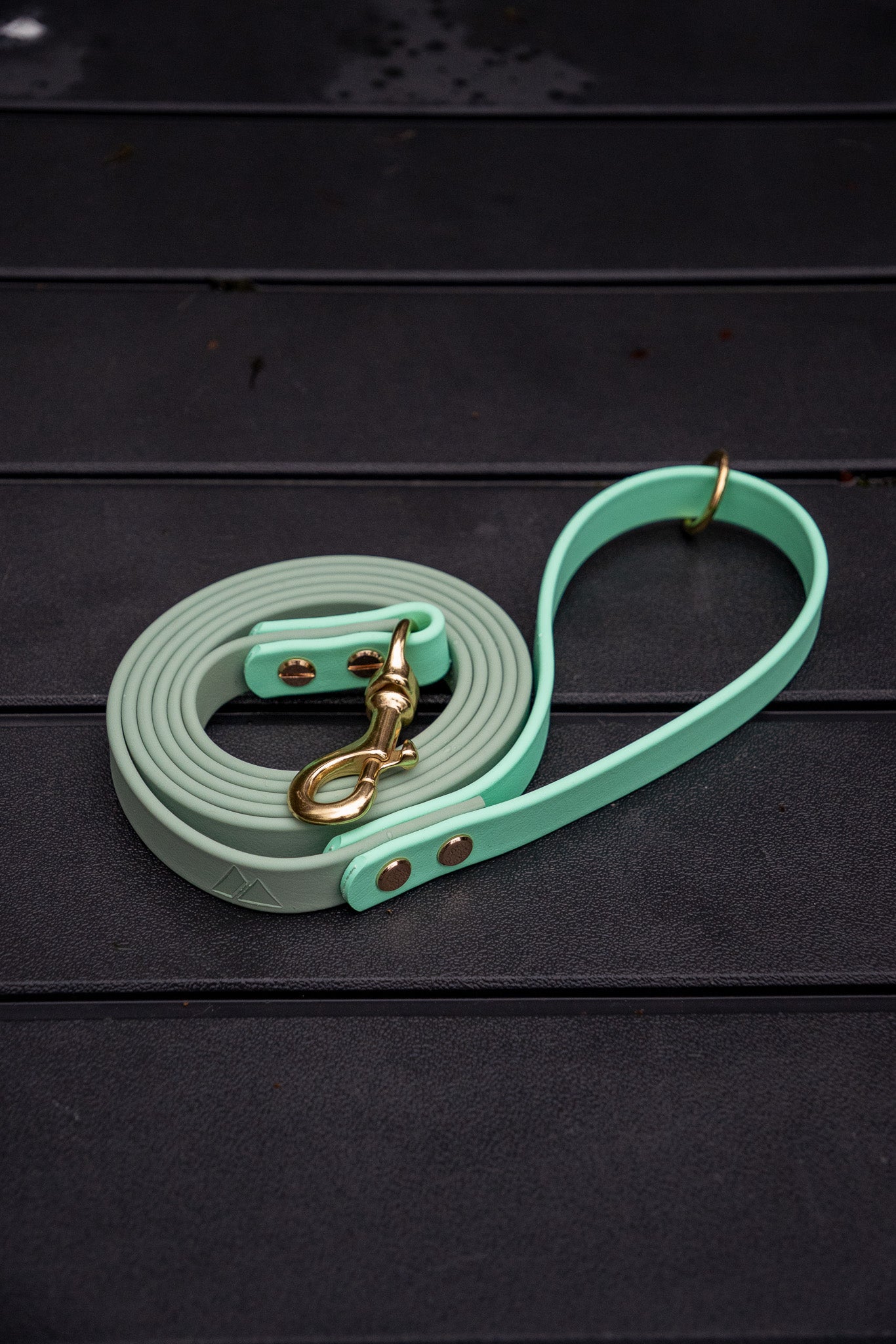
A durable standard leash is the most versatile starting point for Malinois owners. Use it for daily walks, obedience, transitions, and controlled movement.

Best for active use
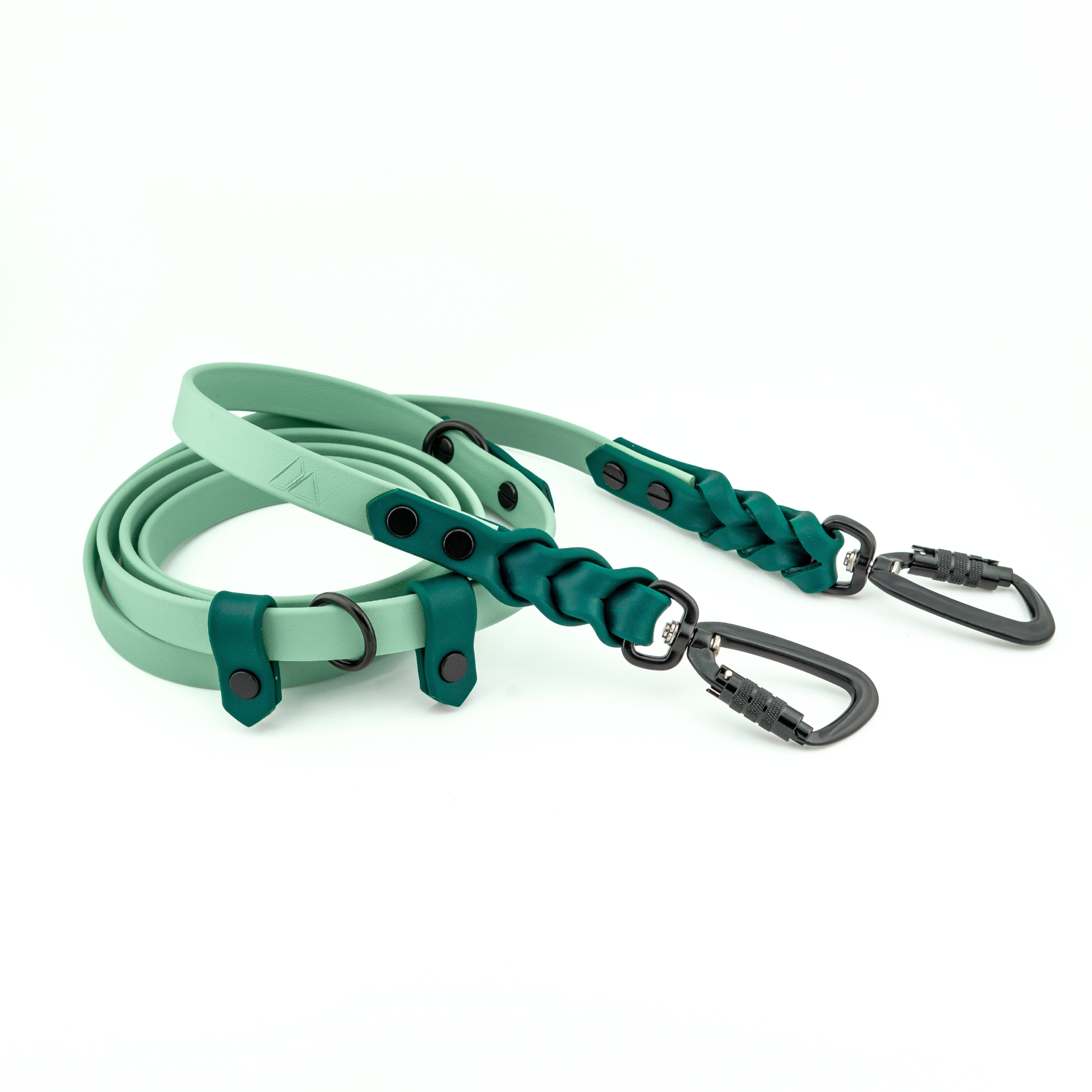
An adjustable hands-free leash gives experienced handlers multiple carrying positions for hiking, training, running, and movement-focused work.

Best collar option
A secure quick-release collar combines practical handling, waterproof construction, durable hardware, and a streamlined fit for athletic dogs.

Material guide
BioThane is one of the most practical materials for Malinois leashes and collars because it combines strong webbing with a smooth waterproof coating. It can be wiped clean after wet walks, muddy training sessions, tracking work, or outdoor adventures.
It also resists odor and does not need the regular conditioning associated with leather.
BioThane is coated webbing that is waterproof, odor-resistant, easy to clean, and available in constructions suitable for powerful dogs. It offers many of the handling benefits of leather without absorbing water or requiring regular conditioning.
Side-by-side comparison
No single leash is ideal for every walk, training session, or activity. Choose the leash based on the job rather than trying to make one piece of gear do everything.
| Leash type | Best use | Advantages | Watch for |
|---|---|---|---|
| Standard 6-foot leash | Daily walks and obedience | Simple, versatile, and responsive | Excess slack can create tangles |
| Hands-free leash | Hiking, running, and active movement | Keeps hands available and distributes force | Requires leash skills and body awareness |
| Long line | Recall, tracking, and field work | Provides distance with a safety connection | Can tangle, catch, or create friction burns |
| Traffic lead | Close control and transitions | Compact and easy to grab near the dog | Too short for normal walking |
Collar selection
A properly fitted flat collar is the best general-purpose option for many Malinois. Choose a strong buckle, durable D-ring, and enough width to distribute pressure.
Best for: everyday wear and identification
A quick-release collar is useful when the handler needs to remove gear efficiently. The buckle should remain secure during normal use and be easy to operate intentionally.
Best for: frequent gear changes and active handling
A martingale may provide additional security for dogs that can back out of a standard collar. It should tighten only enough to prevent escape when correctly fitted.
Best for: additional escape prevention
A wider collar can spread pressure over more surface area and may be useful for powerful dogs. It should not interfere with shoulder movement, jaw motion, or other equipment.
Best for: strong dogs and demanding activities

Sizing guide
Measure the neck where the collar will naturally sit. Use a flexible measuring tape and record the actual circumference without adding several inches or pulling the tape tight.
Compare that number with the product’s adjustment range.
Use a flexible tape where the collar will naturally sit.
Select a size that places the measurement comfortably inside the available range.
The collar should stay secure while allowing normal breathing, swallowing, movement, and coat compression.
Common mistakes
Malinois vary in size, structure, drive, maturity, and training. Measure the individual dog and consider the actual activity.
More weight does not automatically create more control. The leash should be strong enough while remaining comfortable and responsive.
A loose collar may slide over the head or allow hardware to shift. Recheck fit as the dog grows, gains muscle, sheds coat, or changes weight.
Avoid wrapping a long line around your hands, allowing it to drag across bare skin, or letting the dog reach full speed before hitting the end.
Answer-first guide
These answers address the most common buying, sizing, material, safety, and training questions Malinois owners ask.
The best general-purpose leash for a Belgian Malinois is usually a strong six-foot leash made from BioThane, leather, or quality webbing.
Six feet gives the dog room to move naturally while preserving practical control for daily walks, transitions, and obedience.
The best everyday collar for most Belgian Malinois is a properly fitted flat or quick-release collar made with durable hardware and water-resistant material.
A one-inch width works well for many adults, although the correct size depends on the individual dog.
A six-foot leash is the best all-around length for most Malinois walks and obedience training.
Shorter leads are useful for close transitions, while long lines are better for recall, tracking, and distance work.
Yes, correctly selected BioThane is strong enough for most Belgian Malinois.
The material, width, thickness, hardware, and construction should all be appropriate for a powerful dog and the intended use.
BioThane is often more practical than nylon for owners who train outdoors or in wet, muddy conditions.
It does not absorb water, is easy to wipe clean, and is less likely to retain odor.
Yes, a well-made leather leash can be an excellent choice because it is strong, comfortable in the hand, and becomes more flexible with use.
Leather requires more maintenance than BioThane and may be less practical in frequent rain, mud, or wet training conditions.
A Malinois can use a hands-free leash once the dog has reliable leash skills and the handler understands how pulling force transfers to the body.
Hands-free systems are useful for hiking, running, training, and carrying equipment.
Yes, long lines are useful for recall practice, tracking, decompression, exploration, and distance work.
Use them carefully, avoid wrapping the line around your hands, and prevent the dog from reaching full speed before hitting the end.
Many adult Belgian Malinois do well with a leash between one-half inch and three-quarter inch wide, depending on the material and construction.
Width alone does not determine strength. Hardware, webbing type, thickness, and assembly matter as well.
A one-inch collar is a practical starting point for many adult Belgian Malinois.
Some dogs may be more comfortable in a wider collar, especially during demanding work or when they apply significant pressure against the leash.
Measure around the neck where the collar will naturally sit using a flexible tape.
Record the actual measurement and compare it with the manufacturer’s adjustment range rather than relying on breed or weight alone.
A Malinois collar should be snug enough that it cannot easily slide over the head while still allowing normal breathing, swallowing, and movement.
Recheck the fit regularly, especially with growing dogs and dogs whose coats change seasonally.
A Belgian Malinois can wear a properly fitted collar for everyday identification and handling, but collars should be removed when they create an entanglement risk.
Use caution during crating, rough play, and unsupervised group housing.
A Malinois can use either a harness or collar depending on the activity and training goal.
Collars are common for everyday handling, while harnesses are useful for tracking, pulling sports, seat-belt restraint, and activities where neck pressure is undesirable.
Professional trainers commonly use four- to six-foot leather or BioThane leashes, traffic leads, drag lines, and long lines.
The correct length, reliable hardware, and safe handling matter more than having a complicated leash system.
The best hardware is a strong, corrosion-resistant clip matched to the leash material and intended activity.
Bolt snaps, trigger snaps, locking carabiners, and quick-release clips can all work when correctly constructed and regularly inspected.
Clean BioThane gear with warm water, mild soap, and a soft cloth or brush.
Rinse away dirt and allow the material and hardware to dry before storing the gear.
Inspect a Malinois leash and collar before demanding activities and at least weekly during regular use.
Check the material, stitching, rivets, buckles, clips, D-rings, and adjustment points for damage or unusual wear.
Quick recap
Start with a durable six-foot leash for everyday walking, handling, and obedience.
Choose a properly fitted flat, quick-release, or martingale collar based on the dog.
BioThane is practical for active Malinois because it is waterproof and easy to clean.
Add a hands-free leash or long line only when the activity requires specialized gear.
Fit, handling, hardware quality, and maintenance matter more than appearance.
Purchase checklist
Use this checklist to choose gear that fits the dog, the handler, and the intended work.
Measure the neck, review the adjustment range, and choose leash dimensions appropriate for the dog and handler.
Select BioThane, leather, or webbing based on weather, cleaning needs, grip, weight, and activity.
Confirm that clips, buckles, D-rings, stitching, and fasteners are appropriate for a powerful, athletic dog.
Frequently asked questions
A durable six-foot leash is the best all-around option for most Belgian Malinois. It provides enough room for movement while preserving practical control for walks and training.
A properly fitted flat or quick-release collar is best for many Belgian Malinois. Choose durable hardware, waterproof material, and a width that distributes pressure without restricting movement.
Yes. BioThane is waterproof, easy to clean, odor-resistant, and practical for rain, mud, hiking, tracking, and outdoor training.
The correct size depends on the individual dog's neck measurement. Measure where the collar will sit and choose a size that places the measurement comfortably within the adjustment range.
The collar should be snug enough that it cannot easily slip over the head but loose enough for normal breathing, swallowing, and movement.
Hands-free leashes can be safe for trained Malinois when the handler understands how pulling force transfers to the body. They should not replace leash training.
Yes. Long lines are useful for recall, tracking, decompression, and distance work. Handle them carefully and prevent the dog from building uncontrolled speed.
Wash BioThane with warm water, mild soap, and a soft cloth or brush. Rinse away residue and let the material and hardware dry before storing the gear.
Made for active dogs
Explore handmade BioThane leashes, collars, hands-free systems, and long lines built for practical control, outdoor use, and demanding dogs.
Explore Bolder K9 gear