Start with six feet
A 5- or 6-foot leash gives most Aussie owners a practical balance of control, communication, and room to explore.
Australian Shepherd Gear Guide
Australian Shepherds need gear that can keep pace with daily training, outdoor mileage, fast movement, and changing weather. This guide explains the best leash lengths, collar styles, materials, and setups for an active Aussie.
For most Australian Shepherds, start with a waterproof 5- to 6-foot leash, a properly fitted adjustable collar, and a 15- to 30-foot long line for recall and controlled exploration.

The direct recommendation
The best everyday setup for most Australian Shepherds is a durable 5- to 6-foot leash paired with a properly fitted adjustable collar. Choose waterproof, easy-clean materials and dependable hardware that can handle daily walks, training sessions, mud, rain, hiking, and sudden changes of direction.
Australian Shepherds are intelligent, energetic herding dogs that tend to thrive on active routines and mentally engaging training. Their gear should provide clear handling without being excessively heavy or restrictive. A standard leash offers useful communication for neighborhood walks, while a 15- to 30-foot long line creates controlled freedom for recall practice, decompression walks, scent work, and outdoor training.
A hands-free leash can also be useful for experienced dogs on hikes or structured walks. However, it should not replace foundational loose-leash skills, and it may not be the safest first choice for an Australian Shepherd that lunges, circles, chases movement, or changes direction abruptly.
Quick recap
A 5- or 6-foot leash gives most Aussie owners a practical balance of control, communication, and room to explore.
A 15- to 30-foot line is useful for recall, scenting, decompression, and controlled outdoor freedom.
Waterproof BioThane® is well suited to active dogs because it does not absorb water, odor, or trail grime like many woven materials.
Measure the neck instead of relying only on breed averages. The collar should remain secure without restricting normal movement.
Match the tool to the job
An active herding breed usually benefits from more than one leash. Choose equipment by activity rather than expecting one setup to handle every situation equally well.
| Activity | Best gear | Recommended length | Why it works |
|---|---|---|---|
| Daily walks | Standard leash | 5–6 feet | Clear handling without excessive restriction |
| Loose-leash training | Standard fixed-length leash | 4–6 feet | Consistent distance and predictable feedback |
| Recall practice | Long line | 15–30 feet | Controlled freedom while training around distractions |
| Hiking | Standard or hands-free leash | 6–8 feet | Room to navigate while maintaining reliable connection |
| Secure everyday wear | Adjustable flat collar | Measured to the dog | Supports identification tags and routine leash use |
| Dogs that back out | Properly fitted martingale | Measured to the dog | Reduces the chance of slipping out when correctly adjusted |
Built around the breed
Australian Shepherds were developed as responsive working dogs. Many modern Aussies remain highly observant, quick to react to movement, enthusiastic about training, and ready for more activity than a basic neighborhood stroll provides.
That does not mean every Australian Shepherd pulls hard or needs oversized hardware. It means the leash should be dependable, comfortable to handle, and appropriate for frequent use. Heavy, cumbersome gear can interfere with communication, while thin, slippery, or water-absorbing materials may become unpleasant during long outdoor sessions.
High activity: Gear may be used for walking, hiking, training, travel, and dog sports throughout the week.
Fast movement: Secure clips and consistent leash handling matter when a dog quickly changes direction.
Strong environmental awareness: A longer line can support structured exploration without giving up safety.
Outdoor lifestyles: Waterproof gear is easier to maintain after rain, mud, swimming, and trail use.

Material comparison
BioThane® is often the more practical option for an active Australian Shepherd because it is waterproof, odor-resistant, easy to wipe clean, and available with a smooth, consistent grip. Nylon remains lightweight and affordable, but it can absorb moisture, dirt, and odor.
Best for active use
Best for daily walks, hiking, training, rain, mud, snow, and water.
Traditional option
Suitable for dry, occasional use when easy cleaning is not a priority.
Natural material
Best for owners who prefer natural material and regular maintenance.
Choose by length
Six feet is the strongest all-purpose starting point. Shorter and longer options are specialized tools rather than automatic upgrades.
Useful in crowded areas, structured heel work, and situations where the dog should remain close. It offers less room for natural sniffing.
Provides enough space for comfortable movement while preserving practical control during walks and training.
Offers additional room on open trails. Use it only where extra distance will not create entanglement or conflict with other users.
A long line supports controlled freedom, scent work, and recall practice. It is not intended for crowded sidewalks.
Collar selection
A properly fitted adjustable flat collar is the best everyday choice for many Australian Shepherds. It can hold identification tags and provide a straightforward leash attachment point for dogs that do not attempt to back out of their gear.
A limited-slip martingale may be appropriate for an Aussie that can reverse out of a standard collar or has a head and neck shape that makes flat-collar security difficult. A martingale should be adjusted so it tightens enough to prevent escape without continuously constricting the neck.
Best for identification, everyday wear, and trained leash walking.
Best for dogs that may slip backward out of a standard collar.
Consider for running, medical needs, or dogs that create unsafe pressure on the neck.
Measure before ordering
Wrap a flexible measuring tape around the part of the neck where the collar normally sits. Keep the tape level and comfortably snug.
Australian Shepherds vary by age, sex, body structure, coat thickness, and individual breeding. Use the dog’s measurement, not a generic medium-size label.
Measure through the coat without compressing it excessively. Recheck the fit after major seasonal shedding or grooming changes.
The collar should stay secure while allowing comfortable normal movement. Check that it cannot slide over the widest part of the dog’s head.
Bolder K9 recommendations
These recommendations cover the most common Aussie routines: everyday walking, controlled exploration, outdoor adventures, and secure collar wear.
 Best Everyday
Daily walking and training
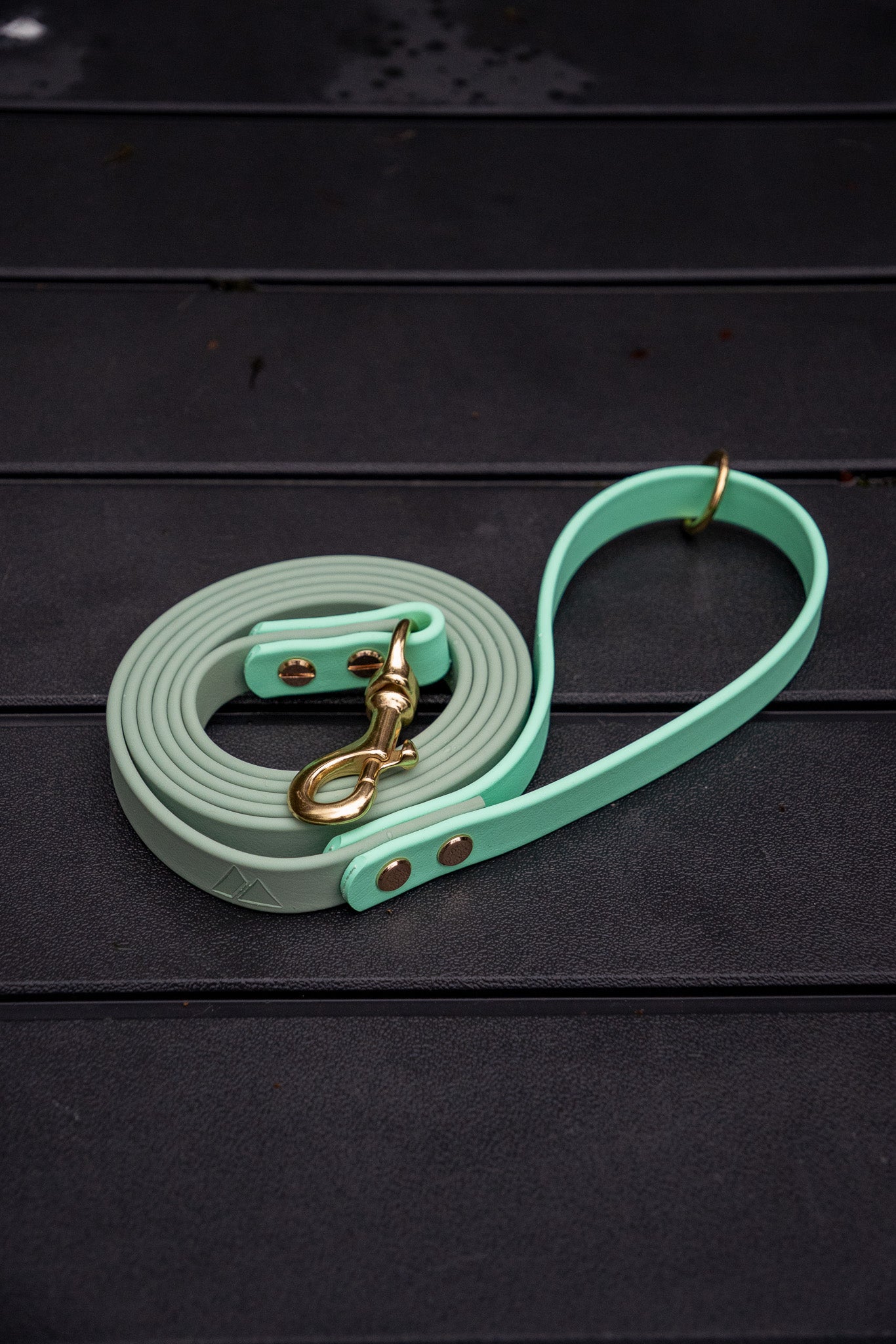
A clean, dependable standard leash for neighborhood walks, obedience work, travel, and daily handling.
 Training Pick
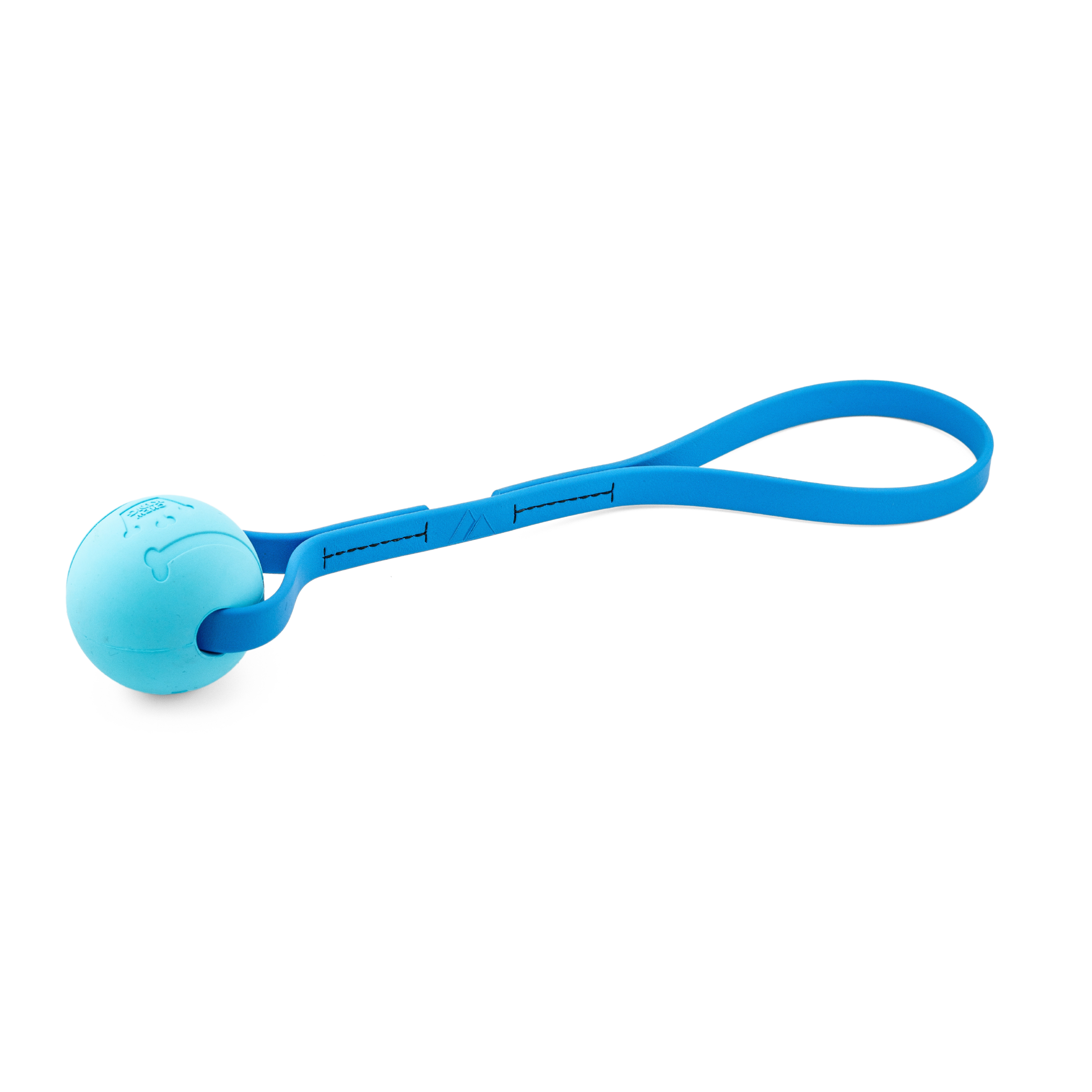
Recall and controlled exploration
Designed to give an active Aussie more room to sniff, explore, and practice recall while maintaining a safety connection.
 Adventure Pick
Hiking and active routines
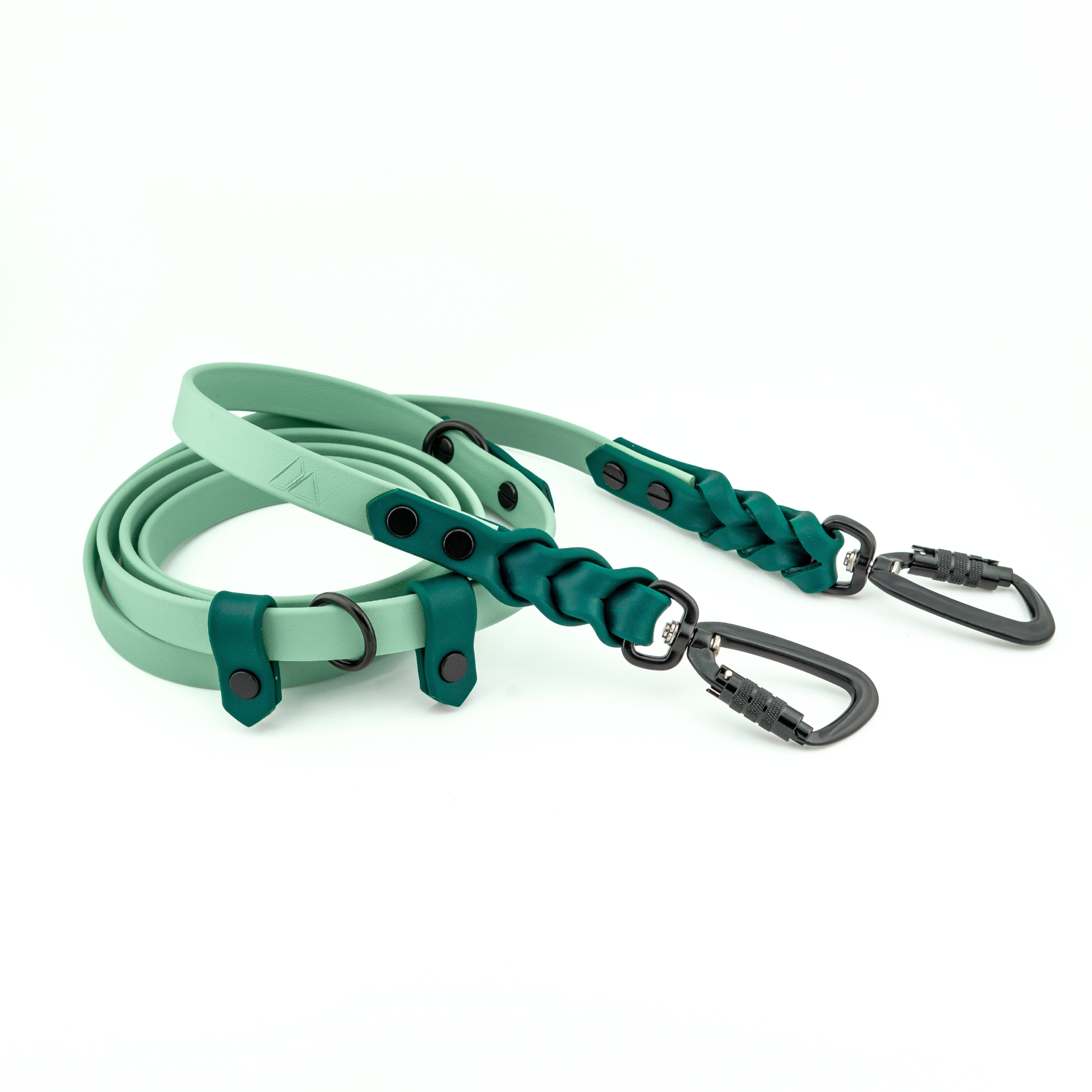
A versatile hands-free system for trained dogs, outdoor mileage, and owners who want multiple carrying options.
 Collar Pick
Everyday identification and handling
A waterproof adjustable collar that is easy to maintain through shedding seasons, rain, mud, and regular outdoor activity.
Build a simple gear system
Neighborhood routine
This is the most versatile choice for routine walks, obedience practice, errands, and everyday handling.
Training freedom
Use a long line to reward check-ins, practice recall, and allow sniffing without granting uncontrolled off-leash access.
Outdoor mileage
Choose gear that can be cleaned after rain, mud, snow, lake water, and regular trail exposure.
Avoid these problems
Constant changing tension can make leash communication inconsistent and allows a fast-moving dog to build momentum.
Select clips and connectors for the dog’s size, activity, and handling needs—not simply because a larger clip looks stronger.
Thick coats can hide excess slack. Check that the collar cannot slide over the head, especially after seasonal shedding.
Long lines and leashes can snag on brush, furniture, fencing, or other objects. Use them only with active supervision.
Better gear improves handling, but loose-leash walking still requires reinforcement, consistency, and appropriate training.
Check straps, stitching, rivets, clips, buckles, and attachment points before demanding activities.
Answer-first guide
Direct answers to the buying, sizing, training, safety, and maintenance questions Aussie owners ask most often.
A durable 5- or 6-foot fixed-length leash is the best everyday choice for most Australian Shepherds. It provides enough space for natural movement while keeping the dog within a manageable distance on sidewalks, trails, and training walks.
Waterproof BioThane® is especially practical for active Aussies because it can be cleaned quickly after rain, mud, snow, or water.
A properly fitted adjustable flat collar is the best general collar for many Australian Shepherds. It works well for identification tags, everyday wear, and supervised leash use.
An Aussie that can back out of a flat collar may benefit from a correctly adjusted limited-slip martingale. Measure the individual dog rather than ordering by breed alone.
Australian Shepherd collar size must be selected from an actual neck measurement, not a breed-based estimate. Adult Aussies can vary significantly in structure, coat, age, and weight.
Measure where the collar naturally rests, compare that number with the product’s sizing chart, and choose a range that allows useful adjustment in both directions.
A 6-foot leash is more versatile, while a 4-foot leash provides closer control. Six feet gives an Australian Shepherd more room to sniff and move naturally without creating excessive distance.
Choose four feet for crowded environments, close-position training, or owners who consistently need the dog nearer to them.
A long line is not mandatory, but it is highly useful for recall, scent work, decompression, and controlled exploration. A 15- to 30-foot line lets an Aussie move and make choices while the handler retains a safety connection.
Use long lines in open areas away from roads, crowds, and entanglement hazards. Gloves may improve handling comfort during faster training sessions.
Yes, genuine BioThane® is an excellent material for active Australian Shepherds. It is waterproof, easy to clean, flexible, and resistant to the odor buildup common in absorbent webbing.
BioThane® is especially useful for dogs that hike, swim, train outdoors, live in wet climates, or regularly encounter mud and trail debris.
BioThane® is generally easier to maintain than nylon for an Australian Shepherd with an active outdoor lifestyle. It does not absorb water and can usually be cleaned with soap, water, and a soft cloth.
Nylon may be lighter and less expensive, but woven fibers can retain moisture, grit, and odor. The best option depends on how frequently the gear gets wet or dirty.
Hands-free leashes can work well for trained Australian Shepherds during hiking, walking, and everyday adventures. They give the handler easier access to rewards, trekking poles, or other equipment.
They are less suitable for dogs that lunge, circle the handler, chase movement, or have not developed reliable leash skills. Sudden force transferred to the waist can affect balance.
Either can be appropriate; the best choice depends on the dog, activity, health, and training goal. A collar is simple for identification and routine handling, while a well-fitted harness can distribute pressure across the body.
Running, medical concerns, forceful lunging, or specialized dog sports may call for a harness. Seek professional guidance when neck pressure or control is a safety concern.
An Australian Shepherd can wear a properly fitted collar during normal supervised daily activity, but continuous wear is not risk-free. Collars can snag on crates, fencing, branches, furniture, or another dog’s jaw during play.
Remove the collar when snagging risk is high, during unsupervised crating when appropriate, or whenever your veterinarian or trainer recommends collar-free time.
A martingale can be safe when it is correctly sized, adjusted, and used under supervision. Its purpose is to reduce the chance of escape by limiting how far the collar can loosen or tighten.
A martingale should not function as an unlimited choke collar. Avoid leaving it on an unattended dog where the loop could catch on an object.
Retractable leashes are usually not the best primary leash for an Australian Shepherd. They can create inconsistent tension, allow the dog to build speed, and make quick control more difficult around people, dogs, bicycles, wildlife, and traffic.
A fixed-length standard leash or supervised long line provides more predictable handling for training and outdoor exploration.
A lightweight 5- or 6-foot fixed leash is best for most Australian Shepherd puppies. The clip should be secure but not so oversized that it repeatedly strikes or weighs down the puppy.
Introduce the leash in short, positive sessions and prevent chewing. Replace or resize equipment as the puppy grows rather than purchasing an excessively large setup too early.
A waterproof 6- to 8-foot leash is a strong hiking choice for most Australian Shepherds. It provides useful range without creating the management demands of a very long line on narrow or busy trails.
A hands-free configuration may work for a trained dog, while a standard hand-held option offers more immediate control on steep, technical, or crowded terrain.
Clean BioThane® with lukewarm water, mild soap, and a soft cloth or soft-bristled brush. Rinse away residue and let the gear air-dry fully before storage.
Pay particular attention to hardware, folds, stitching, rivets, and buckle areas. Avoid harsh chemicals or abrasive tools that could damage coatings and finishes.
Inspect an Australian Shepherd’s leash and collar before demanding activities and perform a detailed check regularly. Look for damaged material, loose stitching, bent hardware, weakened attachment points, and clips that do not close smoothly.
Stop using equipment that shows structural damage. Cosmetic wear and structural failure are different, so examine the complete assembly rather than the surface alone.
Purchase checklist
Record the current neck measurement and confirm the product’s adjustment range before choosing a collar size.
Choose a standard leash for everyday use, a long line for controlled freedom, or a hands-free system for trained adventures.
Select clip style, finish, strap width, and weight based on the individual dog and intended use—not appearance alone.
Care and maintenance
Cleaning is only part of gear maintenance. An Australian Shepherd may use the same leash through wet grass, dusty trails, training fields, snow, and lake water, placing repeated stress on both the strap and hardware.

Frequently asked questions
Additional answers about selecting, fitting, using, and maintaining leashes and collars for Australian Shepherds.
A 3/4-inch leash is a practical choice for many adult Australian Shepherds because it balances strength, grip, and manageable weight. Puppies and smaller Aussies may benefit from lighter hardware, while individual handling preferences should guide the final choice.
Yes, a lightweight long line can be used with an Australian Shepherd puppy for supervised recall practice and exploration. Begin with a manageable length in an open area, prevent chewing, and avoid allowing the puppy to hit the end of the line at speed.
An Australian Shepherd collar should be comfortably snug and secure enough that it cannot slide over the dog’s head. Check the fit through the coat, confirm normal breathing and movement, and remeasure after significant growth, grooming, or seasonal shedding.
A bright, high-visibility leash color is useful for hiking because it is easier to see against soil, brush, snow, and low light. Color does not replace reflective equipment or a light when visibility is limited, but it can make a leash easier to track outdoors.
An Australian Shepherd should go off leash only where it is legal and after developing a reliable recall around realistic distractions. Herding instinct, wildlife, bicycles, runners, livestock, and unfamiliar dogs can challenge even a well-trained Aussie, so a long line is often the safer training step.
Handmade for real use
Bolder K9 makes rugged, waterproof dog gear for daily training, wet trails, muddy adventures, and the routines active dogs repeat every week.