4 FT
Close control
Best for busy sidewalks, veterinary visits, crowded events, and dogs that need tighter management.
- Less excess leash
- Fast handling in tight spaces
- Can feel restrictive on relaxed walks
Bolder K9 Gear Guide
Choosing the correct leash length can improve safety, communication, training, and the overall quality of your walks. This guide compares standard leashes, hands-free systems, and long lines so you can choose the right setup for your dog.
For most dogs, a 6-foot leash is the best everyday choice. It gives enough room for natural movement while keeping the dog close enough for safe, clear handling. A 4-foot leash works better in crowded spaces, an 8-foot leash adds freedom in open areas, and long lines are best reserved for recall, tracking, and structured distance work.

The right leash length should match your dog, environment, and activity.
At a glance
The right length depends on the environment, the dog’s training level, and how much freedom can be handled safely. Start with the shortest length that still allows comfortable movement.
Best for busy sidewalks, veterinary visits, crowded events, and dogs that need tighter management.
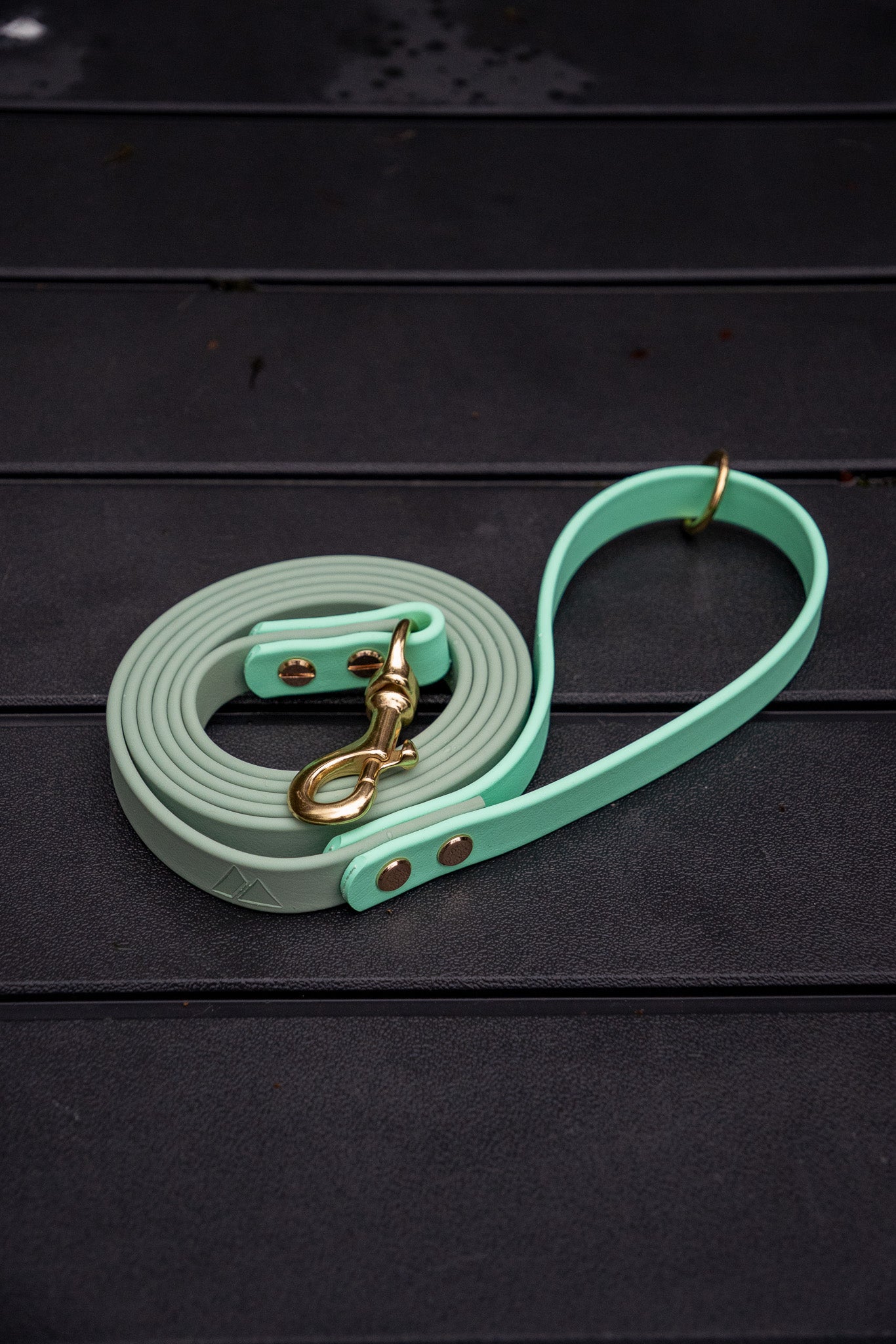
The best all-around length for neighborhood walks, parks, basic training, and general daily use.
Ideal for trained dogs in open parks, beaches, and wider trails where extra movement is appropriate.
Designed for recall, tracking, scent work, open-field training, and controlled exploration.
Everyday walking
For everyday walking, six feet is usually the most practical length. It gives a dog enough room to move, sniff, and adjust pace without creating so much distance that the handler loses control.
The leash should allow natural movement while still letting you prevent the dog from entering the street, approaching another dog, wrapping around people, or reaching hazards. In busy areas, the working length may be much shorter than the leash’s full length.
Use six feet as your default, shorten it when the environment becomes busy, and move to a longer option only when the space and the dog’s training support it.
A short leash can improve control, but keeping a dog tight to your side for an entire walk may create constant pressure, limit sniffing, and make the outing feel unnecessarily restrictive. Shorter leashes are useful tools, but they are not automatically the best choice for every dog or every walk.
Extra length can give a dog more freedom, but it also increases the distance between the handler and the dog. That matters around traffic, wildlife, bicycles, other dogs, and narrow pathways. More leash should come with more awareness and stronger handling skills.

By use case
Six feet is ideal for most neighborhood walks. It gives the dog room to move and sniff while keeping enough control for driveways, intersections, passing dogs, and changing sidewalk conditions.
A 6- to 8-foot leash works well for most trails. A hands-free system can improve comfort, but the handler should still be able to shorten the leash quickly near wildlife, drop-offs, switchbacks, and other hikers.
Four to six feet is the safest range for dense urban environments. The dog should remain close enough to move through intersections, storefronts, patios, and pedestrian traffic without creating trip hazards.
An 8-foot leash is useful for connected exploration, while a 15- to 30-foot long line gives more room for recall practice and play. Waterproof materials are especially valuable around sand, mud, and water.
Most runners do best with a hands-free leash that creates a 4- to 6-foot working length. Too much slack can become a tripping hazard, while too little can interfere with the dog’s stride.
A lightweight 4- to 6-foot leash is best for everyday puppy handling. A separate 10- to 15-foot long line can be introduced for supervised recall work in a safe, open area.
Training tools
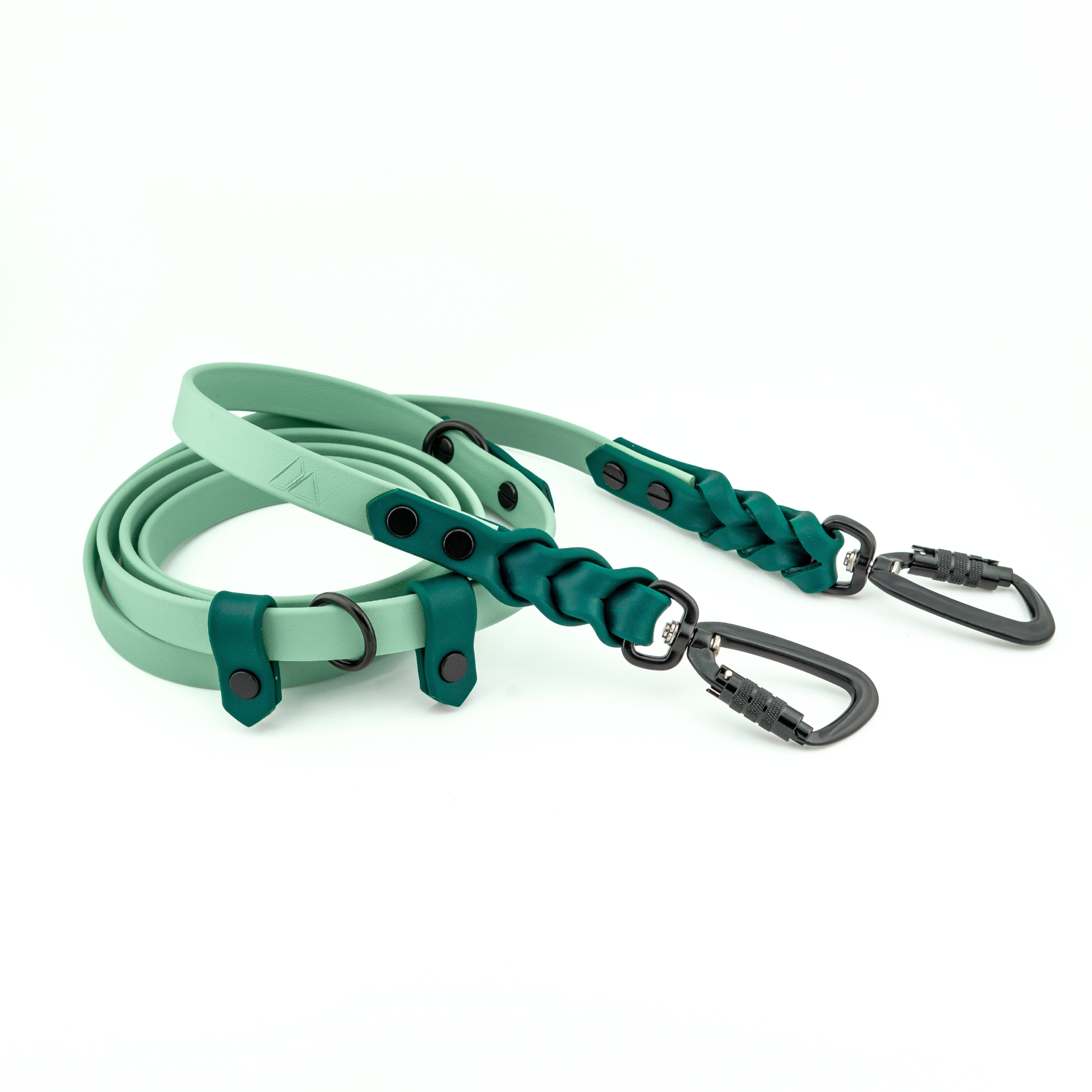
Hands-free systems are worn around the waist or across the body. They are useful for hiking, running, photography, and long walks, but the true working length changes depending on how the leash is worn.
The best designs let the handler shorten the dog’s range quickly and include a convenient grab point for tighter control.
Long lines are fixed-length training leashes typically offered from 10 to 50 feet. They are ideal for recall, tracking, scent work, and controlled distance training.
Use them only in open areas, never wrap them around your hands, and do not allow a dog to reach full speed before hitting the end of the line.
Retractable leashes provide convenience, but they often remain under tension and can teach dogs that pulling creates more distance. Thin tape or cord may also be difficult to see and can create entanglement risks.
For training, a fixed-length leash or traditional long line usually provides clearer communication and more predictable handling.
Dog-specific factors
Dogs that pull, lunge, chase, or ignore leash pressure generally benefit from a manageable fixed-length leash while foundation skills are being built. More freedom should be earned through reliability.
Large dogs often have a longer natural stride, so an 8-foot leash may feel more comfortable in open spaces. Smaller dogs may do well with 4–6 feet, provided the leash and hardware are appropriately lightweight.
Dogs that react to people, dogs, bicycles, or wildlife need enough leash for comfortable movement but not so much distance that the handler loses the ability to intervene early. Four to six feet is often the most manageable range.
The leash should match the handler’s strength, mobility, coordination, and environment. A length that feels effortless for one person may be difficult for another, especially with a powerful dog.
Materials matter
Two leashes of the same length can feel completely different depending on the material, width, hardware, and construction.
Nylon is familiar and affordable. Leather develops a traditional feel over time. Rope can feel comfortable in the hand. BioThane® is popular with active dog owners because it is waterproof, easy to clean, and resistant to odor.
For hiking, rain, snow, mud, beaches, and everyday outdoor use, a waterproof leash often requires less maintenance than absorbent fabric webbing.
No leash material is chew-proof. Replace any leash with structural damage.

Frequently asked questions
A 6-foot leash is the best all-around length for most dogs because it offers a practical balance between freedom, control, and communication.
No. A 4-foot leash is useful in crowded areas, veterinary offices, training classes, and situations where close control is needed. It may feel restrictive in open environments.
Not for a trained dog in an open environment. An 8-foot leash provides extra freedom on trails, beaches, and open parks, but it should be shortened around traffic, people, and other dogs.
A 15- to 30-foot long line is appropriate for most recall training. Ten feet works well for early transition work, while 30–50 feet is better suited to advanced distance work, tracking, and scent training.
A lightweight 4- to 6-foot leash works well for everyday puppy handling. Use a separate 10- to 15-foot long line for supervised recall practice.
A 6- to 8-foot leash works well for most hiking trails. Hands-free systems can improve comfort, while long lines should be reserved for open terrain.
For training, a fixed long line usually offers clearer communication and more predictable handling than a retractable leash.
A 6-foot leash can cover most daily needs, but many owners benefit from a second leash for a specific purpose, such as a shorter traffic leash, hands-free system, or long line.
The bottom line
For most dogs, a 6-foot leash is the best place to start. Choose 4 feet when you need closer control, 8 feet when a trained dog can safely enjoy more room, and a fixed long line when the goal is recall, tracking, or distance work.
The best leash length should match the activity, environment, handler, and dog in front of you.