When considering a long line vs retractable leash, both offer freedom. They provide more freedom than a standard six-foot leash.
But they are not the same tool.
A long line is a fixed-length leash. It gives the handler a predictable amount of line to manage. A retractable leash stores cord or tape inside a spring-loaded plastic handle. It extends and retracts as the dog moves. It's often called a Flexi leash, after the well-known style.
That mechanical difference changes almost everything. It alters how the leash feels and how you handle it. Feedback to the dog changes. It affects what can fail. It also changes what happens when a dog suddenly takes off.
For casual convenience, a retractable leash has some obvious appeal. For training, we generally prefer a traditional long line. This includes predictable handling and durability. It also applies to dogs that may suddenly put significant force into the leash.
Here’s why.
Long Line vs. Retractable Leash at a Glance
| Long Line | Retractable Leash | |
| Length | Fixed | Extends and retracts |
| Handling | Handler manually manages line | Internal mechanism manages line |
| Leash tension | Can remain completely loose | Typically maintains light tension while extending |
| Recall training | Excellent use case | Generally less suitable |
| Open-area exploring | Excellent | Convenient with the right dog |
| Busy sidewalks | Not ideal | Not ideal at extended lengths |
| Mechanical parts | None | Spring, spool, brake/lock mechanism |
| Line visibility | Generally easier to see | Thin cord versions can be difficult to see |
| Potential entanglement | Yes—requires good line handling | Yes, particularly with thin cord/tape |
| Best feature | Predictability and versatility | Convenience |
| Biggest drawback | Requires active line management | Less predictable control and more potential failure points |
Neither one is automatically safe simply because your dog is attached to it. Both require awareness, appropriate handling, and an environment that makes sense for extra leash length.
But the risks aren't identical.
What Is a Long Line?
A long line is essentially an extra-long traditional leash.
Long lines commonly provide 10, 15, 20, 30, or even 50 feet of working distance. This is much longer than the four-to-six-foot length for a neighborhood walk.
There’s no spool. No spring. No brake button.
If you have a 20-foot long line, you have 20 feet of leash.
That simplicity is one of its biggest advantages.
Long lines are especially useful for:
- Recall training
- Sniffing and decompression walks
- Tracking and scent work
- Exploring open spaces
- Puppy training
- Controlled freedom before a dog is ready to be off leash
- Outdoor adventures where local leash rules permit longer lines
If you're new to them, our complete guide to dog long lines breaks down different lengths. It also covers handling considerations. It explains where long lines make the most sense.
What Is a Retractable or Flexi Leash?
A retractable leash works differently.
The leash itself—usually a thin cord or flat tape—is stored on a spool inside a plastic handle. As the dog moves away from you, the line extends. When the dog moves closer and tension decreases, the mechanism retracts the excess line back into the housing.
Most include a brake or locking button that lets the handler temporarily stop the line from extending farther.
And we understand why people like them.
There's no pile of extra leash at your feet. You don't have to manually feed and collect 15 or 20 feet of line. Your dog can move away, come back, sniff, and explore while the device manages most of the slack.
For a calm dog exploring a large, open, low-risk area, that convenience can be appealing.
The problems become much more obvious when something happens quickly.
The Biggest Difference Is Predictability
With a fixed long line, you know what you have.
Twenty feet means twenty feet.
If you've fed out eight feet, you can see approximately how much leash is between you and your dog. You can gather it, feed more out, shorten it, step on it when appropriate, or change your grip.
A retractable leash puts a mechanical system between your hand and your dog.
The dog can move farther away as the leash feeds out. The handler relies on the brake or locking mechanism. This stops additional extension.
That feels effortless—right up until you need immediate control.
If your dog suddenly sees a squirrel, another dog, or a deer, several things may happen. A bicycle or something else exciting can also cause this. Events may unfold very quickly.
Your dog may accelerate.
The leash may continue extending.
You have to recognize what is happening, operate the brake, and manage whatever distance the dog has already gained.
If the dog is already 15 or 20 feet away, locking the leash doesn't magically bring them back. You've simply stopped them from going farther.
That's an important distinction.
Let's Talk About Retractable-Leash Safety
This is our biggest concern with retractable leashes, especially inexpensive models.
Not every retractable leash is cheaply made. There are higher-quality versions with wider tape, appropriately rated components, and better hardware.
But there are also plenty built with small clips, thin cords, lightweight internal components, and plastic housings.
That's a lot of potential failure points for something connecting you to your dog.
1. Thin Lines Can Create Serious Problems
Some retractable leashes use an extremely thin cord.
That keeps the mechanism compact. However, a thin line moving quickly under tension is not ideal. We don't want it wrapped around a hand, ankle, or dog leg. It shouldn't wrap around another person.
Entanglement can happen with any long leash. The difference is that retractable lines can move quickly while remaining under tension.
Never grab a moving retractable cord with your bare hand to stop a dog.
A wider tape-style retractable leash may reduce some problems. These are problems associated with very thin cord. But it doesn't eliminate fundamental handling issues. This applies to a retractable system.
2. The Clip Matters More Than People Think
Look at the hardware connecting your leash to your dog.
Seriously. Look at it.
The entire leash system ultimately depends on that little piece of metal.
Some inexpensive retractable leashes use surprisingly small, lightweight clips. That might not concern you much with a tiny dog calmly wandering through the yard.
Put a powerful 70-pound dog on the other end. Let them accelerate through 15 feet of line. Suddenly, hardware quality matters a whole lot more.
This is one reason we care so much about appropriately sized hardware on dog gear.
The strength of a leash isn't just about the line itself. You have to consider the entire system. This includes leash material, stitching, or connection points. It also includes the clip and handle. For a retractable, it means the internal mechanism.
3. A Retractable Leash Has Moving Parts That Can Fail
A standard long line is mechanically simple.
Line. Handle. Clip.
A retractable leash adds a spool, spring, brake, locking system, housing, and other internal components.
More moving parts means more potential failure points.
If a dog suddenly accelerates and hits the end of the available line hard, that force has to go somewhere. The line, clip, internal mechanism, or locking system may take that load. The handle, attachment point on the dog, or handler may also take the load. This depends on the product and situation.
We're not saying every retractable leash will break.
When choosing equipment for a strong, fast, high-drive dog, it's worth asking a question. Do you really want a mechanical device? Should it be a critical link between you and your dog?
4. Distance Creates Momentum
This problem applies to long lines too.
A dog moving at full speed can generate significantly more force. This is compared to a dog already standing near the end of a leash.
Give a dog 15 or 20 feet to accelerate. Then abruptly stop them. Both the dog and handler can experience a hard jolt.
A long line should never be treated like a 30-foot runway followed by an emergency brake.
Good long-line handling means paying attention to your dog. It means managing available line. It also means avoiding situations where the dog repeatedly reaches full speed and slams into the end.
The difference is that with a fixed line, you directly manage that length. You aren't depending on a retracting and braking mechanism.
The Benefits of a Long Line
We're obviously fans of long lines, but they aren't magic—and they aren't effortless.
Their biggest advantage is the combination of freedom and predictable handling.
Better for Recall Training
A long line is one of our favorite tools for building recall. It allows you to increase distance. It does so without immediately giving up the physical connection to your dog.
Your dog can make choices at realistic distances while you maintain control of the training environment.
Importantly, the long line isn't there so you can reel your dog back every time they ignore you. It's management while you teach the actual behavior.
We cover that process separately in our guide to using a long line for recall training.
No Constant Retracting Pressure
A traditional long line can lie completely slack.
That gives you more control over when leash pressure exists. It also controls when it doesn't. This can make communication clearer during training.
With a retractable leash, the dog typically feels some tension as they extend the leash. They move forward, pressure produces more line, and they gain additional distance.
That's not necessarily the pattern we want when we're trying to teach a dog what a loose leash feels like.
You Can See and Manage the Line
A substantial long line is generally much easier to see than a thin retractable cord.
That's useful for you and your training partners. It's useful for other people sharing the space. Anyone who might otherwise walk directly through the line benefits.
You also physically manage the amount of leash available.
Need 20 feet? Feed it out.
Need 10? Gather some back.
Need your dog close? Shorten it before you reach the distraction rather than waiting until the dog is already at the end.
Fewer Mechanical Failure Points
A traditional long line is a very simple piece of equipment.
That doesn't mean it cannot fail. Clips wear. Materials become damaged. Dogs chew things. Hardware can corrode or become compromised.
You should inspect any leash regularly.
But a fixed long line doesn't depend on an internal spring, spool, brake, or locking mechanism to function.
For us, simple is often a feature.

The Downsides of Long Lines
Long lines have drawbacks too.
You Have to Learn How to Handle One
A retractable leash manages excess line for you.
A long line doesn't.
You'll need to learn how to feed line out. You'll need to gather it back in. Prevent knots and watch where the leash is going. Avoid wrapping it around yourself or other people.
Never wrap a long line around your hand to secure your grip.
They Can Get Messy
Drop 20 feet of traditional nylon webbing into a muddy field and you'll quickly understand this problem.
Long lines drag through:
- Mud
- Wet grass
- Sand
- Snow
- Puddles
- Leaves
- Whatever mysterious substance your dog just found
Material matters here.
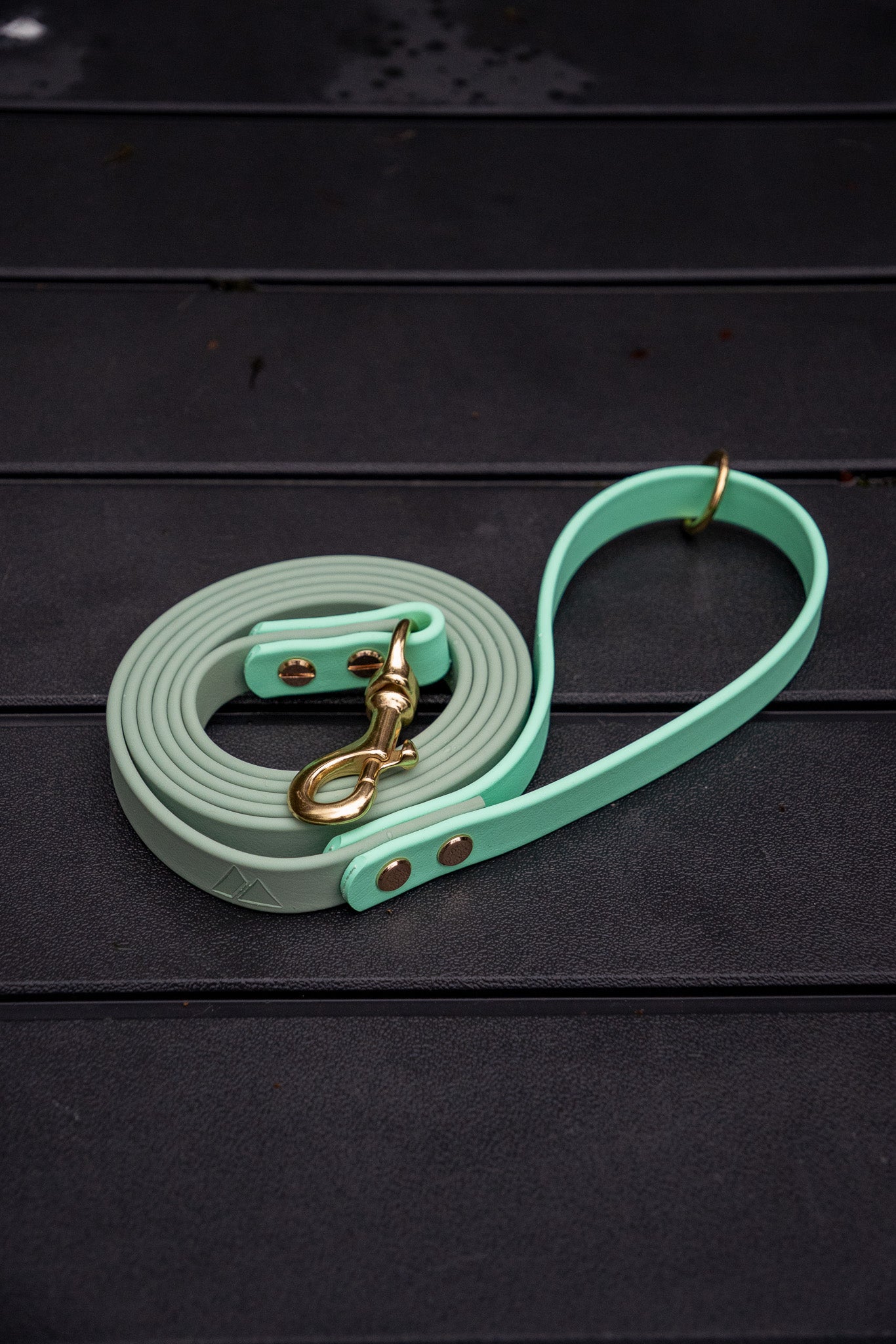
Waterproof coated webbing such as BioThane® is particularly practical for long lines. Dirt and water don't soak into it. This is unlike absorbent materials.
More Line Means More Responsibility
A 30-foot leash does not mean your dog should always have 30 feet.
Around roads, parking lots, other dogs, cyclists, children, narrow trails, or crowded areas, extra distance can quickly become a liability.
Sometimes the best long-line technique is shortening the line.
And sometimes the right tool isn't a long line at all—it's a normal four-to-six-foot leash.
Where Retractable Leashes Actually Have an Advantage
We don't need to pretend retractable leashes have zero benefits.
Their biggest advantage is convenience.
The line automatically stores inside the handle. You don't have to collect coils of leash. Your dog can move closer and farther away without leaving piles of slack on the ground.
For a leash-trained dog in a large, open, low-distraction environment, a quality retractable leash can provide easy exploratory freedom.
They can also be convenient for quick potty breaks. The handler is relatively stationary. The dog needs some room to choose a spot.
But convenience needs to be weighed against the dog, environment, equipment quality, and consequences if something goes wrong.
A retractable leash may seem adequate for a calm 12-pound dog in a quiet yard. However, it's not equipment we'd choose. This applies to a powerful dog that might launch after wildlife.
Context matters.
Long Line vs. Flexi Leash for Strong Dogs
This is where our preference becomes much stronger.
For a large, powerful, high-drive, or highly excitable dog, we'd generally choose a fixed long line. This is true when extra distance is appropriate. It should be a properly sized long line, not a retractable leash.
Why?
Because we'd rather have fewer unknowns between our hand and the dog.
With a long line, you can evaluate the material, hardware, attachment points, condition, and length directly.
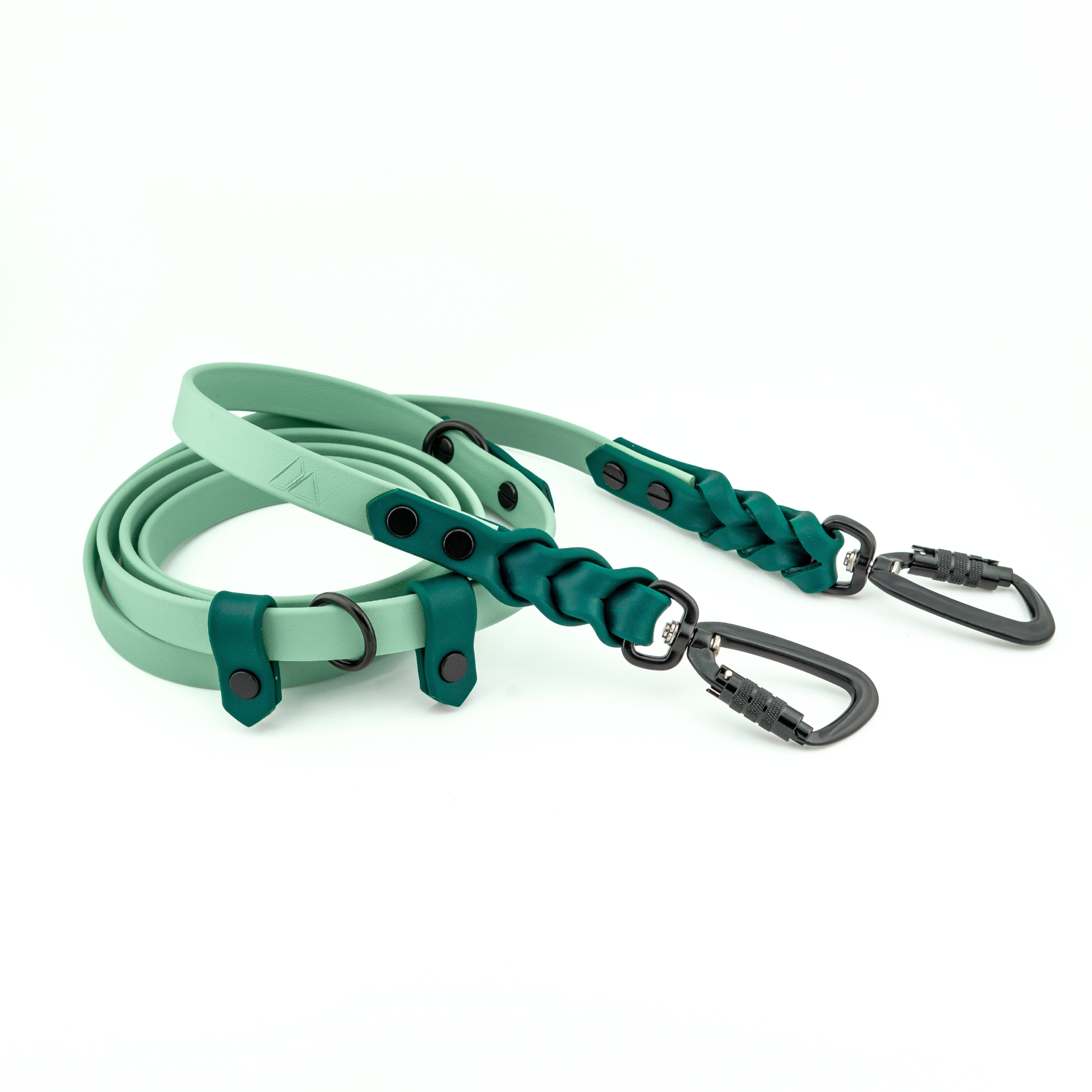
For handlers who want a simple waterproof option, the Element BioThane® Long Line is great. It's for outdoor training and controlled exploration. It keeps the setup straightforward. It does not rely on a retracting mechanism.
That doesn't mean a long line makes a powerful dog easy to handle.
It doesn't.
Handler skill still matters. Training matters. Your attachment point matters. Your environment matters. Allowing a powerful dog to sprint to the end of any long leash can create dangerous force.
Equipment supports good handling. It doesn't replace it.
Long Line vs. Retractable Leash for Everyday Walking
Neither is our first choice for a crowded neighborhood walk.
That may sound strange considering how frequently you see retractable leashes on sidewalks. But think about what you're actually trying to accomplish.
If you're walking beside roads or passing driveways, you don't need your dog far away. This is also true when crossing intersections, encountering other dogs, or sharing sidewalks with people. You generally don't need your dog 15–25 feet away.
You need predictable proximity.
A standard leash usually makes more sense.
Save the extra distance for environments where extra distance is actually useful.
What About Hiking?
It depends heavily on the trail.
On a wide, quiet trail or open area, a long line can give your dog additional room. This is true where leash rules allow it. They can sniff and explore.
On narrow or busy trails, all that extra line becomes cumbersome.
Retractable leashes present similar problems. There's an additional challenge. A thin line may extend across a trail. Another hiker, runner, dog, or cyclist may not immediately see it.
For many hikes, a normal fixed leash or hands-free setup is easier.
The tool should fit the environment—not the other way around.

Long Line vs. Retractable Leash: Which Should You Choose?
If your priority is training, recall practice, predictable handling, or controlled exploration, we'd choose a long line.
If your priority is convenient automatic line management, a quality retractable leash may work. This applies to a calm, leash-trained dog in an appropriate open environment.
But don't choose based solely on convenience.
Look at the actual equipment.
How substantial is the clip?
Is it appropriate for your dog's size and strength?
Is the leash thin cord or wider tape?
How visible is it?
What happens if your dog suddenly accelerates?
How much distance will your dog have before you can stop them?
What components are responsible for taking that load?
And most importantly: what happens if one of those components fails?
Those questions matter a lot more to us than whether the leash automatically rolls itself up.
The Bottom Line
Long lines and retractable leashes solve the same basic problem. They do so in very different ways. Both give your dog more room while maintaining a physical connection.
A retractable leash prioritizes convenience.
A long line prioritizes simplicity and predictable handling.
For recall training, distance work, and controlled exploration, we prefer a fixed long line. This applies to many outdoor training situations. It gives the handler direct control over the available leash. It does not depend on a spring-loaded retracting and braking system.
That doesn't make long lines risk-free.
You still need to manage excess line. Prevent entanglement and inspect your equipment. Use appropriate hardware. Avoid letting your dog hit the end at full speed.
Whatever leash you choose, remember the most important piece of equipment isn't the leash.
It's the person holding it.
Frequently Asked Questions
Is a long line safer than a retractable leash?
A properly used long line can provide more predictable handling. It has a fixed length. It does not rely on a retracting or braking mechanism. However, long lines still carry entanglement and momentum risks. They need to be handled correctly.
Are Flexi leashes bad for dogs?
Not automatically. “Flexi” commonly describes retractable-style leashes. Their suitability depends on the specific leash, dog, handler, and environment. Retractable leashes can be convenient. However, thin lines, extended distance, and entanglement are important. Hardware quality and reliance on mechanical components are also key considerations.
Can a retractable leash break?
Any leash can fail. With retractable leashes, potential failure points are many. These include the line or tape, clip, and internal spool. The brake or locking mechanism, housing, and other components can fail. Inspect the leash regularly. Choose equipment appropriate for your dog's size and strength.
Is a long line better for recall training?
Generally, yes. A long line provides a fixed, predictable amount of distance. It maintains a physical connection to your dog. This makes it particularly useful for recall training and controlled distance work.
Can I use a long line for everyday walks?
You can, but more leash isn't always better. In crowded neighborhoods, near traffic, or around other dogs and people, a standard four-to-six-foot leash is usually easier to manage. Long lines make the most sense when you actually have safe space to use the additional length.
How long should a dog long line be?
It depends on the activity and your handling experience. Shorter 10-to-15-foot lines can be useful when transitioning into distance work. 20-to-30-foot lines provide more freedom for recall and exploration. Longer lines can be useful for specialized activities. These include tracking and scent work.
Can a dog run on a long line?
A dog can move and run while using a long line. However, you should avoid allowing them to build maximum speed. Do not let them slam into the end. More distance means more opportunity to build momentum. An abrupt stop can create significant force. This affects the dog, attachment point, leash, and handler.
Should I use a cord or tape retractable leash?
If you choose a retractable leash, a wider, highly visible tape design avoids some concerns. These are associated with very thin cord. Regardless of style, choose equipment appropriately sized for your dog. Inspect it regularly. Use it only in environments where the additional distance is appropriate.