How to Introduce Your Dog to a New Baby: Before Birth, First Meeting, and Beyond
Bringing home a newborn changes just about everything, especially when you need to introduce dog baby dynamics into the mix. Your sleep schedule, your daily routine, your priorities, and, perhaps most importantly for your dog, the way your household operates.
As trainers and first-time parents, we know this transition is important. Some assume an official introduction must happen the moment you walk inside. This is a mistake.
It doesn't.
Introduce your dog when they show consistent, relaxed behavior around the baby. We want a transition from curiosity toward recognition, familiarity, and neutrality.
That might happen relatively quickly, or it might take several weeks or longer. Your dog's behavior should dictate the timeline, not your excitement to introduce them.
Understanding How Your Dog Perceives a Newborn
Think about a newborn from your dog's perspective.
Your baby doesn't walk, talk, or move like other humans. They smell different and make unusual noises. They move unpredictably and are often carried around.
For some dogs, this is simply interesting. For others, it can be confusing, unsettling, or highly stimulating.
A newborn's crying, squeaking, and sudden movements may also elicit intense interest or concerning prey-related behaviors in some dogs. This doesn't necessarily have anything to do with how friendly your dog is toward adults or how well-trained they are.
Our priority is giving your dog time to become familiar with your baby. Do not expect them to understand this creature immediately.
We cannot know exactly what a dog thinks. However, we can observe meaningful changes in their behavior.
And that's where we recommend placing your focus.
How to Prepare Your Dog Before Your Baby Arrives
Preparation starts well before your due date. You do not need to overhaul all training. Some foundational behaviors make life easier once your baby arrives.
Establish Reliable Foundational Obedience
Some of the most valuable skills for dogs living with newborns are also some of the simplest:
- Place: Going to a designated bed or mat and remaining there until released.
- Down and settle: Relaxing without requiring constant interaction.
- Recall: Reliably moving away from something when called.
- Leave it: Disengaging from items or distractions.
- Spatial awareness: Respecting personal space and moving out of your way when asked.
- Loose-leash walking: Making it easier to maintain your dog's exercise routine once your baby arrives.
We value a reliable place command. It is practical to ask your dog to relax while you feed the baby.
However, obedience is only one piece of the puzzle. A dog holding a down command while intensely staring at a baby isn't necessarily relaxed. We want both responsiveness and genuine emotional regulation.
Introduce Baby Equipment Ahead of Time
Strollers, bassinets, swings, play mats, and other baby equipment can introduce unfamiliar sounds and movement into your home.
Set these items up before your baby arrives. Allow your dog to become accustomed to their presence from a comfortable distance, rewarding calm behavior and establishing appropriate boundaries.
If you plan to walk your dog alongside a stroller, begin practicing before your baby is in it. Establish reliable loose-leash walking first, then gradually introduce the stroller.
Our guide to walking with a hands-free leash is a useful starting point for developing your everyday leash-handling skills.
Gradually Adjust Your Dog's Routine
Now is time to introduce flexibility. This applies if your dog has very strict schedules or unrestricted access to every room.
You don't need to suddenly withdraw attention or reduce your dog's quality of life. Instead, help them become comfortable with reasonable changes in their schedule, independent relaxation, and occasional separation from you.
Make changes before the baby arrives. This ensures new boundaries are not linked only to the newest family member.
Create Dedicated Spaces for Your Dog and Baby
Baby gates, appropriately introduced crates, closed doors, and separate rooms are valuable management tools.
Your dog should have a comfortable area where they can relax without being disturbed. Likewise, your baby should have areas that your dog cannot access without your direct supervision.
Physical separation isn't a failure of training. It's responsible management, particularly when you're exhausted and juggling multiple responsibilities.

Bringing Your Baby Home: Skip the Grand Introduction
Coming home from the hospital is a big event for your dog. Your routine has changed. They are likely excited to see you.
Adding an immediate, up-close introduction to a newborn into that situation isn't something we'd recommend.
Instead, have another adult hold the baby in a separate, secure space while you greet your dog. Give your dog an opportunity to settle before introducing any additional stimulation.
From there, begin allowing your dog to experience the baby's presence at an appropriate distance, using physical barriers as needed.
Your dog can begin becoming familiar with:
- The baby's everyday sounds and movements.
- The scent of baby clothing and blankets.
- Seeing you hold, feed, and comfort your baby.
- Changes in your daily household activities.
- The presence of the baby without being expected to interact.
You can introduce the reality of a baby without introducing the baby directly.
That distinction is important.
We don't believe a dog needs to sniff a newborn immediately to accept them. Familiarity can develop through ordinary, carefully managed daily life.
When Does Your Dog Start Recognizing Your Baby as a Human?
This is a vital aspect of introducing dogs to newborns. It deserves considerably more attention.
We mean an observable behavioral transition. The baby becomes a familiar part of the social environment. They are no longer a novel demand for attention.
There is no definitive test for this, and no specific age at which it happens. Instead, look at how your dog's behavior evolves over repeated exposures.
Early Curiosity and Uncertainty
Your dog may frequently look toward the baby. They may perk up when the baby cries or sniff the air.
Some dogs may be unsure and prefer to keep their distance. Others may want to investigate everything.
Mild, brief curiosity isn't necessarily concerning when your dog remains relaxed and can disengage. What matters is the intensity of their interest and their ability to return to normal behavior.
Some dogs look at a crying baby then return to bed. Others become rigid and intensely focused until the crying stops.
Familiarity and Reduced Interest
As the initial novelty wears off, you may notice that your dog's reactions become less pronounced.
They may hear a noise but no longer feel compelled to get up. They may rest while you feed the baby.
Rather than constantly monitoring what the baby is doing, they begin treating these activities as ordinary household events.
This is a meaningful progression.
Calm, Socially Appropriate Behavior
Eventually, your dog's behavior may resemble how they behave around other familiar people.
Their body language is relaxed. They can acknowledge the baby's presence without needing to investigate. They respond normally to you, voluntarily disengage, and are comfortable resting at an appropriate distance.
These are the types of behaviors we want to see consistently before even considering a closer introduction.
The goal isn't excitement, affection, or protectiveness.
The goal is neutrality.
We want a dog that acknowledges the baby and then goes back to being a dog.
Reading Your Dog's Body Language Around Your Baby
Knowing what to look for helps you decide. You will know when to maintain distance or seek professional guidance.
| Encouraging behaviors | Reasons to pause | Serious warning signs |
| Loose, relaxed posture | Repeated whining or pacing | Intense, prolonged staring |
| Brief glances followed by disengagement | Persistent attempts to investigate | Freezing or rigid posture |
| Voluntarily resting or moving away | Repeated lip licking or stress yawning | Stalking or crouching toward the baby |
| Normal responsiveness to familiar cues | Difficulty settling | Lunging or snapping |
| Remaining relaxed during routine baby activities | Increased vigilance around the baby | Growling or guarding access to the baby |
Body language should always be evaluated in context. A single yawn isn't necessarily a sign of stress, and a wagging tail doesn't automatically indicate friendliness.
Distinguish genuine relaxation from behavioral suppression. A tense, staring dog is not naturally relaxed.
Fixation is a concern. This happens when a dog struggles to redirect attention away from the baby.
The UC Davis School of Veterinary Medicine's guidance highlights prey-related responses. This includes persistent searching, staring, and chasing.
If you see these behaviors, maintain physical separation. Consult your veterinarian or a behaviorist before attempting closer contact.
Even consistently encouraging body language is not proof that a dog is safe to interact directly with an infant.

How to Formally Introduce Dog Baby Pairs: Meeting Your Newborn
You may feel ready for an intentional introduction after several days of consistent relaxation.
Remember that a successful introduction doesn't require physical contact. Many dogs and babies can coexist comfortably without an up-close greeting during the newborn stage.
Step 1: Choose the Right Environment
Choose a quiet, familiar room without visitors, other pets, toys, food bowls, or unnecessary distractions.
Your dog should already be relaxed, and your baby should be settled. Avoid attempting an introduction immediately after an exciting event or during a period of heightened activity.
Step 2: Have Two Adults Present
One adult should be exclusively responsible for the baby, while the other manages the dog.
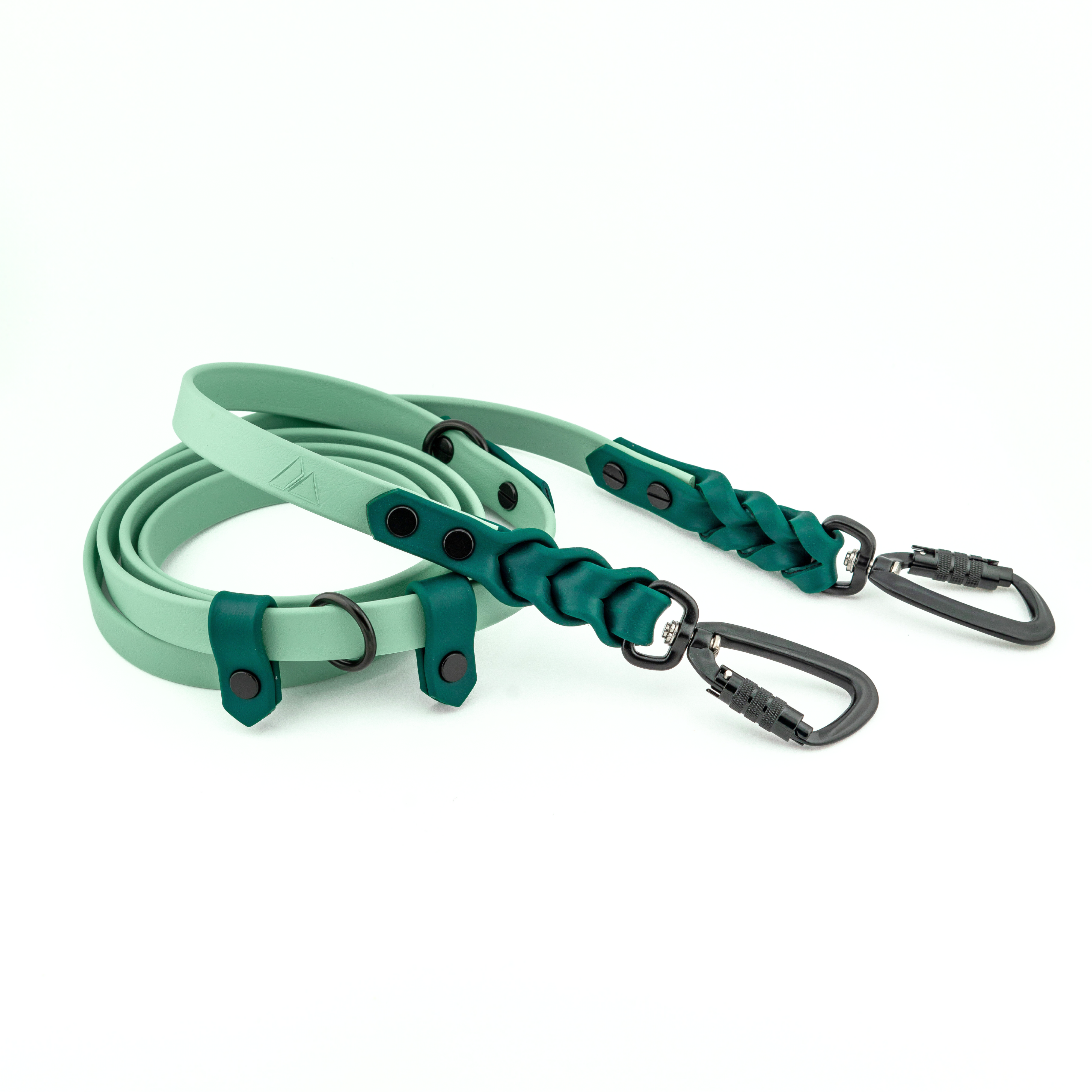
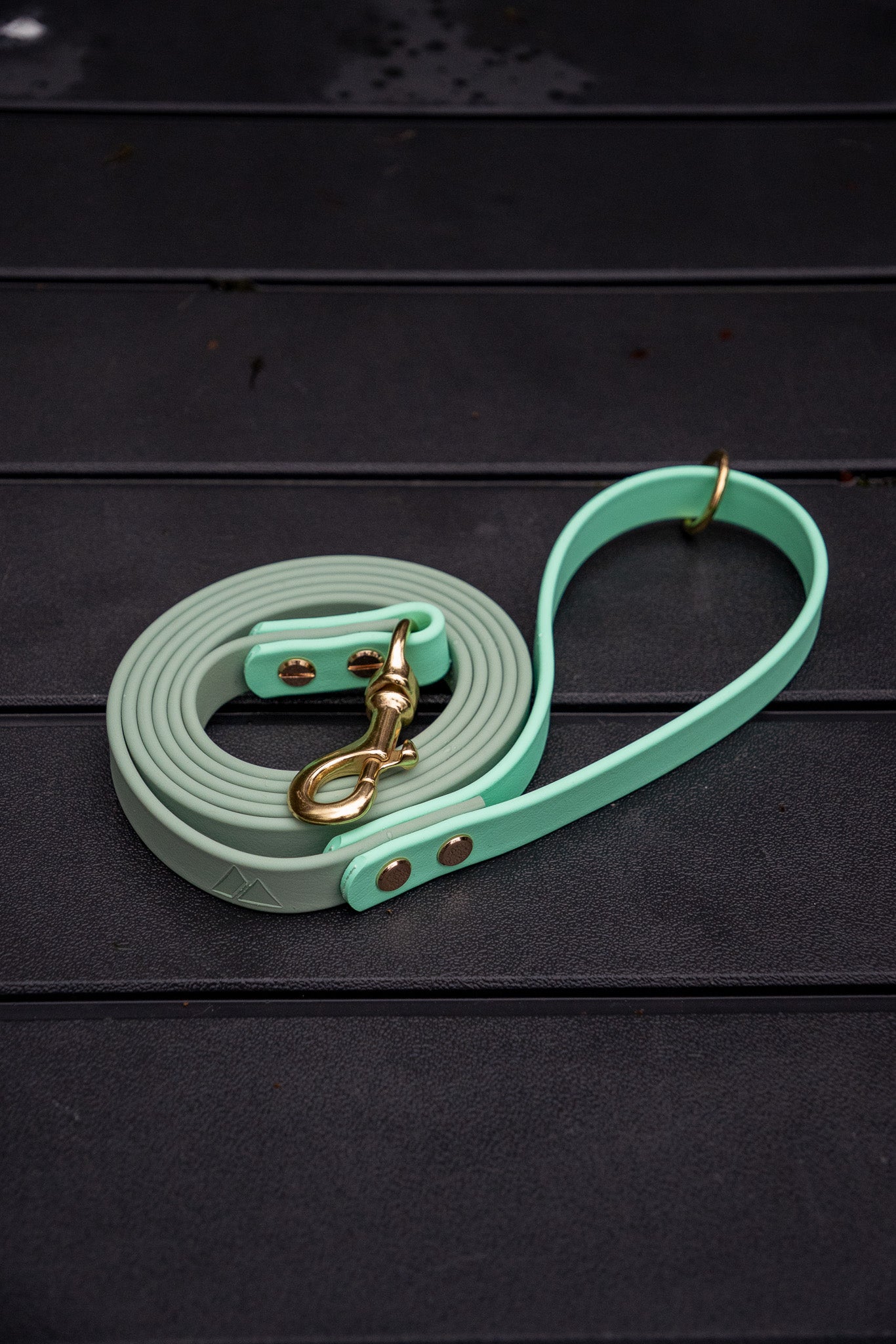
A familiar, fixed-length leash, such as our Atlas Leash, is a practical handling tool.
We prefer a handheld leash for this situation rather than connecting the dog to the person holding the baby. Your equipment should support your ability to maintain space and calmly redirect your dog, not create unnecessary physical connections.
Step 3: Begin at a Comfortable Distance
Allow your dog to observe the baby while maintaining enough distance to prevent contact.
Reward calm behavior, particularly voluntary disengagement and relaxed body language. Your dog should be free to move away with their handler rather than being pressured to approach.
There is no need to lure your dog closer with treats or hold the baby out for them to investigate.
Step 4: Keep the Interaction Brief
A few moments of calm observation can be an excellent first introduction.
If your dog acknowledges your baby and then chooses to look elsewhere, that's a positive outcome. Don't feel obligated to encourage additional interaction simply because things are going well.
Keep your baby's face and body out of reach. For closer contact, get an assessment from a qualified professional.
Step 5: End the Introduction While Things Are Going Well
An uneventful introduction is a successful introduction.
Your dog doesn't need to lick, cuddle, or physically interact with your newborn. End the session before either your dog or your baby becomes uncomfortable.
The first introduction should be one small step in a much longer adjustment process, not the culmination of it.
Common Mistakes When Introducing Dogs to Babies
Forcing Your Dog to Meet the Baby
Avoid holding a baby in a dog's face. Do not restrain a nervous dog or force an uninterested dog to approach.
Give your dog space and an appropriate way to disengage.
Mistaking Excitement for Affection
Whining, frantic tail wagging, intense interest, and persistent attempts to get closer may indicate heightened arousal rather than affection.
We prefer a dog calmly lying across the room. We do not want a dog desperate to investigate.
Encouraging Protective Behavior
It can be tempting to interpret a dog constantly hovering around a baby as protective or nurturing.
Some behaviors are concerning. This includes blocking people from the baby or becoming tense when the baby is picked up.
Your dog doesn't need to manage access to your child. That's your responsibility.
Punishing Warning Signals
If your dog growls, moves away, or communicates discomfort, take that information seriously.
Punishing a growl doesn't necessarily resolve the discomfort behind it. Instead, calmly separate your dog and baby and address the underlying concern with professional assistance.
Assuming a Successful Introduction Means the Work Is Done
A dog that behaves appropriately around a sleeping newborn may respond differently to a crawling infant or an unpredictable toddler.
An introduction is not a lifetime safety assessment.
Continue managing their relationship as your child develops and your dog's environment changes.
Helping Your Dog Adjust to Life With a Newborn
Your dog is still your dog. They still need exercise, mental stimulation, downtime, and meaningful interaction with you.
That doesn't mean maintaining the exact same lifestyle you had before becoming parents. Realistically, some things will change.
Short training and food enrichment help maintain quality of life. Supervised play and structured walks also help when time is limited.
A few minutes with a training toy can help you reconnect. Keep energetic play away from your baby's space.
Reward ordinary behavior around the baby. Recognize when your dog chooses to lie down or move away quietly.
You don't always need to ask your dog to do something. Sometimes, the best behavior is the one they choose on their own.
Never Leave Your Dog and Baby Unsupervised
This applies regardless of your dog's breed, age, training level, temperament, or previous history with children.
Active supervision means an attentive adult is present and able to manage the dog's access to the baby.
Being in the same room while you're sleeping, showering, cooking, working, or concentrating on something else is not active supervision.
When your attention needs to be elsewhere, physically separate your dog and baby using secure, appropriate barriers.
This becomes even more important when your baby begins rolling, crawling, grabbing, and walking.
Your dog's relationship with your child will evolve through multiple developmental stages. Continue reassessing your household management rather than assuming the initial introduction established permanent boundaries.
When to Seek Professional Help
Seek professional guidance if your dog has a history of aggression or anxiety. This is vital before your baby arrives.
If your baby is home and behavior is concerning, maintain secure separation. Wait for an individualized assessment.
Start with your veterinarian. They can evaluate the dog and refer you to a veterinary behaviorist.
There is no benefit to rushing an introduction when you're uncertain about your dog's behavior.

Frequently Asked Questions
How long should you wait before introducing your dog to your newborn?
There is no universal timeline. Begin with separation and carefully managed exposure at a distance. Consider a closer introduction only after your dog has demonstrated consistent relaxation and appropriate behavior. Some dogs may need weeks or longer, and others may require ongoing separation and professional support.
How do I know if my dog recognizes my baby as a human?
You cannot definitively determine how your dog categorizes your baby. However, decreasing novelty-driven interest, relaxed body language, normal responses to familiar cues, and voluntary disengagement can indicate growing familiarity. These behaviors do not guarantee that direct contact is safe.
Should I bring home a baby blanket for my dog to smell?
Your dog can investigate a scented item before the baby arrives. This is optional. It does not replace supervision. Keep baby items out of reach.
Is it normal for my dog to ignore my newborn?
A lack of interest can be an excellent outcome. Your dog doesn't need to actively seek a relationship with your newborn.
Why does my dog become excited when my baby cries?
A newborn's crying may trigger curiosity, uncertainty, anxiety, or heightened arousal. Look at your dog's overall body language and their ability to disengage. Persistent fixation, stalking, or an inability to settle warrants separation and professional guidance.
Should I let my dog lick my newborn?
We recommend preventing your dog from licking your newborn, particularly around their face, mouth, and hands. Licking is not necessary for bonding, may transfer germs, and places your dog unnecessarily close to your baby.
Will my dog naturally protect my baby?
Not necessarily, and protective behavior isn't something we recommend encouraging. A dog that guards a baby or restricts other people's access can introduce serious behavioral and safety concerns. Calm coexistence is a much more appropriate goal.
Final Thoughts: Build the Relationship, Don't Force It
As trainers and parents, we believe the most valuable gift for your dog is time.
Time to process unfamiliar sounds. Time to adjust to a new routine. Time to become comfortable with the presence of another human in your household.
Your dog and your baby don't need to become best friends on day one. They don't need a picture-perfect first meeting, and they certainly don't need forced physical interaction to establish a future relationship.
They need a safe environment and clear boundaries. They need to develop familiarity at an appropriate pace.
Train the behaviors you want to see. Reward neutrality. Respect your dog's communication. And never compromise your baby's safety for the sake of an introduction.
The relationship can develop naturally over time. There is no reason to rush it.
Be patient. Be intentional. Be Bolder.