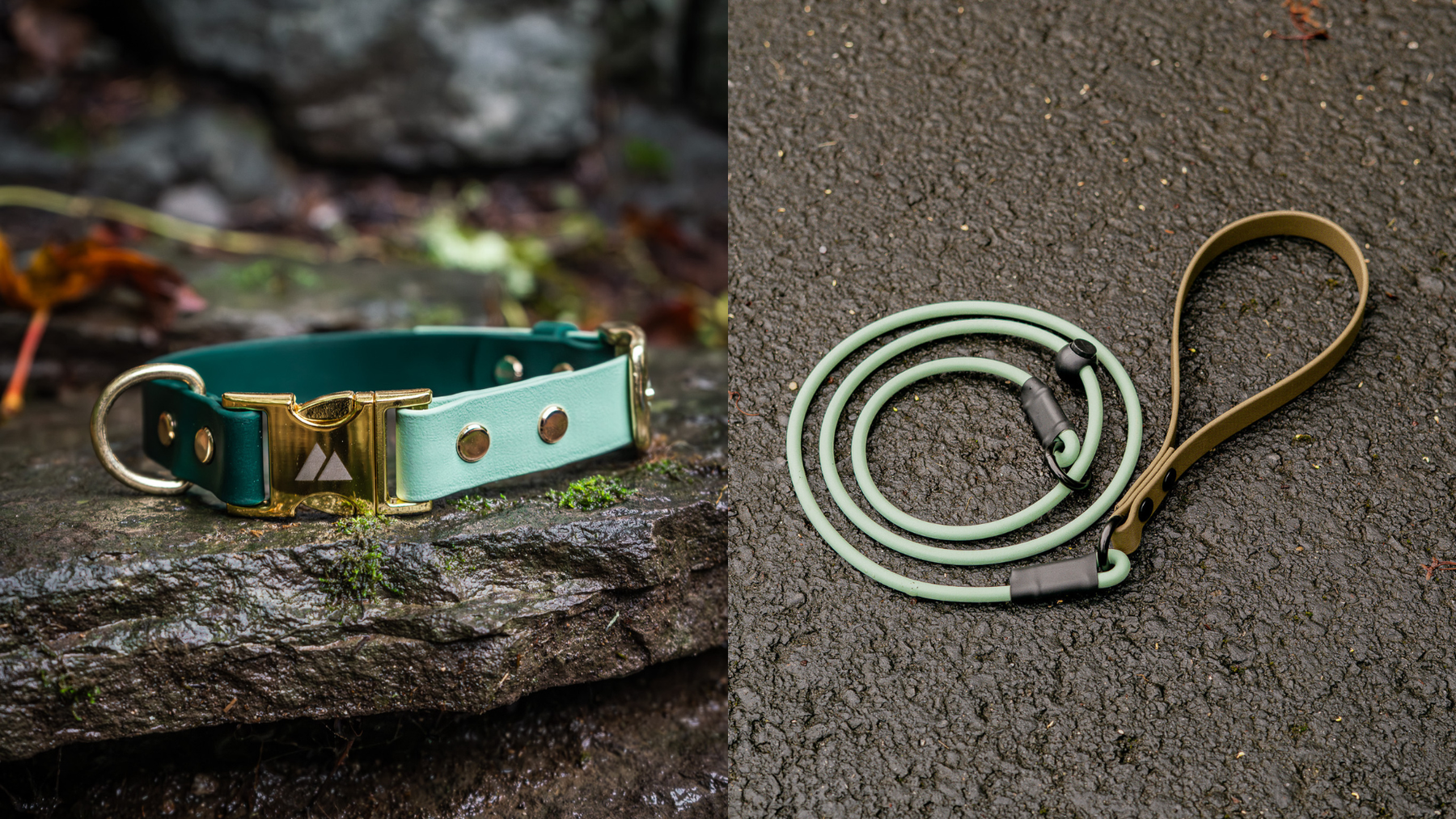
Which Dog Collar Is Best for Training?
A dog collar isn’t just a piece of gear—it’s part of how you communicate. Different collars create different types of feedback. Some dog collars are built for everyday reliability. Others are designed for more intentional, moment-to-moment training. When those roles get blurred, progress can stall—or worse, confusion builds for the dog.
This guide from our team at Bolder K9 breaks down four common tools—flat collars, martingale collars, slip collars, and slip leashes—so you can choose with more clarity and less guesswork.
As always, the right tool depends on the dog, the handler, and the timing. When in doubt, work with a professional trainer to ensure proper fit and use.
Flat Collar
Our pick: Atlas Quick Release Biothane Collar

The flat collar is the foundation. It’s simple, stable, and designed for everyday wear.
What it does well
A flat dog collar maintains a consistent size and distributes pressure evenly around the neck. There’s no tightening mechanism, which makes it predictable and low-risk for daily use in different environments.
Training impact
A flat collar provides minimal corrective feedback. It doesn’t tighten or release in response to behavior—it simply holds the leash.
For dogs that already understand leash pressure, this works well. But for dogs that pull or disengage, it often becomes background noise. Constant pressure without change is easy to ignore.
Best use cases
- Daily wear (ID tags, casual walks)
- Dogs with established leash manners
- Low-distraction environments
Limitations
If you’re actively teaching leash skills, the flat collar won’t offer much clarity. It manages—it doesn’t teach.
Martingale Collar
Our pick: ECO Adjustable Biothane Martingale Collar

The martingale collar sits between everyday wear and active training. It’s designed for controlled tightening.
What it does well
When the dog pulls, the collar tightens slightly—then releases immediately when tension stops. Unlike a slip collar, that tightening is limited, which prevents over-correction.
Training impact
This creates a clear pressure-and-release signal, which is foundational in teaching leash responsiveness.
It gives you a way to say, “That’s not it,” without escalating intensity. For many dogs, that’s enough to build awareness and better choices over time.
Best use cases
- Dogs who slip out of flat collars
- Early leash training
- Handlers who want more communication without harsh correction
Where it requires attention
Fit matters more here than with a flat collar. Too loose, and it loses function. Too tight, and it behaves more like a constant-pressure tool.
Slip Collar
Our pick: Biothane Rope Slip Collar

The slip collar is a more direct training tool built for precision and timing, and no it does not mean your dog can slip out easier.
What it does well
It tightens fully when pressure is applied and releases completely when it’s not. There’s no limit to the loop—so the handler controls everything through timing and intent.
Training impact
This creates binary feedback: on or off, tight or loose.
Used well, it can sharpen communication significantly. The dog learns exactly when behavior changes the outcome. But that clarity depends entirely on the handler’s timing.
Best use cases
- Structured training sessions
- Experienced handlers
- Situations requiring precise, immediate feedback
Where it requires caution
This is not passive gear. If tension lingers or corrections are poorly timed, it can create confusion or stress instead of learning.
Slip Leash
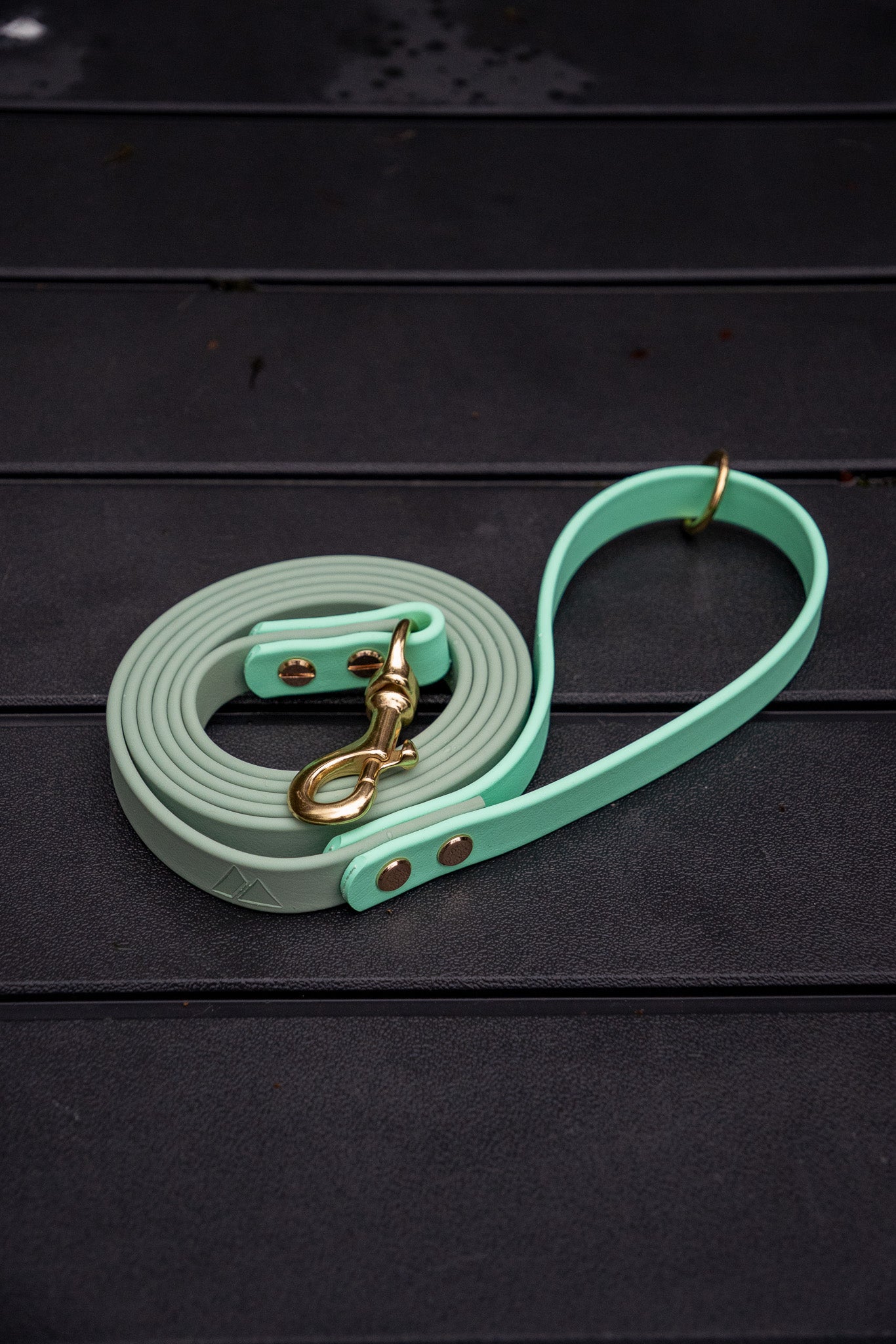
Our pick: Hybrid Handle Biothane Rope Slip Leash

A slip leash combines leash and collar into one continuous system.
What it does well
It’s fast, simple, and highly adjustable. You can place it higher or lower on the neck, change tension instantly, and move between dogs or environments without re-clipping gear.
Training impact
Like a slip collar, it relies on pressure and release, but adds flexibility in how that pressure is applied.
Because you can adjust position easily, it allows for more nuanced handling—but also introduces more room for inconsistency if you’re not intentional.
Best use cases
- Vet visits, grooming, or transport
- Short, controlled training sessions
- Situations where efficiency matters
Where it requires awareness
Slip leashes are often used casually because they’re convenient—but they still function as a training tool. Without consistency, signals can become unclear.
Choosing the Right Dog Collar for Training
Each of these tools serves a different role:
- Flat collar: everyday stability and simplicity
- Martingale collar: added communication with controlled feedback
- Slip collar: precise, timing-dependent training
- Slip leash: adaptable, all-in-one handling tool
The goal isn’t to find the “best” dog collar. It’s to match the tool to the moment.
A flat collar might be perfect for a calm neighborhood walk—but ineffective for teaching leash pressure. A slip leash might be ideal for controlled environments—but too nuanced for casual, inconsistent use.
The Bigger Picture
No collar fixes behavior on its own. Progress comes from clear timing, consistent handling, and appropriate expectations. The tool simply shapes how that communication is delivered.
If you’re unsure which direction to go, a professional trainer can help you choose—and more importantly, show you how to use the tool in a way that’s fair and effective for your dog. Because in the end, it’s not about the gear. It’s about clarity.
Be sure to check out Bolder K9 on Instagram!