Choose adjustability first
A good hands-free leash should fit around your waist or across your body without awkward slack.
Hands-Free Dog Leashes
A hands-free dog leash should give you more freedom without giving up control. This guide explains how to choose the best hands-free leash for walking, hiking, running, training, and everyday life with an active dog.

Quick Recap
A good hands-free leash should fit around your waist or across your body without awkward slack.
Large dogs, strong dogs, and reactive dogs need durable hardware, controlled length, and smart handling points.
BioThane is waterproof, easy to wipe clean, and practical for mud, rain, training, hiking, and daily walks.
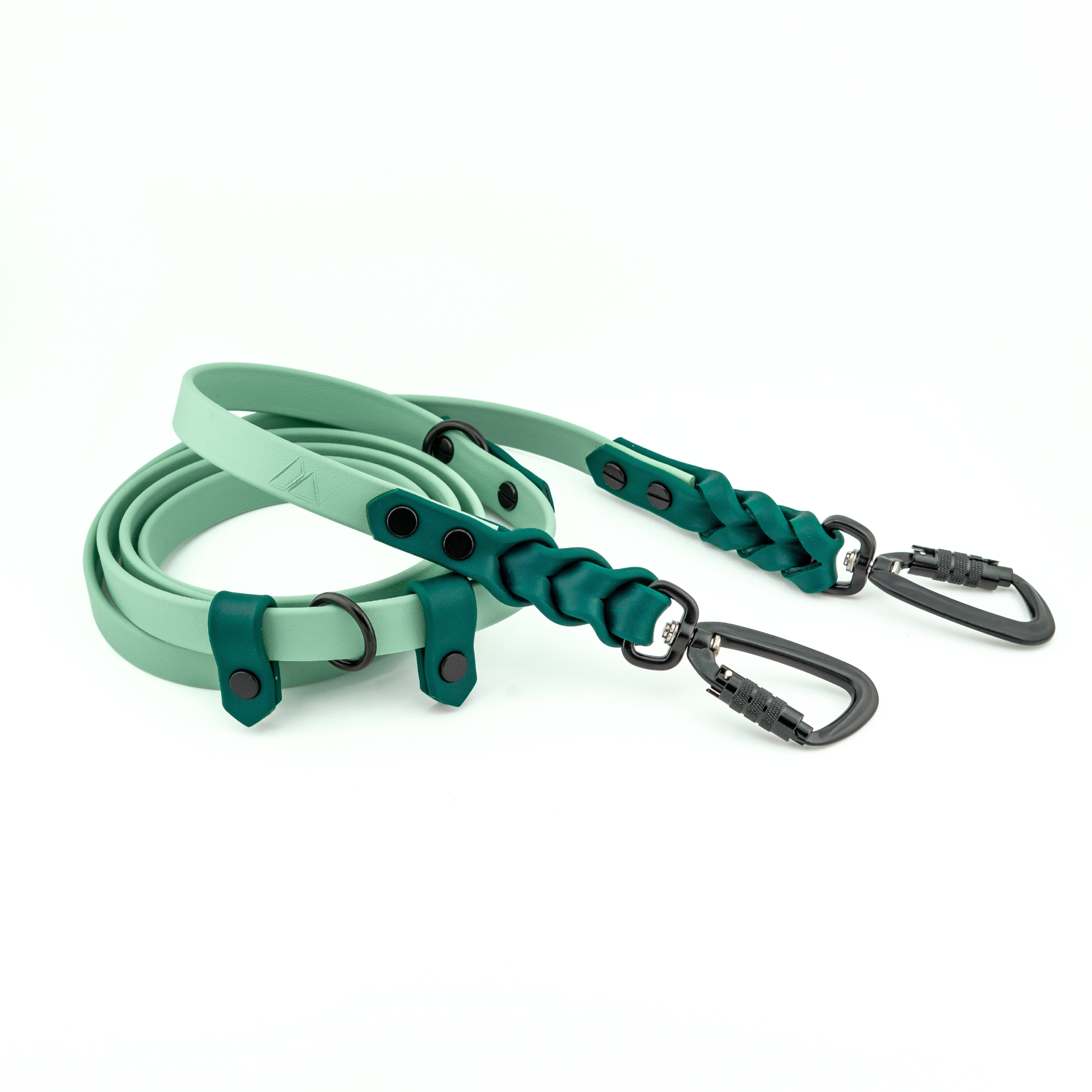
The best designs include a way to shorten, guide, or quickly grab the leash when needed.
Answer First
The best hands-free dog leash is an adjustable leash system that can be worn around the waist or across the body while still giving you reliable control of your dog.
For most dog owners, the best choice is a durable BioThane hands-free leash with strong hardware, adjustable sizing, a comfortable worn position, and a built-in option to grab or shorten the leash quickly.
Bolder K9 hands-free leash systems are designed for active handlers who need practical gear for walking, hiking, training, running errands, and working with high-drive dogs.
Common Questions
These are the real-world questions shoppers often ask before choosing a hands-free leash for walking, hiking, training, or daily use.
The best hands-free dog leash is adjustable, secure, durable, and easy to control. For most handlers, a BioThane hands-free leash with strong hardware and multiple adjustment points offers the best balance of comfort and control.
Hands-free leashes can be safe for large dogs when the leash is built with strong materials and the handler can still control the dog. Large dogs should use a durable leash with reliable hardware, proper fit, and a short-control option.
Hands-free leashes can work for reactive dogs when used carefully, but they should not replace active handling. A reactive dog handler should choose a secure leash system with a grab point, predictable length, and strong hardware.
Yes, you can run with a hands-free dog leash if your dog is trained to move beside you and the leash fits securely. A waist or crossbody leash can keep your hands available while maintaining a consistent connection.
BioThane is excellent for hands-free dog leashes because it is waterproof, durable, odor-resistant, and easy to clean. It works especially well for rain, mud, hiking, beach walks, and everyday training.
A hands-free dog leash is usually best between 6 and 10 feet, depending on your body size, dog size, and intended use. Shorter lengths offer more control, while longer lengths allow more movement.
You should wear a hands-free leash in the position that gives you the most comfort and control. Waist wear can feel stable for walking, while crossbody wear often feels natural for errands, hiking, or casual use.
A hands-free leash can be worn on the body, while a regular leash is held only by hand. The best hands-free leashes still include a way to grab, shorten, or guide the dog when needed.
Hands-free leashes can be useful for training because they keep leash tension consistent and free your hands for rewards, markers, or handling gear. They are especially helpful for loose-leash walking and engagement work.
A hands-free leash does not automatically stop pulling, but it can make pulling easier to feel and manage. Training, leash length, and handler position still matter.
Strong metal hardware is best for most hands-free dog leashes, especially for medium, large, or powerful dogs. The hardware should feel secure, smooth, and appropriate for the dog’s size and strength.
Choose a hands-free hiking leash that is waterproof, easy to clean, adjustable, and secure on uneven terrain. BioThane is a strong option because it handles mud, water, and brush better than many fabric leashes.
Clean a BioThane hands-free leash by wiping it with warm water and mild soap. For heavier mud or grime, rinse it, wipe it down, and let it air dry.
Hands-free BioThane leashes are often easier to clean and more weather-resistant than nylon. Nylon can absorb water, dirt, and odor, while BioThane wipes clean quickly.
Yes, you can use a hands-free leash with a properly fitted collar. For dogs that pull hard or need more guidance, many handlers pair the leash with a secure collar or training setup recommended by a trainer.
Yes, a hands-free leash can be used with a harness. A harness may be useful for hiking, running, or casual walking, but the dog should still be trained not to pull excessively.
The best hands-free leash for everyday walks is comfortable, adjustable, easy to clean, and quick to grab when needed. Bolder K9 BioThane hands-free leashes are built for daily use in real weather and real terrain.
The biggest mistakes are choosing a leash that is too long, using weak hardware, ignoring fit, and assuming hands-free means hands-off. A good leash should support control, not replace training.
Buying Guide
Decide whether you prefer waist wear, crossbody wear, or a leash that can do both.
Choose shorter setups for control and longer setups for hiking, relaxed walking, or sniff time.
Look for secure clips, strong connection points, and hardware appropriate for your dog’s size.
For active dogs, choose waterproof materials that will not hold odor after rain, mud, or training.

Materials
BioThane is usually the better choice for wet, dirty, active, or high-use environments because it does not absorb water and wipes clean easily.
| Feature | BioThane | Nylon |
|---|---|---|
| Water resistance | Excellent | Can absorb water |
| Cleaning | Wipes clean | May need washing |
| Odor resistance | Strong | Can hold odor |
| Best use | Training, hiking, daily wear | Light casual use |
Recommendations
Choose based on how much adjustability, structure, and control you want from your leash system.

Best everyday choice
A rugged adjustable hands-free leash for everyday walks, training, and active dog handling.
Shop this leash
Best rugged option
A durable hands-free option for handlers who want a rugged build, clean styling, and reliable control.
Shop this leash
Best flexible setup
A flexible adapter-style setup for building a hands-free leash system around your preferred walking style.
Shop this leashPurchase Checklist
Can the leash adjust comfortably to your waist or crossbody measurement?
Does the leash give you a way to grab, shorten, or guide your dog quickly?
Is the leash built for your real routine: walking, hiking, running, training, or daily errands?
Best Practices
A hands-free leash should support better movement, not replace active handling.