What Is French Linen? Why Dog Trainers Choose It for Tug Toys
Not all tug toys are created equal. Many professionals prefer French linen tugs. In dog training, the material matters. The handle you're holding matters too.
French linen has become a popular choice among professional dog trainers, working-dog handlers, and sport-dog enthusiasts. But its appeal goes beyond durability.
French linen is a specialized woven fabric used in bite tugs. It combines durability and flexibility. It has a textured surface for comfortable gripping. These traits are useful for interactive reward play. They help with bite development and training sessions.
You might be building a young dog's confidence. You could be increasing engagement. French linen offers a balance. It provides a comfortable bite surface and necessary structure.
But is it actually better than jute, Nylcot, Cordura, or firehose?
That depends on your dog, your training goals, and how you use the toy.
What Exactly Is French Linen?
In dog training, French linen is a heavy-duty woven material. It is common in professional bite-training equipment.
Clothing linen is lightweight. Training-grade French linen is different. It is designed to withstand repeated gripping, pulling, and friction.
The terminology can be confusing. Some use "French linen" for synthetic blends. Others distinguish it from Nylcot. Fiber composition varies by manufacturer. The name alone is not precise.
What matters for training is how the finished material performs.
French linen bite fabrics are generally valued for three characteristics:
- A textured, grippable surface: The woven construction gives dogs a surface they can engage with rather than a slick exterior.
- Flexibility under pressure: The material can move and compress around the dog's bite, depending on the tug's filling and construction.
- Durability during repeated interaction: Quality training-grade fabrics are designed to handle the repeated gripping and releasing involved in tug games.
French linen is commonly used in bite tugs, bite pillows, bite wedges, and protective bite-training equipment.
For everyday dog owners, though, you don't need to participate in protection sports to appreciate the material.
A well-designed French linen tug is very useful. It rewards obedience and encourages interactive play. It teaches dogs that working is enjoyable.
Why Is French Linen So Popular for Dog Training?
The real advantage of French linen isn't simply how long the fabric lasts.
The material helps create a productive interaction. It connects the dog and the person holding the toy.
1. It Provides a Comfortable, Satisfying Bite Surface
Dogs don't all enjoy biting the same things.
Some prefer firm rubber balls. Others enjoy soft fleece, braided rope, or a larger fabric surface they can grip with their whole mouth.
French linen offers a middle ground.
Its woven texture provides a defined bite surface. The fabric and filling compress. This allows a dog to establish a secure grip.
That combination is particularly useful when introducing tug games to dogs that are hesitant to bite harder materials.
The dog does not fight a rigid toy. Instead, the dog can focus on the game.
French linen is not always the most comfortable material. Puppies may prefer a soft fleece tug. Experienced adults may enjoy a firmer surface.
French linen gives trainers another way to match rewards. They can match the dog's preferences and experience.
2. It Supports Full, Confident Grips
Handlers want dogs to develop a committed, full-mouth grip. They want to avoid grabbing with front teeth.
A properly sized French linen tug can support that goal.
The material has some flexibility. A dog can settle into the bite. It does not need to readjust its mouth.
The size, diameter, and firmness of the tug matter here.
A narrow, soft tug may be easier for a younger or less experienced dog to engage with. A larger, firmer tug may be more appropriate for an adult dog practicing stronger, more deliberate grips.
However, fabric alone doesn't teach good bite mechanics.
The handler's presentation, movement, timing, and understanding of the dog's physical development all influence the result.
A good tug creates the opportunity for a confident grip. Good handling helps the dog learn how to use it.
3. It Helps Turn Play Into a Meaningful Training Reward
A tug toy becomes a training reward when the dog values the opportunity to play with it.
For many dogs, the reward isn't simply possessing the object.
It's the entire experience: chasing, catching, gripping, pulling, winning, and interacting with the handler.
French linen works well here. It provides a fabric bite surface. This surface can be presented in different ways.
A handler can use the tug to reward a successful recall, a focused heel position, or a completed obedience exercise.
For example, imagine you're working on engagement with a young German Shepherd.
The dog offers eye contact and responds to a cue. Then, it chases and catches a French linen tug.
The handler asks for a release after a brief game. They reset the exercise. Then, they offer another chance to earn the toy.
The dog begins to learn that paying attention and participating in training can lead to a rewarding interaction.
French linen doesn't create motivation alone. A well-matched tug makes the reward easier to enjoy. It helps the handler deliver rewards consistently.
4. It Encourages Handler-Focused Engagement
Training toys differ from ordinary chew toys. The role of the handler is the biggest difference.
A chew toy is generally designed for the dog to enjoy independently.
A training tug is different.
The handler is part of the reward.
The person controls the game. They decide when it starts and how it moves. They decide when the dog wins.
That creates opportunities to practice attention, communication, and cooperation.
A French linen tug with well-positioned handles can make these interactions easier to manage.
The handler presents the bite surface clearly. They keep hands away from the mouth. They adjust movement based on the dog's confidence.
Consider two scenarios:
Dog A receives a toy and runs away to play alone.
Dog B engages in a short tug game. It wins the toy and returns. Then, it eagerly waits for another round.
Neither behavior is automatically wrong. Dog B participates in a game. This creates repeated opportunities for interaction and reinforcement.
That's the value of handler-focused reward play.
The goal isn't to make the dog dependent on the toy. It's to make working together worth repeating.
5. It Offers Flexibility for Different Training Stages
Not every dog should start with the same tug.
A puppy learning to enjoy play has different needs from an experienced adult working dog.
French linen tugs come in different sizes and shapes. They have various firmness levels. This makes the material adaptable to training stages.
For beginners, a softer, appropriately sized tug may make catching and gripping easier.
For more experienced dogs, a firmer or larger tug can provide a different bite experience.
Some tugs include additional loops. These allow handlers to create prey-like movement. They do this by dragging the toy.
These features give handlers options without requiring an entirely different training approach.
Choose the appropriate equipment for the individual dog. Do not assume a firmer toy is always better.

French Linen vs. Other Dog Tug Toy Materials
French linen isn't the only fabric used in dog training.
Jute, Nylcot, and Cordura are common options. So are ballistic nylon, fleece, and firehose. Each offers a different texture and feel.
Understanding those differences helps you choose the right tool rather than simply buying the toughest-looking toy.
| Material | Bite feel | Best suited for | Main tradeoff |
| French linen | Textured, flexible, often moderately firm | Reward play, grip development, working-dog training | Quality and firmness vary by construction |
| Nylcot | Woven, structured, with some give | Repeated grip work and sport training | May feel firmer than some French linen tugs |
| Jute | Coarse, fibrous, textured | Traditional bite work and experienced dogs | Rougher texture; can shed fibers |
| Cordura | Smooth to lightly textured, flexible | General tug games and reward play | Performance depends heavily on fabric grade and construction |
| Ballistic nylon | Dense, relatively smooth | Everyday interactive play | May offer less pronounced bite texture |
| Firehose | Dense, often stiff and flat | Rugged tug sessions with dogs that enjoy firmer surfaces | Can be less inviting for tentative biters |
| Fleece | Very soft and pliable | Puppies, beginners, gentle tug games | Usually less resistant to intensive wear |
These are general characteristics, not universal rankings. The quality of stitching, fabric weight, filling, and overall design can matter as much as the material name.
French Linen vs. Nylcot: What's the Difference?
French linen and Nylcot are frequently discussed together because both are popular in bite-training equipment.
Nylcot generally refers to a woven blend of nylon and cotton. French linen is a broader trade term that may describe different specialized woven fabrics, including some blends.
French linen may feel softer and more flexible. Nylcot may feel denser or more structured.
Both can be useful for full-grip development and reward play.
If your dog prefers a slightly more forgiving surface, a softer French linen tug may be worth considering.
If you're looking for a structured tug for repeated bite exercises, a Nylcot option may be appropriate.
However, the finished tug's firmness can outweigh the difference between the fabrics.
A tightly filled French linen tug may feel considerably firmer than a loosely filled Nylcot tug.
French Linen vs. Jute: Traditional Texture or Flexible Grip?
Jute is one of the traditional materials associated with bite training.
Its coarse, natural-fiber construction provides a distinctive texture that many experienced dogs enjoy gripping.
French linen typically offers a less abrasive-feeling surface, depending on the particular weave.
That can make it a practical option for dogs transitioning from softer toys or learning to maintain a confident grip.
Jute suits dogs comfortable with rough textures. It also suits programs where that material is preferred.
Neither material is inherently superior.
For puppies or sensitive dogs, the choice should also account for age, dental development, and individual comfort.
French Linen vs. Cordura and Ballistic Nylon
Cordura and ballistic nylon are popular because of their abrasion-resistant construction and practical everyday durability.
These fabrics are often used for general-purpose bite tugs and interactive dog toys.
These are a good choice for owners. They work for backyard play, obedience, or recreational games.
French linen tends to be especially appealing when the handler wants a woven bite surface associated with structured grip work.
However, Cordura and ballistic nylon shouldn't be dismissed as inferior training materials.
A well-constructed tug made from either fabric may be exactly what a particular dog prefers.
French Linen vs. Firehose: Flexibility or Firmness?
Firehose tugs offer a noticeably different experience.
Depending on their construction, firehose toys can be dense, relatively stiff, and resistant to abrasion.
That makes them appealing for dogs that enjoy gripping firmer surfaces during energetic tug games.
French linen is generally more flexible and can be easier to compress around the bite.
For a young dog learning to engage confidently, that flexibility may be an advantage.
For an adult dog that enjoys a firmer, more resistant tug, firehose may be a good fit.
One important distinction: firehose is durable, but that doesn't make it indestructible or appropriate for unsupervised chewing.
Both materials should be treated as interactive training equipment.
Why the Handler's Grip Matters Just as Much as the Dog's
A great bite surface is only half of a well-designed tug.
The other half is how the handler holds, moves, and presents it.
Difficult tugs make reward timing awkward. They increase the risk of accidental contact with the handler's hands.
That's why handle design matters.
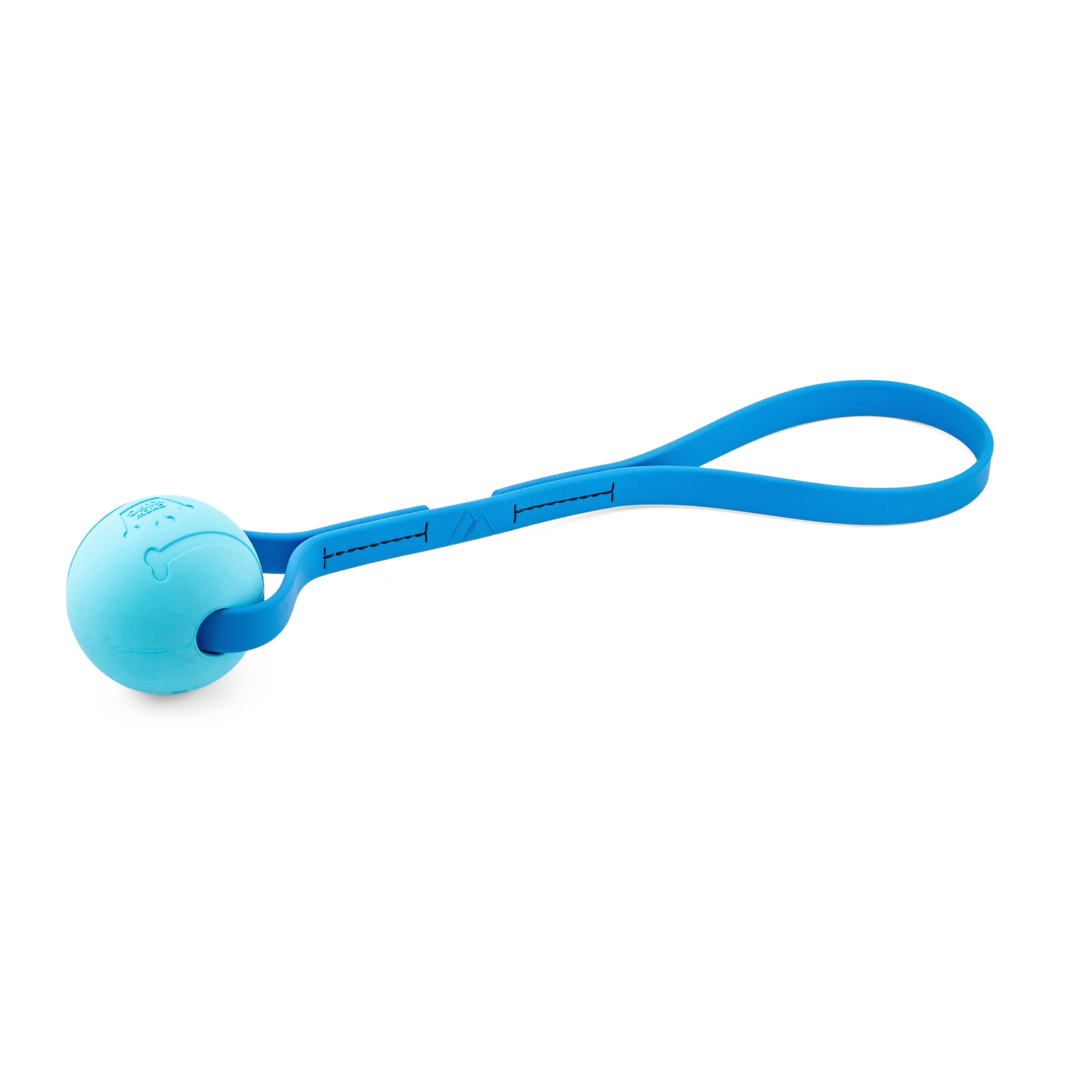
At Bolder K9, our French Linen Bite Tug with BioThane® Handles is special. It combines a woven surface with reinforced construction and BioThane handles.
The fabric provides the grip area. The handles give the handler dedicated places to hold the toy.
BioThane® is great for muddy or wet environments. Its coated surface is easy to wipe clean.
These details make the toy more convenient. This helps handlers moving between obedience and outdoor sessions.
The goal isn't to create the heaviest or most complicated tug possible.
It's to make interaction clear, comfortable, and repeatable.
How to Use French linen tugs to Build Engagement
You don't need to train for a protection sport to use a French linen tug effectively.
Here is a simple progression for incorporating one into reward-based training.
Step 1: Make the Toy Interesting
Start with short, playful movements.
Move the tug along the ground or away from the dog to encourage interest. Avoid repeatedly pushing the toy directly into the dog's face.
Give the dog an opportunity to chase and catch it.
If the dog seems hesitant, reduce the intensity and try a softer presentation.
Step 2: Reward the Decision to Engage
When your dog grabs the tug, allow a short, enjoyable game.
Use controlled, mostly horizontal movement rather than forceful upward jerks or sudden twisting.
Keep the intensity appropriate for the dog's size, age, physical condition, and experience.
For beginners, a few seconds of successful play may be enough.
Step 3: Let Your Dog Win
Allowing the dog to win the tug can make the game more satisfying.
A win might involve the handler releasing the toy after a short tug session.
Some dogs will immediately bring the toy back for another round. Others may need to learn that returning to the handler restarts the fun.
Use a safe, enclosed area while developing this behavior.
Step 4: Introduce a Release Cue
Once the dog enjoys the game, begin teaching a reliable release.
Make the toy still, use your established cue, and reward the release with another opportunity to play when appropriate.
Avoid turning every release into the end of the session.
The dog should learn that letting go is part of the game. It is not the end of fun.
Step 5: Use Tug as a Reward for Training
Once your dog understands the game, incorporate short tug sessions after behaviors you want to reinforce.
For example:
- Reward a successful recall with a brief tug game.
- Reinforce focused heelwork with an energetic play break.
- Use tug after a completed obedience sequence.
- Practice a release and reset before offering another opportunity to engage.
The objective is to make training more interactive without allowing the reward to become chaotic or distracting.
For a broader overview of choosing and using reward toys, explore our guide to tug toys for dog training.

Common Mistakes When Using French Linen Tug Toys
Even a well-made tug can be used poorly.
One common mistake is choosing a toy that's too large or too firm for the dog. If the dog struggles to catch or maintain a grip, the game can quickly become frustrating.
Another is making every tug session overly intense. More resistance doesn't automatically create better engagement. Some dogs benefit from short, low-pressure games where success comes easily.
Handlers can also become too focused on winning. If the dog rarely gets possession of the toy, the reward may lose some of its appeal.
Finally, a training tug should never be treated as an unattended chew toy.
French linen is designed to withstand interactive gripping and pulling, not prolonged chewing or ingestion. Inspect the fabric, seams, filling, and handles regularly, and replace the toy when damage compromises its integrity.
Is French Linen the Best Material for Your Dog?
French linen is an excellent option for many training situations, but it isn't the automatic winner for every dog.
Consider French linen if:
- Your dog enjoys gripping and pulling on fabric toys.
- You're developing engagement through interactive reward play.
- You want a tug with different size or firmness options.
- You're working on confident grips with an appropriately designed training toy.
- You want a dedicated bite surface paired with practical handler handles.
Consider different materials if your dog prefers rubber balls. Try a softer beginner tug or firmer firehose.
You can also use more than one type of reward toy.
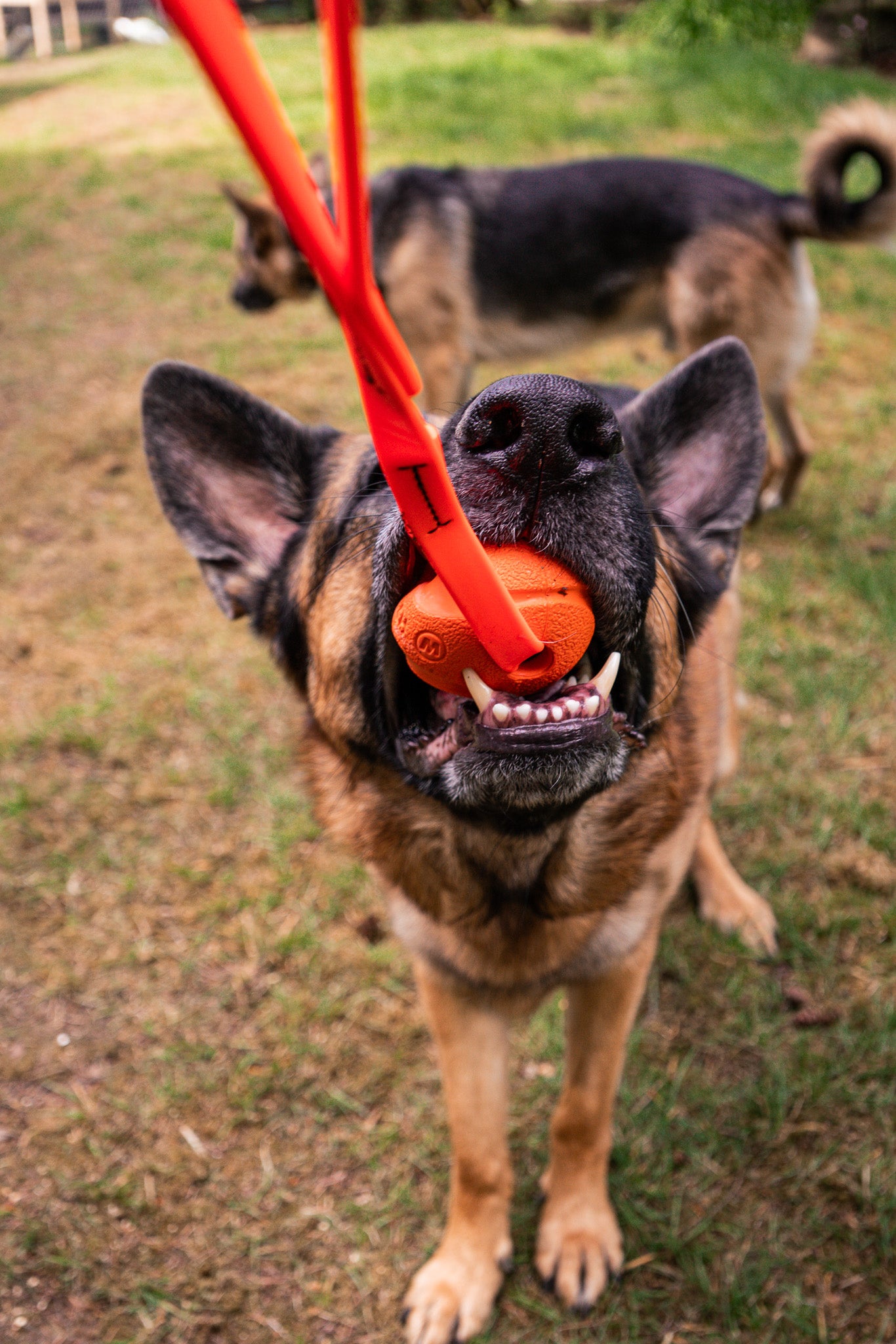
A French linen tug is great for structured engagement. A ball tug is more convenient for quick outdoor rewards.
The best training toy is the one your dog genuinely values and that you can use safely and consistently.
Frequently Asked Questions About French Linen Dog Toys
Is French linen actually made from linen?
Not necessarily. French linen is often a trade term. It includes synthetic or blended materials. Check the fiber specifications.
Is French linen safe for puppies?
An appropriately sized, softer French linen tug may be suitable for some puppies during supervised, gentle play. Avoid hard pulling, excessive resistance, or activities that strain developing teeth and jaws. Adjust play during teething and consult your veterinarian if your puppy shows discomfort.
Is French linen better than jute for dog training?
Neither is universally better. French linen often offers a more flexible, less coarse-feeling surface, while jute provides a traditional, rougher texture. The better choice depends on your dog's preferences and training goals.
Can French linen help improve my dog's grip?
A properly sized tug supports grip development. It provides a textured surface for a maintainable bite. Grip quality also depends on technique and development.
Can I use French linen tug toys for regular obedience training?
Absolutely. French linen tugs can be used as interactive rewards for recalls, heelwork, engagement exercises, and other trained behaviors. You don't need a working or protection dog to benefit from structured tug play.
Is French linen more durable than firehose?
Not necessarily. Firehose offers more abrasion resistance. French linen offers flexibility. Construction and play style affect longevity.
Can I leave a French linen tug with my dog?
No. French linen bite tugs are interactive training tools, not unsupervised chew toys. Put them away after training and inspect them regularly for wear.
The Bottom Line: French Linen Is About More Than Durability
French linen has earned its place in dog training because it offers something that matters more than simply being tough.
It provides a textured, flexible bite surface. This supports confident gripping and reward play. It creates meaningful interaction.
Combine it with appropriate sizing and construction. Now, a French linen tug is more than a toy.
It becomes a way to reward effort, develop cooperation, and make training something your dog actively wants to participate in.
At Bolder K9, we believe good training equipment should support the work you're already putting into your dog—not replace it.
You might be introducing a puppy to tug. You could be developing a sport dog. Choosing the right surface is a great start.
Ready to find the right tug for your training goals? Explore Bolder K9's bite tugs and interactive training toys and choose the material, size, and design that fits your dog.
Train bold. Play with purpose.