For most dogs, a good dog tug session doesn't need to last very long.
A few minutes of focused tug can be more useful than dragging games out for 20 minutes. When used as a reward, bursts may be shorter. Sometimes play lasts just several seconds before returning to training.
There isn't one perfect number, though.
The right session length depends on your dog and their physical condition. It also depends on intensity, environment, and your goals.
The better question isn't simply, "How many minutes should we tug?"
It's:
"Is my dog still playing well?"
Short Tug Sessions Are Often Better
Tug can be physically and mentally intense.
A dog may accelerate, pull, brace, change direction, regrip, and put a surprising amount of effort into a short game.
That's part of what makes tug such a useful reward for many dogs.
It's also why you don't necessarily need a marathon session.
For recreational play, a few minutes at a time can be plenty, especially when the game is energetic. You can always take a break and play another round later.
When tug is being used as a reward during training, the game can be much shorter.
Dog completes the behavior.
Tug appears.
You play for several seconds.
Dog releases.
Training continues.
In that situation, tug isn't a separate 10-minute activity. It's part of the reinforcement cycle.
Our guide to using tug toys for dog training goes deeper. It covers tug as a functional reward rather than simply a toy.
Watch the Dog, Not Just the Clock
We'd rather see someone pay attention to their dog than stare at a timer.
Two dogs can play tug for three minutes and have completely different experiences.
One may still be focused, coordinated, and enthusiastically asking for another round.
The other may be overheating, losing interest, getting frantic, or physically tiring.
Your dog gives you information throughout the game.
Watch for changes in:
- Enthusiasm
- Grip
- Coordination
- Breathing
- Movement
- Ability to disengage
- Overall intensity
If the quality of the game starts falling apart, extending the session usually doesn't make it better.
End the game while it's still a good game.
That's especially useful when you're trying to build value for a tug as a training reward.

Tug as a Training Reward Can Be Very Short
You use tug during obedience, sport training, or recall practice. You don't need minutes of tug every time you reward the dog.
Think in short bursts.
A high-value game might last only a few seconds before you ask for an out, reset, and continue training.
That keeps the reward exciting without completely interrupting the training session.
It also lets you use tug repeatedly.
Instead of:
Train → five-minute tug game → training is basically over
you can create:
Behavior → tug → reset → behavior → tug → reset
For dogs that genuinely enjoy tug, that can make the toy a very practical reinforcer.
If you're just getting started, our beginner's guide to tug toys covers toy selection, introducing the game, and basic handling.
Puppies and Dog Tug Session Length
Keep puppy tug sessions especially short.
Puppies don't need long, exhausting games to benefit from tug.
You're building the game.
Let the puppy chase the toy, grab it, win it, and enjoy interacting with you. Short successful sessions can help keep the game exciting.
Be mindful of the puppy's age, physical development, teething stage, and intensity.
You don't need aggressive side-to-side whipping or hard upward pulling to make tug fun.
In fact, you generally shouldn't be trying to prove how hard your puppy can pull.
Keep it playful.
High-Drive Dogs May Not Tell You They're Tired
This is worth remembering with working, sport, and high-drive dogs.
Some dogs will happily continue playing well past the point where you should probably call the session.
Enthusiasm doesn't automatically mean unlimited physical capacity.
Hot weather, intense training, repetitive movement, slippery surfaces, and overall workload all matter.
Your dog may have done obedience, running, jumping, or hiking. In these cases, they aren't starting the session with a fresh tank.
Consider the entire session—not just the minutes spent holding the tug.
Your Goal Changes the Right Session Length
There's a big difference between recreational tug and reward-based tug.
Tug for Fun
A few minutes of active play followed by a break may be plenty.
If your dog wants another round later, great.
Tug as a Training Reward
Think seconds rather than minutes.
The goal is usually a short, valuable reinforcement before returning to work.
Building Interest in Tug
Shorter can be even better.
Try to build toy drive or help a dog discover that tug is fun. Don't wait until they're bored to stop.
Quit while the dog is still interested.
Leave them wanting another round.
Physical Exercise
We wouldn't use endless tugging simply to exhaust a dog.
Tug can absolutely be physically demanding, but more isn't automatically better. Mix it into a broader routine appropriate for your dog's age, health, conditioning, and needs.
When Should You End a Tug Session?
End the game when the quality starts declining—not after it has completely fallen apart.
That might mean your dog:
- Starts losing interest
- Repeatedly drops the toy
- Has difficulty maintaining their grip
- Becomes physically sloppy
- Is breathing heavily and needs a break
- Is overheating
- Stops responding to familiar cues they normally understand
- Becomes too frantic for the game you're trying to play
You can also end simply because you achieved your training goal.
You wanted three great recalls rewarded with tug. Once you get them, you don't need to keep going just because they have energy.
A good training session doesn't have to end with an exhausted dog.

The Toy Matters Too
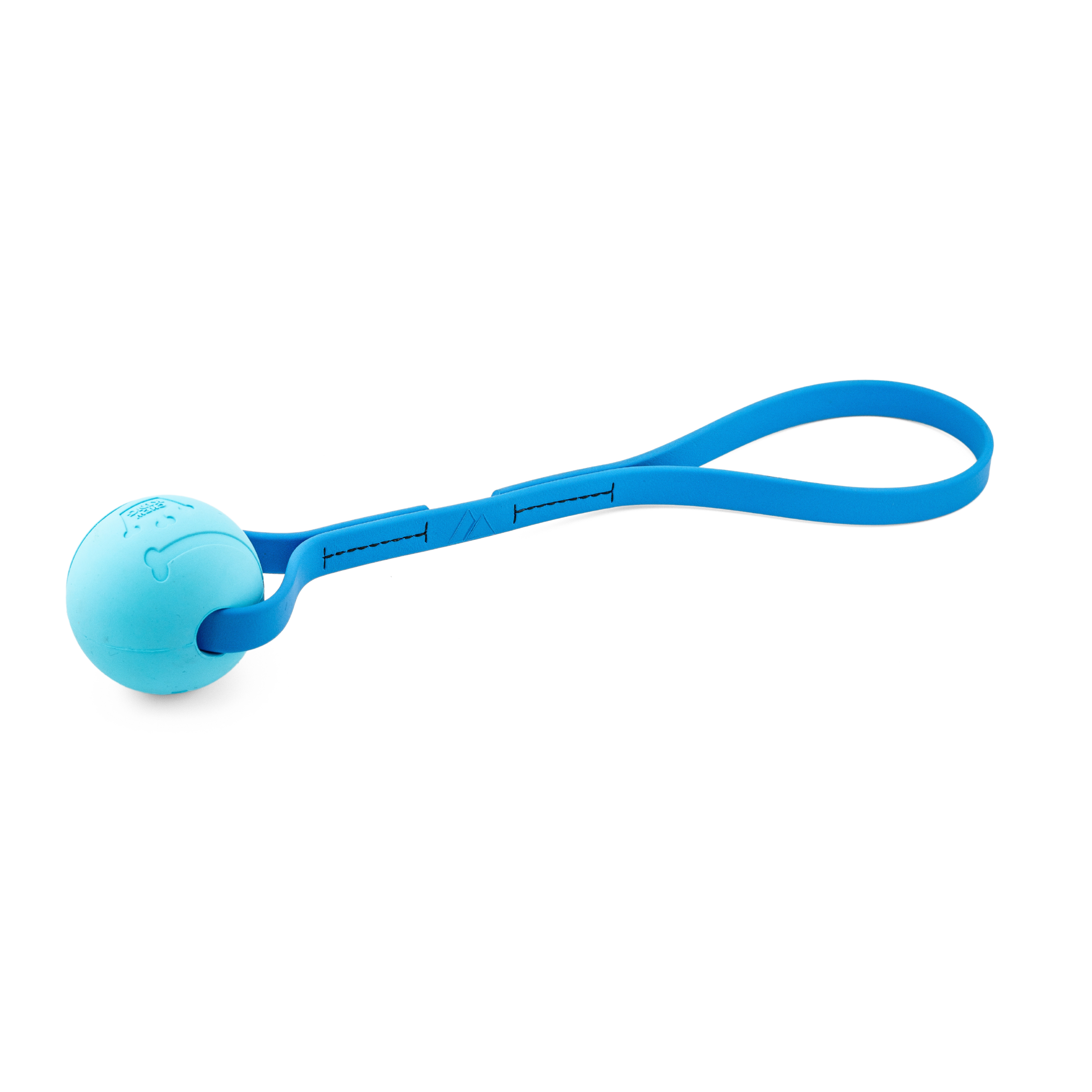
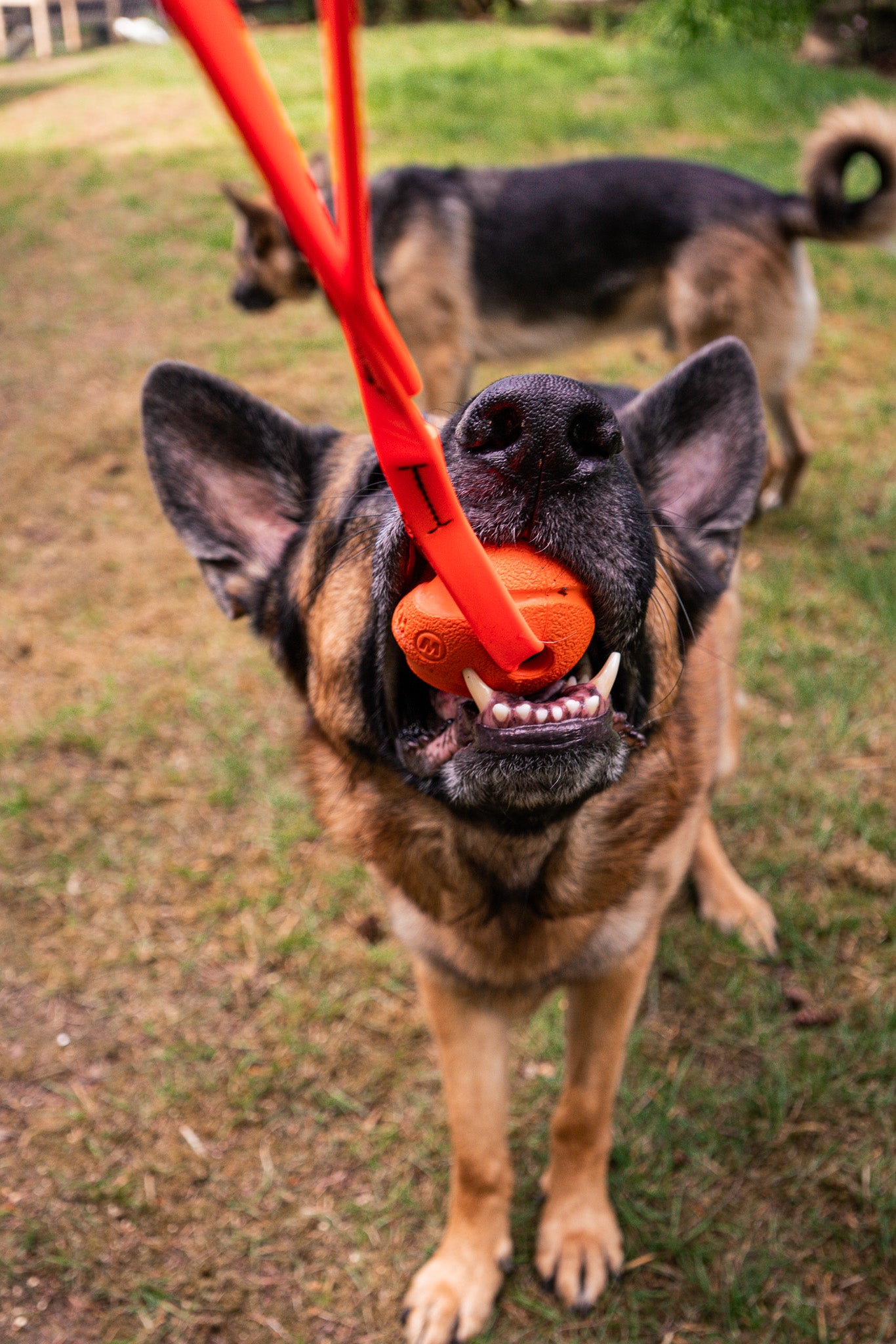
A training tug is meant for interactive play.
It isn't the same thing as a chew toy.
Some people finish a session by handing the tug to the dog. They let the dog lie down and chew on it.
That's not what most purpose-built training tugs are designed for.
Use the toy for the game, then put it away when the session is finished.
That can also help preserve the tug's value.
A favorite tug should appear specifically for interaction with you. This makes the toy part of the game, not just another object.
For dogs that enjoy active play, the Element BioThane® Tug is designed as an interactive toy. It is not an unsupervised chew toy.
Don't Obsess Over the Stopwatch
So, how long should you play tug with your dog?
For many dogs, a few minutes of active recreational tug is enough for one round. Training rewards may involve only several seconds at a time.
But those aren't hard limits.
A young puppy, conditioned sport dog, senior companion dog, and high-drive working dog shouldn't automatically receive identical tug sessions.
Watch the individual dog.
Consider the intensity.
Factor in the weather and everything else they've done that day.
And remember that the goal isn't to see how long your dog can tug.
The goal is to have a good game.
Stop while you still have one.
Frequently Asked Questions
How many minutes should I play tug with my dog?
A few minutes of focused recreational tug may be plenty for many dogs. Training-reward tug can be much shorter, sometimes lasting only several seconds before returning to the exercise. Adjust based on your dog's physical condition, enthusiasm, environment, and intensity of play.
Can you play tug for too long?
Yes. A dog can become physically tired, overheated, less coordinated, or mentally disengaged even if they initially wanted to keep playing. Watch the quality of the game rather than relying exclusively on a timer.
How long should tug last as a training reward?
It can be very short. Several seconds of enthusiastic play may be enough to reinforce a behavior before resetting and continuing training.
Should puppies play tug?
Tug can be an enjoyable interactive game for puppies when it's appropriate for the individual puppy and played sensibly. Keep sessions short and avoid unnecessarily forceful movements, especially during physical development and teething.
Should I let my dog keep the tug after playing?
Allowing the dog to "win" and carry the tug can be part of the game. However, training tugs shouldn't become unsupervised chew toys. Put the tug away when play is finished.
Should I stop tugging if my dog is still excited?
You don't have to wait for your dog to lose interest. In training, ending while the dog is still enthusiastic can help preserve the value of the game and the toy.
The Bottom Line
You don't need a 20-minute tug marathon to have a productive session.
For many dogs, short, enthusiastic rounds are better than playing until the dog is tired or bored.
Use a few minutes for recreational play when appropriate. Use shorter bursts when tug is functioning as a training reward. Take breaks, watch your dog's physical condition, and adjust the game to the individual in front of you.
Most importantly, don't measure a successful tug session by how exhausted your dog is afterward.
Measure it by the quality of the interaction.
When the game is still good, that's often the perfect time to stop.